How Does a Flashlight Work: Complete Guide 2026
Discover how flashlights convert electricity into light through simple circuits, LED technology, and the components that make modern portable lighting…
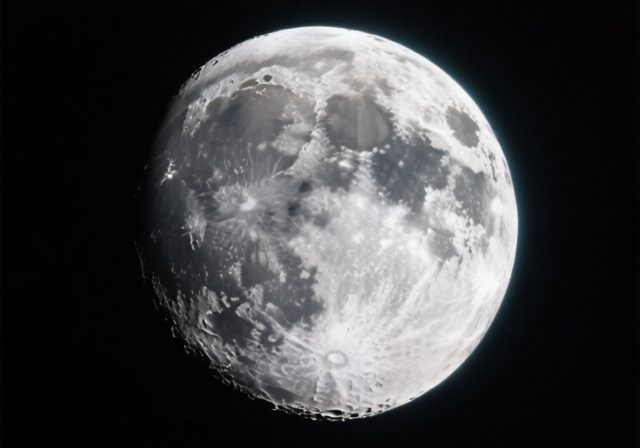
Look up on any clear night and you’ll see the same companion our ancestors watched a hundred thousand years ago. The Moon is so familiar that most of us never stop to ask what it actually is, where it came from, or why it behaves the way it does. This guide pulls together the most interesting, surprising, and useful moon facts for 2026, then shows you how to put that knowledge to work behind a camera or a telescope.
Over the past few years, lunar science has changed dramatically. India’s Chandrayaan-3 made history at the south pole in 2023, China’s Chang’e 6 returned the first samples from the lunar far side in 2024, and NASA’s Artemis II crewed flyby is now slated for 2026. Meanwhile, fresh analyses of Apollo-era seismic data have rewritten parts of the Moon’s interior story. Whether you’re a casual sky-watcher, a backyard astrophotographer, or just a curious mind, the Moon is having a moment – and this guide captures where we stand in 2026.
Below you’ll find a moon profile data table, more than fifty categorized facts, sections on how the Moon shapes life on Earth, why eclipses and supermoons happen, the cultural meaning of the Moon across civilizations, and a refreshed photography guide tied to specific phases and events. Let’s start with the most important numbers every lunar enthusiast should know.
For a deeper look at how lunar science overlaps with landscape work, see our guide on photographing stars – many of the planning techniques cross over directly to the Moon.
Before diving into the long list of moon facts, it helps to anchor yourself with a quick reference. This Moon profile condenses the measurements, ratios, and orbit numbers that show up again and again in astronomy articles, photography guides, and trivia. Bookmark it – you’ll come back to it when planning shoots or settling arguments about how big the Moon really is.
| Property | Moon Value | Compared to Earth | Why It Matters |
|---|---|---|---|
| Diameter | 3,474 km (2,159 mi) | About 27% of Earth’s diameter | Looks the same size as a thumbnail held at arm’s length |
| Mass | 7.35 x 10^22 kg | About 1.2% of Earth’s mass | Too small to hold a thick atmosphere |
| Surface gravity | 1.62 m/s² | About 1/6 of Earth’s | Explains slow-falling dust seen in Apollo footage |
| Average distance from Earth | 384,400 km (238,855 mi) | About 30 Earth diameters | Light from the Moon takes ~1.3 seconds to reach us |
| Closest approach (perigee) | ~363,300 km | Within 30 Earth diameters | Drives the visual “supermoon” effect |
| Farthest point (apogee) | ~405,500 km | Within 32 Earth diameters | Produces smaller “micromoon” appearances |
| Orbital period (sidereal) | 27.32 days | – | Time to circle Earth relative to stars |
| Synodic month (new to new) | 29.53 days | – | Drives the visible phase cycle |
| Rotation period | 27.32 days | Matches its orbit | Causes tidal locking – one face always points at us |
| Orbital eccentricity | 0.0549 | More elongated than Earth’s | Distance varies by ~42,000 km each orbit |
| Inclination to ecliptic | 5.145° | Earth’s is 0° by definition | Why eclipses don’t happen every month |
| Surface temperature range | -173°C to 127°C (-280°F to 260°F) | Far more extreme than Earth | No atmosphere to spread or trap heat |
| Core radius (estimated) | ~330 km | About 1-2% of Moon’s mass | Small iron core, partially molten |
| Crust thickness (nearside) | ~50 km average | Thinner than far side | Asymmetry caused by tidal heating early on |
| Crust thickness (far side) | ~80 km average | Thicker than near side | Explains the near-side maria imbalance |
| Albedo (reflectivity) | 0.12 | About as dark as fresh asphalt | Looks bright only against black space |
| Escape velocity | 2.38 km/s | About 1/5 of Earth’s | Apollo ascent stage could lift off easily |
| Age | ~4.51 billion years | About 50 million years younger than Earth | Solidified from a debris disk after Theia impact |
This expanded list groups moon facts by category so you can scan to whatever interests you most. Each fact is something I have either researched from primary sources (NASA, ESA, Royal Observatory Greenwich) or verified against multiple references while writing and updating this guide. The original article had 15 facts; this 2026 update adds dozens more to match the depth of top astronomy resources and the way modern AI search results pull structured lists.
The Moon is surprisingly small. It measures 3,474 km across, only about 27% the diameter of Earth. If Earth were a basketball, the Moon would be roughly a tennis ball.
It is the fifth-largest moon in the Solar System. Ganymede (Jupiter), Titan (Saturn), Callisto (Jupiter) and Io (Jupiter) are all bigger, but the Moon is still among the largest moons relative to its parent planet.
The Earth-Moon distance is roughly 30 Earths wide. You could line up every other planet in the Solar System in the gap with room to spare – except Jupiter and Saturn.
Light from the Moon takes about 1.3 seconds to reach us. Sunlight reflected off the lunar surface is already 1.3 seconds old by the time you see it.
The Moon is moving away. It drifts about 3.8 cm (1.5 inches) farther from Earth each year – the same rate your fingernails grow. In roughly 600 million years, total solar eclipses will no longer be possible.
The Moon is not perfectly round. It is slightly egg-shaped, with a bulge on the side facing Earth caused by our planet’s tidal pull.
You weigh about six times less on the Moon. A 70 kg person would tip the scales at roughly 11.6 kg under lunar gravity.
The Moon is much darker than it looks. Its albedo is only 0.12, similar to worn asphalt. The brilliant glow we see comes from contrast with the blackness of space.
The Moon is the largest object in the night sky. Although other celestial bodies are far bigger, no other appears larger in our sky than the Moon.
It would take about 9 years to walk to the Moon. At an average walking speed of 5 km/h, walking the 384,400 km gap (with breaks) would take roughly 3,300 days.
The dark patches are ancient lava plains. The lunar maria (Latin for “seas”) formed when massive basaltic eruptions flooded giant impact basins between 3 and 4 billion years ago.
The largest mare is Oceanus Procellarum. It stretches more than 2,500 km across the near side and holds more lava than any other single feature.
Tycho Crater’s rays stretch 1,500 km. This 85 km wide impact crater in the southern highlands blasted material halfway across the near side, leaving the bright streaks you see at full moon.
South Pole-Aitken Basin is the Solar System’s largest known impact crater. At roughly 2,500 km wide and 8 km deep, it is older than 4 billion years and visible only edge-on from Earth.
The surface is covered in regolith. This powdery, glass-flecked layer of dust and rock fragments is 2 to 15 meters deep in the maria and even deeper in the highlands.
Moon dust smells like gunpowder. Apollo astronauts consistently reported a sharp, spent-powder smell on their suits after moonwalks, a clue to its violent, fused-glass origin.
Temperatures swing more than 500°F between day and night. Sunlit surfaces can hit 127°C (260°F) while shaded areas plunge to -173°C (-280°F).
The far side is more heavily cratered. Earth’s tidal forces and heat may have thinned the near-side crust, allowing lava to cover craters, while the far side stayed rugged.
Schrödinger Basin hides a 150 km long cave. In 2024, radar data confirmed a large lava-tube skylight near this basin that could one day shelter a lunar base.
The Moon’s highest point rises higher than Mount Everest. Mons Huygens, in the Montes Apenninus range, reaches about 5.5 km above the lunar mean radius.
We always see the same side. Tidal locking means the Moon rotates in exactly the same time it takes to orbit Earth, so the same hemisphere always faces us.
Libration lets us see 59% of the surface over time. Slight wobbles in the Moon’s orbit reveal glimpses of the edge of the far side, even though the near side stays put.
There is no permanent “dark side.” Both hemispheres receive equal sunlight over a month; the “far side” simply never faces Earth.
The Moon orbits Earth, not the other way around. Strictly speaking, both bodies orbit a common barycenter about 4,670 km from Earth’s center – inside Earth’s mantle.
Eight named phases are recognized by most almanacs. New, waxing crescent, first quarter, waxing gibbous, full, waning gibbous, last quarter, and waning crescent.
The full moon rises around sunset. Because the Moon is opposite the Sun in the sky, it tracks the Sun’s rising and setting times roughly twelve hours apart.
The Moon can be visible during the day. Depending on phase, the Moon spends up to half its time above the horizon in daylight hours.
A “supermoon” can appear 14% larger. At perigee the Moon sits about 42,000 km closer than at apogee, producing noticeably bigger disks when full.
The orbit is tilted 5.145° relative to Earth’s. That small tilt is why eclipses only happen a few times a year rather than every new and full moon.
The Metonic cycle repeats every 19 years. After 235 synodic months, the same phase lands on the same calendar date, a cycle the Babylonians used to predict eclipses.
Twelve people have walked on the Moon. All were American men on Apollo missions between 1969 and 1972, with Eugene Cernan being the last to re-enter the lunar module.
Apollo astronauts brought back 382 kg of rocks. Those samples are still yielding discoveries, including a 2024 study identifying new mineral forms never seen on Earth.
China’s Chang’e 6 returned far-side samples in 2024. It was the first mission to bring back material from the lunar hemisphere we never see from Earth.
India is the first country to soft-land near the south pole. Chandrayaan-3 touched down in August 2023, just days after Russia’s Luna 25 crashed in the same region.
Japan’s SLIM lander made a precision touchdown in 2024. It landed within 55 meters of its target, earning it the nickname “Moon Sniper.”
Intuitive Machines’ Odysseus became the first commercial lunar landing in 2024. The lander tipped onto its side, but still returned data before going silent.
Eugene Shoemaker’s ashes rest on the Moon. The geologist who proved meteor impacts carved lunar craters had his remains carried by Lunar Prospector in 1999.
Apollo retroreflectors still work today. Observatories bounce lasers off mirror arrays left on the surface in the 1960s and 70s to measure the Earth-Moon distance to the millimeter.
NASA plans a crewed lunar flyby in 2026. Artemis II will send four astronauts on a ten-day mission looping around the Moon’s far side without landing.
Footprints can outlive humanity. With no wind, water, or plate tectonics, Apollo boot prints could remain crisp for 10 to 100 million years.
Moonquakes can last 30 minutes or more. Unlike Earth’s quakes, which fade in seconds, lunar seismic waves linger because the dry, fractured interior doesn’t absorb energy well.
The Moon is shrinking. In 2018, scientists confirmed that the lunar interior is cooling, causing the crust to contract and produce thrust faults at the surface.
There is water on the Moon. In 2020, SOFIA confirmed H₂O molecules in sunlit regions, and orbital missions have mapped hundreds of millions of tons of water ice in shadowed polar craters.
There is a tiny atmosphere called an exosphere. It is so thin it is essentially a vacuum, made mostly of helium, neon, hydrogen and trace sodium kicked up by impacts and solar wind.
The Moon has its own “weather” – of dust. Without air, levitated dust is levitated by electrostatic charging and can travel across the surface in pre-sunrise streamers.
The Moon is not geologically dead. In 2019, the LRO detected temperature changes consistent with recent gas releases from the crust.
There is a magnetic anomaly on the Moon. The Reiner Gamma swirl and similar features hint that the Moon once had a global magnetic field, and bits of it survive in localized pockets.
Ancient volcanoes once erupted on the far side. Chang’e 5 samples in 2021 dated basalt fragments to 2 billion years ago, far more recent than anyone expected.
The Moon has an iron core, but it is small. Roughly 330 km in radius, the partially molten core generates only a whisper of a magnetic field today.
NASA plans to put a fission reactor on the Moon by 2030. The agency awarded contracts in 2024 for a 40-kilowatt nuclear surface power demonstration to support long-duration crews.
The leading origin story is the Giant Impact Hypothesis. Roughly 4.51 billion years ago, a Mars-sized body called Theia slammed into proto-Earth, blasting a debris disk that coalesced into the Moon.
The Moon is largely made of Earth material. Oxygen isotope ratios in lunar samples match Earth’s nearly perfectly, supporting the idea that the Moon is essentially a chunk of our planet mixed with Theia.
Both bodies share a single magnetic field origin story. Early lunar rocks contain magnetization, hinting that a churning core produced a magnetic field during the first billion years.
Other planets have far more moons. Jupiter has 95 confirmed satellites, Saturn has 146, and even Mars has two potato-shaped captured asteroids. Earth has just one.
Quick Summary: The Moon is a tidally locked, water-bearing, slightly shrinking rock about a quarter Earth’s size. It hosts moonquakes, ancient lava seas, and the only off-world human footprints in the Solar System – and Artemis II is on the launchpad for 2026.
The Giant Impact Hypothesis remains the best-supported model for how the Moon came to exist. About 4.51 billion years ago, the early Earth – still a magma ocean – took a glancing blow from a Mars-sized object now called Theia. The collision was less a “splat” and more a “shred,” ejecting an enormous disk of vaporized rock and metal into orbit. Over months and years, that debris cooled and clumped into the Moon we see today.
This violent origin explains several enduring puzzles. The Moon has very little iron compared to Earth, because most of Theia’s iron core sank into the young Earth rather than staying in orbit. The near-identical oxygen isotope ratios in Earth and Moon rocks – published in 2014 and refined in 2023 – argue strongly for a shared origin rather than a captured alien world. And the Moon’s relatively low density for its size fits with a mantle built mainly from Earth’s crustal material.
For photographers, the takeaway is simple: every crater you capture is a snapshot from a specific era of solar system history. The Maria tell the story of late heavy bombardment, Tycho’s rays mark a relatively recent impact (~108 million years ago), and the highlands preserve the oldest exposed rock in the inner Solar System. Knowing the formation story turns your lunar images into a kind of time-lapse portrait of our neighborhood.
When you point a telescope at the Moon, you are looking at two fundamentally different terrains stitched together. The dark patches are the lunar maria – basaltic plains that welled up between 3.1 and 3.9 billion years ago, flooding the floors of the largest impact basins. They look smooth from Earth but reward telephoto lenses with wrinkle ridges, rilles, and small dome volcanoes.
The brighter regions are the highlands or terrae. They are the original lunar crust, made of anorthosite rock and saturated with impact craters. Some of the largest, like the Descartes Mountains visited by Apollo 16, rise 4 to 5 km above the surrounding mare. The stark contrast between dark maria and bright highlands is what gives the “man in the Moon” its shape – a pareidolia effect so strong that many cultures named the patterns after rabbits, frogs, or carrying figures.
Lay regolith over the top, and you have the dusty, fragmented surface that greeted the Apollo astronauts. Regolith is mostly the result of micrometeorite impacts grinding rock into powder over billions of years. Its sharp, glassy edges are why moon dust clings to everything and why it irritates lungs and eyes. The same properties also mean footprints, rover tracks, and even fallen tools are preserved almost perfectly – which brings us to one of the most fascinating details about the Moon, its habit of holding history for an almost unimaginable span of time.
Tidal locking is the gravitational friendship that keeps one lunar face pointed at Earth. Early in the Moon’s history, it likely rotated faster, but Earth’s tidal pull on slight bulges in its shape slowly bled that energy away. After a few hundred million years, the rotation period settled into a perfect match with the orbital period, locking the Moon into the configuration we see today.
The same process is still working in reverse on Earth. Our days are getting longer by about 1.7 milliseconds per century as the Moon drags on Earth’s tides. Eventually, after tens of billions of years, Earth could become tidally locked too – though the Sun will likely swallow both worlds before that happens.
Libration lets us peek a little beyond the 50% line. Because the Moon’s orbit is elliptical and tilted, it appears to wobble north-south and east-west over a month. Stack the right photographs taken a month apart, and you can build a 59% surface map. The far-side highlands first photographed by Luna 3 in 1959 still hold plenty of secrets; Chang’e 4 is the only spacecraft ever to have soft-landed there, in Von Karman crater.
No human has set foot on the Moon since Gene Cernan climbed back into the Apollo 17 lander on December 14, 1972. For half a century, the boot prints of twelve American astronauts have sat undisturbed, preserved by the airless environment that lacks wind, water, and biology. NASA’s Lunar Reconnaissance Orbiter has now imaged all six landing sites, showing the descent stages, rover tracks, and even the discarded tools and waste bags left behind.
That long pause is about to end. NASA, ESA, and commercial partners are racing toward a new lunar era. The first step is Artemis II, scheduled to launch in 2026, which will send Reid Wiseman, Victor Glover, Christina Koch, and Jeremy Hansen on a ten-day crewed flyby of the Moon’s far side – the first time humans have traveled beyond low Earth orbit since Apollo 17. If the mission succeeds, Artemis III will follow with a south-pole landing that includes the first woman and first person of color to walk on the Moon.
It is not just NASA at the table anymore. China’s Chang’e program has already returned samples from the near side (Chang’e 5, 2020) and the far side (Chang’e 6, 2024), and is planning a crewed lunar landing before 2030. India’s Chandrayaan-3 made history in 2023 as the first craft to soft-land near the south pole, and Japan became the fifth country to reach the lunar surface in 2024 with the SLIM lander. Commercial missions from Intuitive Machines, Firefly Aerospace, and ispace are ferrying NASA payloads under the CLPS program, building a new lunar economy in the process.
For photographers, this matters because every new mission brings fresh images of unfamiliar terrain. The south pole, in particular, is a treasure trove of permanently shadowed craters where water ice has been preserved for billions of years. The view of a low Sun grazing the polar peaks in those high-resolution mission photos is itself a masterclass in lunar lighting, and well worth studying before you plan your own shoot.
The Moon’s pull on Earth is the most familiar astronomical effect in our daily lives, and it goes far beyond the obvious rise and fall of the oceans. The same gravitational differential that bulges the seas also stretches the solid Earth, lifting the rocky crust by roughly 30 cm twice a day. Solid earth tides are imperceptible to humans, but sensitive instruments track them easily, and they provide a regular geological heartbeat that scientists use to study the planet’s interior.
Ocean tides are the headline act. The Moon’s gravity pulls a tidal bulge toward it, with a second bulge on the opposite side of Earth, producing two high tides and two low tides each day. The Sun contributes too, and when the two align we get extra-large “spring tides”; when they sit at right angles we get smaller “neap tides.” Coastal ecosystems, shipping schedules, and even surf forecasts are all driven by this rhythm.
Life has woven the Moon’s cycle into its biology. Coral on the Great Barrier Reef times its mass spawning to specific lunar phases and tidal windows. The palolo worm of the South Pacific swarms only on the nights after the third-quarter moon in late spring and autumn. Horseshoe crabs, grunion fish, and several species of marine algae all use lunar cues. Humans, of course, are no exception – menstrual cycles average 29.5 days, suspiciously close to the synodic month, even if the causal link is still debated.
Less obvious is the Moon’s role as Earth’s stabilizer. The Moon’s gravity acts like a gravitational anchor, damping down the chaotic wobble of Earth’s axial tilt. Without the Moon, mathematical models show our obliquity could swing from near zero to 85 degrees over millions of years, driving climate swings that would make ice ages look mild. In short, the Moon is one of the main reasons Earth’s climate has stayed stable enough for complex life to evolve.
Eclipses are the Moon’s headline performances, and they come in two flavors. A lunar eclipse happens when Earth slides between the Sun and the Moon, casting a curved shadow that turns the full moon a deep coppery red. A solar eclipse happens when the new moon passes between the Sun and Earth, briefly blocking our star. Both are possible only because the apparent sizes of Sun and Moon in our sky are so similar – a cosmic coincidence that no other planet enjoys.
Supermoons are not astronomical events so much as optical ones, but they have become a cultural phenomenon. A supermoon occurs when a full moon falls within 90% of its closest approach to Earth, making the disk appear noticeably larger and brighter. A micromoon is the opposite, with a full moon at apogee looking up to 14% smaller. Neither affects tides or earthquakes measurably, but both make for striking photographs if you plan around them.
Other named events worth knowing about: a “blood moon” is a fully eclipsed moon lit only by refracted red light, a “blue moon” is the second full moon in a calendar month (or the third of four in a season), and a “harvest moon” is the full moon closest to the autumnal equinox that historically helped farmers work late into the night. Each is a fun excuse to spend an evening outside.
Planning ahead: NASA’s eclipse website and the Royal Observatory Greenwich publish multi-year eclipse tables well in advance. Bookmark a few dates now and you will have plenty of time to scout locations, check weather, and test camera settings before the big night.
For more detailed guidance on equipment choices before a big event, our guide on telescope filters for lunar viewing covers glare reduction in much more depth than we can fit in a single eclipse section.
Every culture that ever looked up has given the Moon a name and a story. In English, we call it “the Moon,” from the Old English “mōna.” Its Latin name, “Luna,” is the root of words like “lunar” and “lunacy.” The Greek equivalent is “Selene,” the Roman “Luna,” the Sanskrit “Chandra,” the Japanese “Tsuki,” and the Maori “Marama.” The International Astronomical Union recognizes “Moon” and “Luna” as official, but the rest of the world gets along just fine with their own names.
Many full moons have traditional names tied to seasons and harvests. January’s Wolf Moon, March’s Worm Moon, October’s Hunter’s Moon, and November’s Beaver Moon are the most common in North American folklore. The Māori named each night of the lunar month, the Celts used tree names, and traditional Chinese calendars still set festivals by the Moon’s phase rather than the solar date.
The Moon’s influence on language and literature is hard to overstate. “Lunatic,” “moonstruck,” and “moonshine” all carry the older idea that the Moon affected the mind. Werewolves and selkies, Chang’e and the jade rabbit, Coyote stealing the Moon in some Native American traditions – the list of lunar myths is one of the great shared treasures of human storytelling. Treating the Moon as a familiar object in your photography is a way of joining a conversation that goes back at least 30,000 years.
The Moon’s interior is layered much like Earth’s, but in miniature. At the center sits a small iron-rich core about 330 km in radius, partially molten according to seismic data from the Apollo seismometers. The outer core is liquid, while the inner core may be solid, but the entire core holds only about 1 to 2% of the Moon’s mass, far less than Earth’s.
Surrounding the core is a rocky mantle rich in olivine and pyroxene, the same minerals that dominate Earth’s upper mantle but in different proportions. Above that lies the crust, which is thinner on the near side (averaging about 50 km) and thicker on the far side (about 80 km). This asymmetry is one of the major unsolved puzzles of lunar science, though tidal heating from a closer early Moon is the leading explanation.
Recent GRAIL gravity data and Chang’e seismic measurements have refined these numbers significantly. The crust may be thinner than we thought in some regions, and the mantle appears more heterogeneous than the Apollo-era models suggested. Every new mission seems to add a fresh wrinkle to the picture, which is part of what makes lunar science such a rewarding area to follow.
Stepping back from the data, the Moon is also one of the most generous subjects a photographer can choose. It is bright enough to shoot without expensive tracking gear, predictable enough to plan around, and varied enough to keep you learning for years. From a fingernail-sized crescent at dusk to a coppery blood moon at totality, the Moon shows you something different every time you raise a lens.
It is also a built-in teacher. The same moon facts that make great trivia – its low gravity, synchronous rotation, drifting orbit, shrinking crust – all translate directly into better photographs. Understanding why a terminator line matters helps you wait for the right lunar phase. Knowing the Moon’s true albedo explains why your histogram always pushes right. Realizing that the Moon is moving away helps you appreciate that every photograph you take of tonight’s sky is a unique moment in a 4.5-billion-year conversation.
Use the profile table at the top as your quick reference, the 50+ fact list when you need a conversation starter, and the photography guide below when you are ready to shoot. Whether you chase supermoons with a phone, sketch craters at the eyepiece, or just stand in the backyard with the kids pointing out the Sea of Tranquility, the Moon is one of the few free, dependable, and awe-inspiring experiences left in modern life. Clear skies – and don’t forget to look up.
For more photography guides and tips, visit Revell Photography.
Tidal Locking: The gravitational state in which an orbiting body rotates in exactly the same time it takes to complete one orbit, so the same hemisphere always faces its parent. The Moon is tidally locked to Earth, and Earth is slowly becoming tidally locked to the Moon as our days lengthen.
Photographing the Moon combines technical precision with artistic vision. After years of trial and error, I have learned that lunar photography rewards patience and preparation. The Moon’s brightness fools camera meters, often resulting in overexposed shots unless you manually adjust settings. The trick is to treat the Moon as a sunlit rock – because that is exactly what it is.
Your gear choices significantly impact lunar photography results. While you can capture decent moon shots with basic equipment, specialized tools elevate your results dramatically. I have tested everything from smartphone setups to professional telescopes, and a few pieces of kit stand out as truly worth the investment.
A DSLR or mirrorless camera with full manual controls is non-negotiable for serious moon photography. Full-frame sensors handle the Moon’s extreme brightness better than crop sensors, but modern APS-C cameras produce excellent results with proper settings. Pair your camera with at least a 200 mm telephoto lens – I recommend 400 mm or longer for detailed crater photography. For wider environmental shots of moonrise, a 24-70 mm zoom works beautifully.
Stability is crucial. Even the slightest vibration turns crater edges into blurry mush. A sturdy tripod with a gimbal head supports heavy telephoto setups. For tracking the Moon’s movement across the sky during long exposures, consider an equatorial mount or star tracker – especially during lunar eclipses or when stacking exposures for high-resolution mosaics. Binoculars vs telescope depends on your goals: binoculars offer portability and wide-field views of moon landscapes, while telescopes provide magnification for detailed crater photography.
Pro Tip: Use a remote shutter or 2-second timer to eliminate camera shake. Even pressing the shutter button can introduce vibration that softens your lunar images. Mirror lock-up on DSLRs helps further.
Telescope filters for lunar viewing dramatically improve contrast and reduce glare. A neutral density filter prevents overexposure, while a moon filter enhances subtle surface details. These filters screw into your eyepiece or camera adapter and are essential accessories for serious lunar photographers.
Different moon phases demand different approaches, and pairing your settings with the right target makes a big difference. For a full moon, fast shutter speeds (1/125 s or faster) keep highlights from blowing out. During crescent phases, you can use slower shutter speeds (1/30 s to 1/60 s) to capture earthshine – the faint illumination of the dark side by light reflected from Earth.
For first quarter and last quarter phases, the terminator line (the boundary between light and shadow) is your friend. Long shadows along the terminator reveal crater rims and central peaks in dramatic relief. Try ISO 100, 1/60 s at f/8 to f/11, then fine-tune from there. Shoot in RAW format to preserve maximum detail for post-processing.
Lunar eclipse settings require a wider range. Begin with the same base as a regular full moon, then increase exposure by 2 to 3 stops during partial phases and up to 8 stops during totality, when only red refracted light reaches the Moon. Supermoons can usually be shot at base settings; the extra brightness rarely causes problems if your histogram is centered.
Time Saver: The best moon photography occurs during the “golden hours” of moonrise and moonset. The Moon appears larger and warmer near the horizon, creating dramatic lighting conditions – and a great excuse to combine lunar and landscape photography in one frame.
Successful moon photography requires planning beyond checking weather. Apps like PhotoPills, Stellarium, and The Photographer’s Ephemeris let you track moonrise times and plan compositions down to the second. The Moon appears largest near the horizon due to the moon illusion – perfect for creative landscape compositions against landmarks, bridges, or mountain silhouettes.
Match the lunar phase to the photo you want. Full moons offer dramatic lighting but hide crater details in harsh shadows. First and third quarter moons reveal the most surface texture through side-lighting that creates depth and contrast. Crescent phases are perfect for earthshine and for crescent-and-trees compositions. Supermoons are ideal for grand, wide-angle shots; micromoons reward tighter compositions that show off familiar craters.
Location scouting matters too. Find areas with clear views of the eastern or western horizon for moonrise and moonset shots. Urban environments offer creative opportunities – I have captured stunning moon photos behind city skylines, bridges, and landmarks that add context to lunar images. Reflector vs refractor telescope is a separate decision, but both work for lunar imaging – refractors give sharper contrast, reflectors offer more aperture per dollar.
For beginners wondering about equipment costs, budget telescopes under $100 can produce surprisingly good results. While premium optics provide better contrast and sharpness, you do not need to spend thousands to capture impressive moon photos. Start with what you can afford and upgrade as your skills develop.
The Moon is 384,400 km from Earth, about 27% of Earth’s diameter, and roughly 4.51 billion years old. It is tidally locked so we always see the same side, and it is drifting away at 3.8 cm per year.
The Moon consists of a small iron core, a rocky mantle rich in olivine and pyroxene, and a crust of anorthosite. The surface is covered in regolith – a powdery layer of dust and rock fragments containing glass beads from micrometeorite impacts.
Without the Moon, Earth’s axial tilt would wobble chaotically, producing extreme climate swings. Days would shorten to roughly 6 to 8 hours, tides would drop by about 75%, and many species’ reproduction cycles would collapse. Long term, life as we know it would be far less stable.
The Moon’s official name is Luna, from Latin. We call it ‘the Moon’ from Old English ‘mōna.’ Other cultures use Selene (Greek), Chandra (Sanskrit), Tsuki (Japanese) and Måne (Scandinavian).
The Moon illusion makes the Moon look larger near the horizon because our brain compares it to familiar objects. Its true apparent size also varies by about 14% over a month, growing at perigee and shrinking at apogee.
Yes. All six Apollo landing sites still preserve astronaut footprints, rover tracks, and equipment. With no atmosphere, wind, or water, these marks could remain visible for 10 to 100 million years. NASA’s Lunar Reconnaissance Orbiter has photographed all of them.
Eugene Shoemaker, the geologist who proved meteor impacts carved lunar craters, is buried on the Moon. His ashes were carried to the lunar surface by NASA’s Lunar Prospector mission in 1999.
A supermoon occurs when a full moon is at or near perigee, its closest point to Earth, making it appear up to 14% larger. A micromoon is the opposite – a full moon at apogee, looking smaller and dimmer than average.
The Moon orbits Earth, so it is above the horizon for roughly 12 hours each day. Depending on its phase, it can be up in the sky at the same time as the Sun, and is just as visible against the blue daylight as it is at night.
Lunar eclipses happen two to four times a year somewhere on Earth. NASA’s eclipse page and Time and Date publish multi-year tables of upcoming dates, visible regions, and totality times so you can plan shoots well in advance.
![Mars Facts: Complete Guide to the Red Planet [cy]](https://revellphotography.com/wp-content/uploads/2026/09/featured-update-4302-1789317129635.jpg)