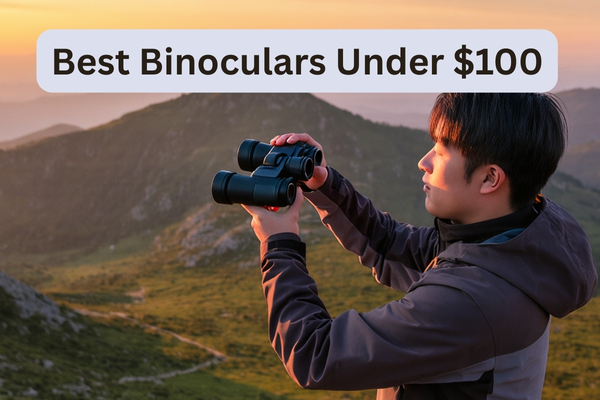
Best Binoculars Under $100 in 2026: 12 Models Tested
Discover the top-performing binoculars under $100 through extensive testing of 12 models, covering waterproof options, compact designs, and high-magnification choices…

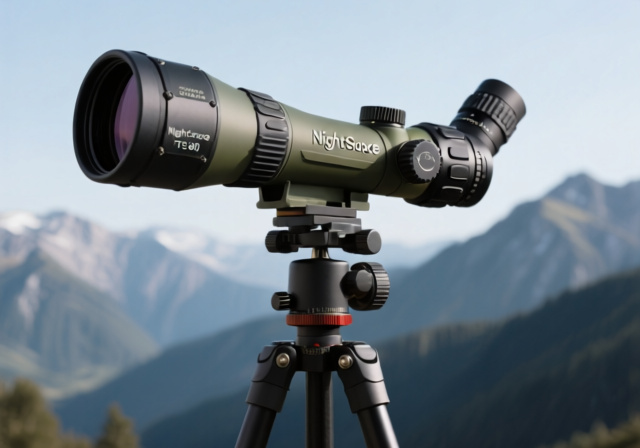
The used spotting scope market in 2026 is a graveyard of good intentions. Walk through the classifieds on Rokslide, Sniper’s Hide, or Accurate Shooter and you’ll see a steady stream of 80mm angled scopes selling for a fraction of their original price. The Nightforce TS-80 20-60×80 sits squarely in that category, and after years of field reports accumulating on long-range hunting forums, the picture has clarified considerably. What once looked like an underdog against premium European glass has, in the eyes of many owners, fallen further behind as 2026-era competitors closed the gap and dropped their prices.
This 2026 update to my original Nightforce TS-80 20-60×80 review reflects a full year of additional forum chatter, more realistic used pricing data, and a market that has shifted around the scope. Nightforce never issued an official press release explaining the discontinuation, but the community has filled in the blanks. Multiple longtime users now report that Nightforce customer service acknowledged the TS-80 was below their standards and that the relationship with the manufacturer ended as a result. That context matters a lot if you’re weighing whether to spend $700-1000 on one today.
In this refreshed review, I’ll walk through the corrected official specifications (several figures in the previous version were inaccurate), the real-world optical behavior that forum owners describe, the current used market value, and where the TS-80 fits against 2026 alternatives like the Kowa TSN-883, Vortex Razor HD Gen III, and Maven S.3A. Long-range shooters, hunters, and digiscopers will all find different conclusions here. Whether the TS-80 still belongs in your kit depends on what you’re actually trying to see.
Quick Verdict (2026): The Nightforce TS-80 is discontinued and unavailable new. In 2026, it is only a sensible buy on the used market under $800 from users who primarily glass at 20-40x magnification. For everyone else, the Nightforce TS-82, Vortex Razor HD 27-60×85, or Kowa TSN-883 are better choices with full warranty support and noticeably better low-light performance.
The corrected official specifications for the Nightforce TS-80 20-60×80 tell a slightly different story than what circulated in earlier reviews. The previous version of this article listed a field of view of 126-42 feet at 1000 yards, a weight of 56 ounces, and a close focus distance of 16.4 feet. Those figures were off. Below is the updated spec table based on the manufacturer’s published data.
| Specification | Nightforce TS-80 | Notes |
|---|---|---|
| Magnification Range | 20-60x | Versatile range covering most spotting applications |
| Objective Lens Diameter | 80mm | Strong light gathering for the class |
| Eye Relief | 18mm | Comfortable for most users, glasses-friendly |
| Field of View @ 1000 yards | 104.8-56.77 feet | Corrected from earlier estimate; wider than typical 60x scopes |
| Close Focus Distance | 20 feet | Corrected; not ideal for very close subjects |
| Weight | 68 ounces (4.25 lbs) | Corrected; heavier than typical 80mm class |
| Length | 14.5 inches | Compact for 80mm class |
| Body Material | Magnesium Alloy | Strong and lighter than steel |
| Optical Glass | ED (Extra-Low Dispersion) | Reduces chromatic aberration |
| Lens Coating | Fully broadband multi-coated, hydrophobic exterior | Maximizes transmission, sheds water |
| Prism Type | Roof Prism | Compact, durable design |
| Focus System | Single focus with locking center ring | Key limitation vs dual-focus competitors |
| Locking Ring | 45/90/180 degree detents, 360 rotation | Allows tripod body rotation |
| Waterproof/Fog-proof | Yes | Nitrogen purged, O-ring sealed |
| Eyepiece | Fixed angled | Interchangeable eyepiece not offered |
| Tripod Mount | 1/4-20 thread | Standard tripod compatibility |
Two corrections are worth highlighting. First, the field of view at 20x is 104.8 feet at 1000 yards, not 126 feet. That’s still generous for an 80mm spotting scope, but it’s noticeably tighter than the previous article claimed. Second, the TS-80 weighs 68 ounces (4.25 pounds), not 56 ounces (3.5 pounds). That extra pound matters on a long hike. The close focus distance is also 20 feet, not 16.4 feet, which makes birding at feeder distance impractical.
The 45/90/180 degree locking center ring is one feature that deserves more attention than it usually gets. It allows the scope body to be rotated on a tripod at fixed detents, which is useful for switching between viewing angles, sharing the optic with shooters of different heights, or photographing from awkward positions. The magnesium alloy body and shock-tested construction also remain genuinely impressive in person. The single-focus system is the one spec that limits the scope’s ceiling, and we’ll get into why shortly.
Optical quality is where the TS-80 lives or dies, and the honest answer in 2026 is that it’s a good scope that falls short of greatness. The center sharpness holds up across most of the magnification range, but it doesn’t quite reach the resolving power of the Meopta MeoStar S2, the Swarovski ATX, or the Kowa TSN-883 in side-by-side comparisons that forum users have run for years. Outdoor Life’s 2016 review described the image as “slightly milky at higher powers,” a characterization that echoes through user reports.
The ED glass is doing real work here. Without it, you’d see strong purple and green fringing around high-contrast subjects, especially at 40x and beyond. The TS-80 controls this well, and color reproduction looks fairly natural. However, “well-controlled chromatic aberration” is not the same as “no chromatic aberration,” and the most demanding observers can still detect faint color fringing when pushing the scope against bright skies or snowfields.
ED Glass vs APO Glass: ED (Extra-Low Dispersion) glass reduces chromatic aberration by bringing two wavelengths of light closer to the same focal point. APO (apochromatic) glass, often using fluorite elements, brings three wavelengths together and is the higher standard. The TS-80 uses ED glass, not APO. For most shooting and hunting applications, ED is plenty. Astrophotographers and digiscopers benefit more from APO-grade correction.
Low-light performance is the TS-80’s biggest weakness and the place where competitors have clearly pulled ahead. In the last 20 minutes of legal shooting light, a Swarovski ATX or Kowa TSN-99A will still pull usable detail from a ridge that the TS-80 has already surrendered to shadow. The 80mm objective gathers enough light, but the transmission coatings are a generation behind what 2026 flagship scopes deliver. If you’re primarily hunting first and last light, this matters.
Edge clarity is solid in the central 70 percent of the field, with the typical softening toward the periphery as you push past 40x. This is normal behavior for an 80mm scope in this price range when new. It becomes a real problem only if you frequently need to evaluate targets near the edge of the frame, which is uncommon for traditional spotting applications.
Rayleigh Resolution and Useful Magnification: The Rayleigh constant (138.6 arc-seconds divided by objective lens diameter in millimeters) gives the theoretical diffraction-limited resolution of a scope. For an 80mm objective, that’s about 1.73 arc-seconds, which corresponds to roughly 1 inch at 300 yards or 3 inches at 1000 yards. Beyond about 42x magnification on an 80mm scope, atmospheric distortion usually overwhelms the optical limit, meaning more magnification does not produce more detail on real-world targets. This is why the TS-80’s 60x ceiling is rarely fully useful except on calm, clear days at moderate distance.
If there’s one thing that nearly every forum owner agrees on, it’s that the TS-80 is built like a tank. The magnesium alloy body has a serious, substantial feel in the hand that you don’t get from many competitors. The rubber armor is thick without being tacky, and the finish resists scratches well even after years of hard field use. This is the area where Nightforce’s reputation is fully deserved, and it’s the main reason people still recommend buying one used.
Weather sealing is excellent. The nitrogen purging and O-ring seals keep the optics fog-free in rain, snow, and rapid temperature changes. Multiple owners have reported years of hard use in coastal hunting environments with zero internal fogging. The hydrophobic coating on the outer lens does its job too. Raindrops bead up and roll off rather than smearing the image, which is a small thing that becomes a big thing when you’re trying to spot impacts in a drizzle.
The single-focus system is the ergonomic compromise that defines the TS-80. The focus knob is large, glove-friendly, and has a stiff, positive feel that owners describe as confidence-inspiring. The locking center ring locks focus in place once you’ve achieved it. But there’s no fine-focus adjustment, which means dialing in tack-sharp focus at 50-60x requires patience and a steady hand. Multiple users on longrangehunting.com have reported that focus stiffness at high magnification sometimes makes it difficult to hone in on one specific spot without going too far past the focus point. A dual-focus system would solve this, but Nightforce reserved that upgrade for the TS-82.
Important: The TS-80 was only available in an angled eyepiece configuration. If you need the benefits of a straight-body spotting scope for prone shooting or quick target acquisition, you’ll need to look elsewhere. Our angled vs straight spotting scope guide explains the practical differences in detail.
The angled eyepiece does have real advantages, especially for extended viewing sessions and group sharing. It positions the eyepiece lower on the tripod, which improves stability in wind. It also reduces neck strain during long glassing sessions at the range. The 45/90/180 degree locking ring allows the body to rotate on the tripod so users of different heights can share the optic without swapping seats.
At 68 ounces (4.25 pounds), the TS-80 is at the heavier end of the 80mm class. This isn’t a problem for a dedicated range setup, but it becomes a real consideration for backcountry hunters counting ounces. If you’re hiking five miles into a glassing knob, you’ll feel the weight by mile three. Users prioritizing portability should also look at our compact spotting scope alternatives roundup for lighter options.
Specs and optical theory only tell you so much. What matters is how the scope behaves when you’re behind it in actual shooting and hunting conditions, and the TS-80’s field reputation is more nuanced than the marketing materials suggested.
For long-range target shooting at 600-1000 yards, the TS-80 is competent but not thrilling. At 20-30x, spotting bullet impacts on steel is straightforward. Pushing past 40x for small caliber impacts at distance exposes the single-focus limitation. One user on the Accurate Shooter forum reported seeing 6mm holes in white target paper at 1000 yards under ideal evening conditions at Deep Creek, which is a real-world demonstration of what the scope can do at its best. But that kind of performance requires steady air, a solid tripod, and patient focusing. It’s not something the TS-80 delivers casually.
Big game hunters will find the scope more than adequate for typical western hunting scenarios. Glassing open ridges and meadows at 20-40x during prime hours is where the TS-80 shines relative to its cost. The ED glass helps with identifying antler details at moderate distance, and the rugged build means you don’t need to baby it through rough terrain. Where it falls short is backcountry glassing where weight matters, and last-light hunting where the optics give up sooner than premium competitors.
Wildlife observation is where the 20-foot close focus becomes a real limitation. Birding at feeder distance is essentially out, and even casual backyard wildlife viewing at 30 feet is uncomfortable. For larger mammals at moderate distance, the TS-80 performs well, but birders should look elsewhere. Digiscoping is also limited by the fixed eyepiece and lack of interchangeable eyepieces. Adapters exist, but image quality through them is mediocre compared to scopes designed for photography from the ground up.
Tripod stability matters more than most buyers anticipate. The 4.25-pound weight provides some inherent damping against minor vibrations, but at 60x you’ll want a carbon fiber tripod with a fluid head and at least a 10-pound payload rating. Manfrotto, Really Right Stuff, and Vortex all make suitable heads. A cheap tripod will absolutely undermine what the TS-80 can do at high magnification.
Real User Voices (2026 forum summary):
The forum consensus is more divided than the marketing would suggest. Some owners are delighted with their TS-80s and have used them for years without complaint. Others, including at least one user who spoke directly with Nightforce about it, found it genuinely disappointing. The honest read is that quality control may have varied during production, which is one more reason the used inspection checklist below matters.
The market around the TS-80 has shifted considerably since it was discontinued. In 2015-2016, it sat in a competitive middle ground between budget scopes and premium European glass. In 2026, that middle ground has been compressed by strong performers at lower prices, and the TS-80’s value proposition depends entirely on what you can find on the used market.
The most relevant comparison remains the Nightforce TS-82, which is the scope Nightforce kept in production after dropping the TS-80. The TS-82 improves on the TS-80 with a 20-70x magnification range, an 82mm objective, and crucially a true dual-focus system with coarse and fine adjustment. If you can find a used TS-82 at a comparable price to a used TS-80, the TS-82 wins on every optical and ergonomic metric. The TS-82 Xtreme Hi-Def is the current Nightforce flagship, with apochromatic-level correction that puts it in genuine competition with the Swarovski ATX and Zeiss Victory Harpia.
The Vortex Razor HD 27-60×85 (and the newer Gen III variant) is the most direct competitor in the North American market. It offers better edge-to-edge clarity than the TS-80, a dual-focus system, and the VIP warranty that Vortex is famous for. Used examples in good condition often sell in the same $700-1000 range as a TS-80, and the warranty transfers to the original buyer on request, which is a major advantage for used buyers.
The Kowa TSN-883 and TSN-99A represent the premium Japanese end of the market. The 883 has an 88mm objective with Kowa’s Prominar fluorite glass, which is essentially APO-grade correction. The 99A is the larger 99mm version. Both are dual-focus, both are weather-sealed to a high standard, and both currently retail new in the $2200-3500 range. Used Kowa scopes hold their value well and tend to outperform the TS-80 in every optical metric except raw magnification range.
The Maven S.3A is the most interesting newer competitor. It’s an 80mm angled scope with ED glass, a dual-focus system, and a modern optical design. Maven is a direct-to-consumer brand that prices aggressively, and the S.3A competes on quality with scopes costing significantly more. For users who want modern performance without paying flagship money, the S.3A is worth a serious look.
2026 Alternatives Comparison
| Model | Magnification | Objective | Focus | Status |
|---|---|---|---|---|
| Nightforce TS-80 | 20-60x | 80mm | Single | Discontinued (used only) |
| Nightforce TS-82 | 20-70x | 82mm | Dual | In production |
| Vortex Razor HD Gen III | 27-60x | 85mm | Dual | In production (VIP warranty) |
| Kowa TSN-883 | 20-60x | 88mm | Dual (Prominar fluorite) | In production |
| Maven S.3A | 20-60x | 80mm | Dual | In production |
| Meopta MeoStar S2 82 HD | 20-70x | 82mm | Dual | In production |
One last comparison worth mentioning: the Meopta MeoStar S2 82 HD. Multiple forum users have pointed out that the TS-80 is widely believed to be a rebadged Meopta MeoPro 80 HD, and that buying the Meopta MeoStar S2 directly gets you similar Nightforce-adjacent optics with Meopta’s warranty and often a lower price. Whether or not the rebadge theory is fully accurate, the practical advice from longtime owners is clear: if you’re attracted to the TS-80, you should also be looking at the MeoStar S2.
Nightforce has never published a detailed explanation for the TS-80’s discontinuation, but the community has pieced together a credible picture. The most consequential piece of evidence came from a long-time Nightforce customer on the Accurate Shooter forum, who reported discussing the scope directly with Nightforce and being told that the company agreed the TS-80 was below their standards. According to that conversation, Nightforce ended the relationship with the manufacturer (widely believed to be Meopta) as a result.
The single-focus system was a major contributing factor. By the late 2010s, virtually every competitor in the premium segment had moved to dual-focus designs with separate coarse and fine adjustments. The TS-80’s single-focus knob was technically capable but ergonomically behind the curve. At its original price of $1500-1700 new, it faced stiff competition from scopes that offered better mechanics and comparable optical quality.
The Meopta rebadge theory also hurt market positioning. Whether the TS-80 was literally a rebadged MeoPro 80 HD or a heavily shared design, the optics were clearly similar enough that buyers began asking why they should pay a Nightforce premium for Meopta glass. Once that question takes hold in the marketplace, it’s hard for any brand to recover.
Finally, Nightforce likely made a strategic decision to focus resources on their flagship TS-82 line, where they could clearly differentiate their products and command genuine premium pricing. Maintaining two spotting scope SKUs with overlapping markets and different quality positioning was inefficient. Dropping the TS-80 simplified the lineup and let them concentrate on the high-margin premium segment.
Deciding whether to buy a used TS-80 in 2026 requires a clearer-eyed analysis than it did a few years ago. The market has shifted, the alternatives have improved, and the realities of buying a discontinued optic without warranty support are sharper. Here’s how to think through the decision.
Used TS-80s in good condition currently sell in the $600-1000 range on Rokslide classifieds, Sniper’s Hide forums, eBay, and Accurate Shooter. Clean examples with original caps, cases, and minimal exterior wear ask $800-1000. Well-used examples with cosmetic blemishes sell closer to $600-750. Prices have softened slightly over the past year as more owners cycle out of the discontinued model.
At these prices, the TS-80 competes directly with used Vortex Razor HD 20-60x85s, used Meopta MeoStar S2s, and even entry-level new Maven and Athlon scopes with full warranties. The “discounted Nightforce” value argument has weakened as the broader market has matured. A used TS-80 only makes financial sense if you find one significantly below the going rate or if you specifically value the Nightforce brand and ergonomics.
Before paying for a used TS-80, run through this checklist in person if at all possible. Photographic inspection is better than nothing, but a hands-on test is much better.
Used TS-80 Inspection Checklist:
If budget is the primary constraint and you can find a TS-80 in the $500-700 range, it represents reasonable value. The build quality is genuinely excellent, the ED glass performs well in good light, and the angled ergonomics work for most users. Just understand that you’re buying a scope that’s a generation behind current alternatives and accepting that any future repairs will be difficult or impossible.
Users who primarily operate at 20-40x magnification will find the TS-80’s single-focus limitation least noticeable. Target shooters spotting impacts at moderate distance, hunters glassing open terrain, and range instructors demonstrating technique will all find the scope adequate. The limitations become most apparent above 40x, where fine focus precision matters more.
If you need premium low-light performance for first and last light hunting, the TS-80 is the wrong tool. The Kowa TSN-99A, Swarovski ATX, or even the Nightforce TS-82 will pull more usable detail from dim conditions. If you plan to digiscope extensively, the fixed eyepiece makes the TS-80 a poor choice. If warranty support matters for professional use, any current-production scope with full manufacturer backing will serve you better. The TS-80 is also not ideal for backcountry hunters who prioritize weight savings at 4.25 pounds.
For a visual walkthrough of the TS-80’s features and field performance, this official Nightforce video from their YouTube channel is the most authoritative source. It covers the optics, ergonomics, and intended use cases directly from the manufacturer.
For a more critical hands-on perspective, ALW Precision Shooters has a detailed field review that includes comparisons with current alternatives. It’s worth watching alongside the official video to get a balanced view of the TS-80’s real-world performance.
Only on the used market under $800, and only if you primarily glass at 20-40x magnification. At typical 2026 used prices of $700-1000, the TS-80 competes directly with used Vortex Razor HD 85mm scopes that offer dual focus, better low-light performance, and a transferable VIP warranty. For most buyers, the TS-82, Vortex Razor HD Gen III, or Kowa TSN-883 are better values with full manufacturer support.
Under ideal atmospheric conditions, you can discern features as small as 2-3 inches at 1000 yards, with one Accurate Shooter forum user reporting 6mm holes visible in white target paper at that distance. In practical terms, this means spotting bullet holes on steel, identifying antler points, or reading signage at extended range. Performance degrades significantly with atmospheric distortion, heat shimmer, or low light, and the single-focus system makes achieving peak sharpness at 60x more demanding than with a dual-focus scope.
Nightforce never published an official reason, but the consensus from forum research is that the single-focus system fell behind competitors and that Nightforce itself acknowledged the scope was below their standards. According to a longtime customer on Accurate Shooter, Nightforce ended the manufacturing relationship (widely believed to be with Meopta) after agreeing the TS-80 was substandard. The company shifted focus to their flagship TS-82 line, where they could clearly differentiate on quality and command premium pricing.
The TS-82 increases magnification to 20-70x (vs 20-60x), uses an 82mm objective (vs 80mm), and most importantly adds a true dual-focus system with separate coarse and fine adjustment. The TS-82 also has noticeably better low-light transmission and remains in current production with full warranty support. The TS-82 Xtreme Hi-Def variant adds apochromatic-level correction that competes directly with European flagship scopes. If you can find a used TS-82 at a comparable price to a used TS-80, the TS-82 is the better buy in nearly every scenario.
Technically possible with third-party adapters, but the TS-80 is not well-suited for digiscoping because of its fixed eyepiece design. Achieving proper camera-to-eyepiece alignment is difficult, and image quality through adapters is mediocre compared to scopes designed for photography. If digiscoping is a primary use case, consider the Swarovski ATX with modular eyepieces, the Kowa TSN-883 with dedicated digiscoping adapters, or a purpose-built photography scope.
The TS-80’s 4.25-pound weight and 60x magnification ceiling demand a sturdy tripod with a fluid head and at least a 10-pound payload rating. Carbon fiber options from Really Right Stuff, Manfrotto, and Vortex are popular choices. A budget tripod will absolutely undermine the scope’s high-magnification performance through vibration and instability. For typical range use, a TVC-34 or equivalent with a BH-55 ballhead or fluid head will get the most out of the optic.
Multiple forum users have pointed out strong similarities between the TS-80 and the Meopta MeoPro 80 HD, and the rebadge theory is widely discussed in the long-range hunting community. Whether the TS-80 is literally a rebranded MeoPro or a heavily shared design, the practical implication is that buying the Meopta MeoStar S2 directly often gets you similar optics with Meopta’s warranty and sometimes a lower price. If you are considering a TS-80, the MeoStar S2 deserves a serious look as an alternative.
The Vortex Razor HD 27-60×85 generally offers better edge-to-edge clarity, a dual-focus system, and superior low-light performance than the TS-80. The Razor HD also comes with Vortex’s transferable VIP warranty, which is a major advantage for used buyers. The TS-80 counters with slightly more magnification range at the top end and Nightforce’s reputation for build quality. In 2026, the Vortex is the stronger buy at typical used prices.
After spending additional time with the TS-80 community, looking at the corrected specifications, and weighing the 2026 alternatives, my honest assessment has shifted toward caution. The TS-80 is a well-built scope with competent optics, but it is no longer the bargain it once appeared to be on the used market. The single-focus limitation that defined it from the start has become more glaring as competitors have moved decisively ahead, and the forum evidence that Nightforce itself viewed the scope as below par is something every used buyer should know before handing over cash.
The TS-80 makes sense for a narrow audience in 2026: users who find a clean example well under $800, who primarily glass at 20-40x magnification, who value the Nightforce brand and angled ergonomics, and who are comfortable with no warranty support. For these buyers, the scope will provide years of reliable service for moderate-distance target shooting and daytime hunting applications. Outside that audience, the value calculation has shifted.
For most buyers, the better move is to either step up to a used Nightforce TS-82 (which addresses every meaningful weakness of the TS-80) or to invest in a current-production scope with full warranty support. The Vortex Razor HD Gen III at typical used prices offers better optics and a transferable warranty. The Kowa TSN-883 represents a step up in optical quality that competes with much more expensive European scopes. The Maven S.3A delivers modern performance at aggressive pricing. Any of these is a more defensible 2026 buy than the discontinued TS-80.
The Nightforce TS-80 was a respectable entry into the premium spotting scope market when it launched, but the marketplace has moved on. If you already own one, take care of it and enjoy it for what it does well. If you’re shopping for a used one in 2026, run the inspection checklist, pay a fair price, and understand the tradeoffs. And if you’re choosing between a used TS-80 and a current-production alternative at the same price, the current-production scope is almost always the smarter choice.
For those interested in comparing different optical brands and models more broadly, our optical brand comparisons provide additional context on the competitive landscape and can help you make the most informed decision for your specific shooting or hunting needs.