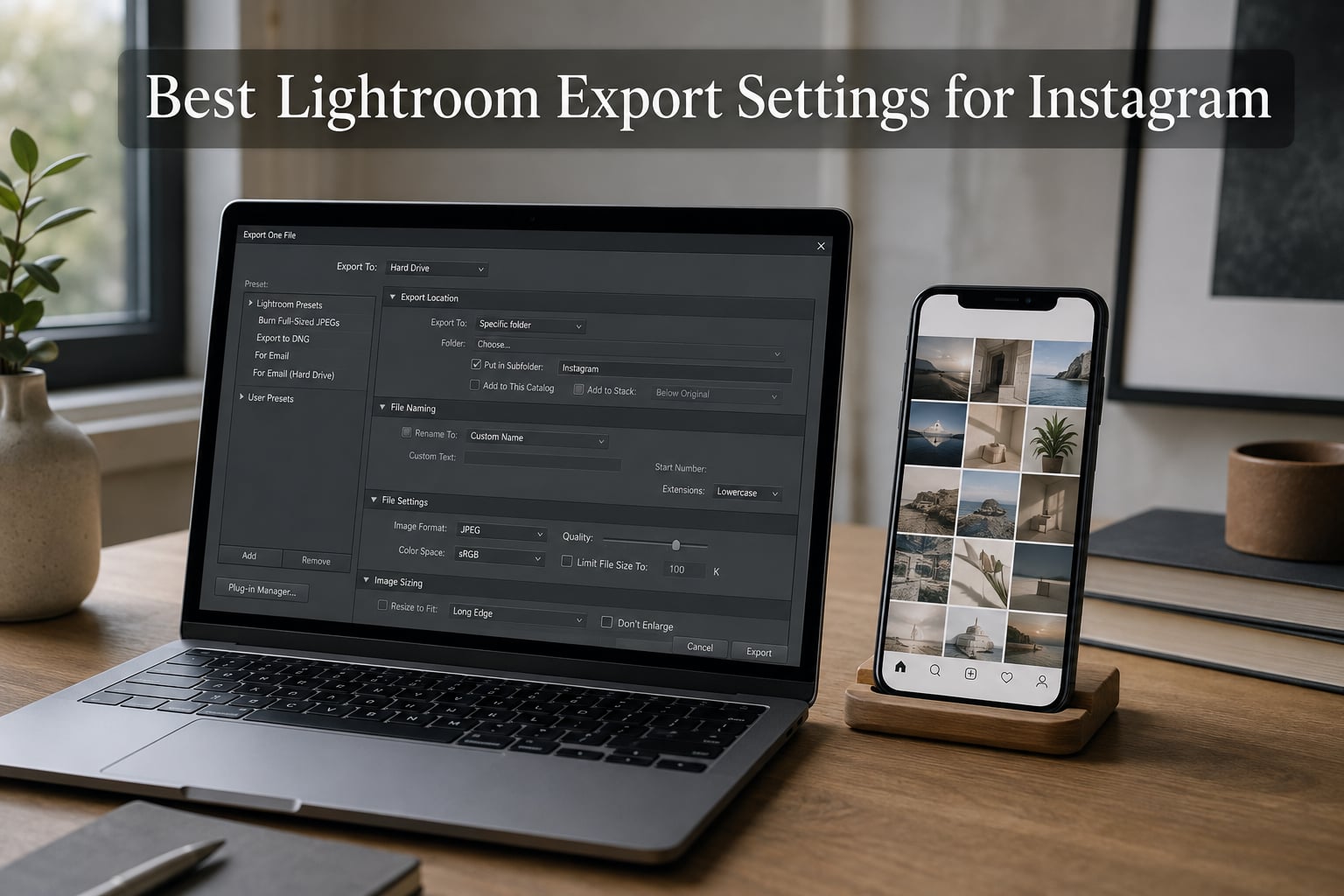
Best Lightroom Export Settings for Instagram 2026: Pro Guide
I have lost count of how many beautifully edited photos I have watched turn muddy the second they hit the…

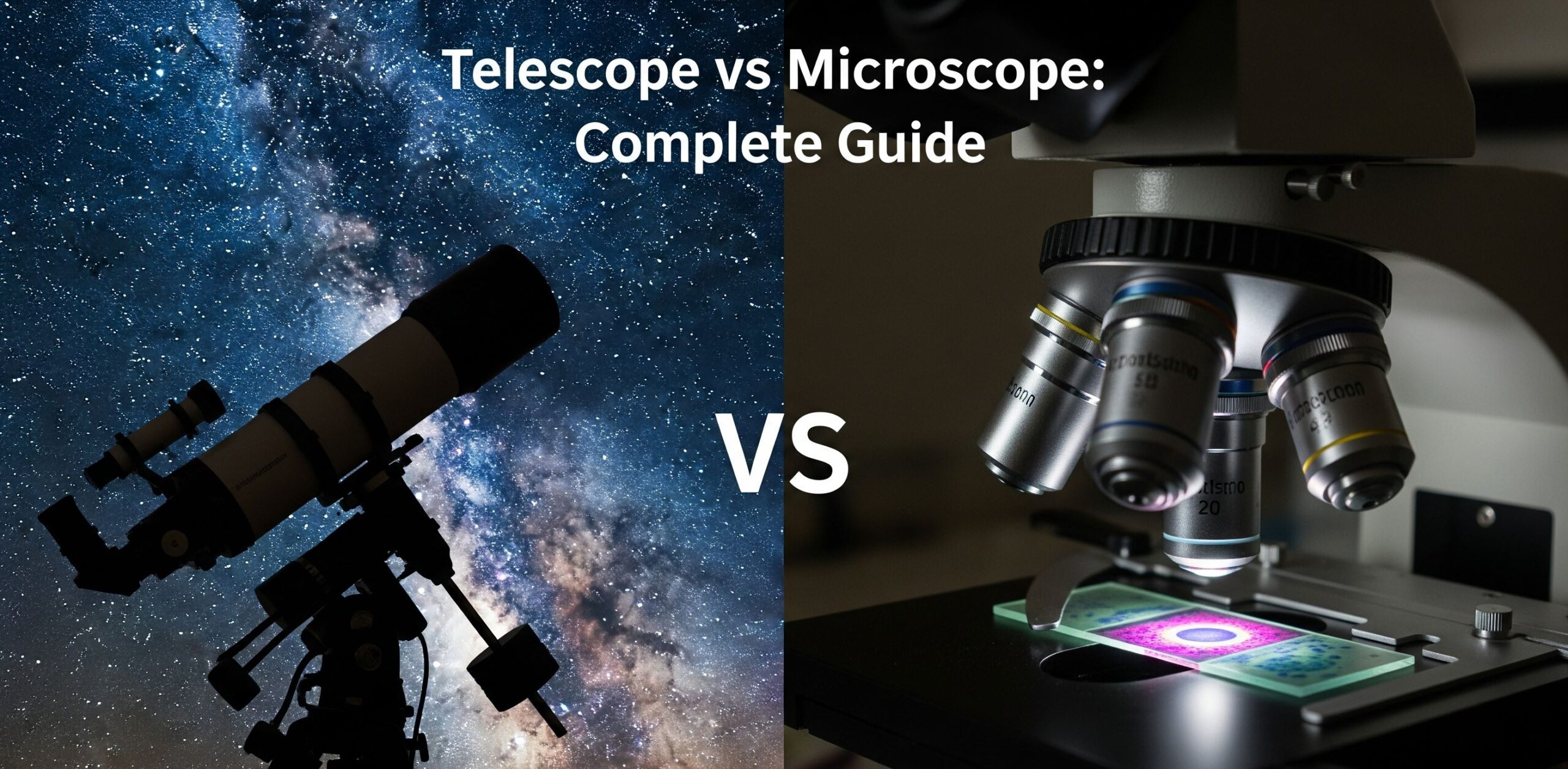
Have you ever wondered why astronomers peer into massive telescopes while biologists hunch over complex microscopes, when both instruments technically just “magnify” things? The answer lies in a fundamental divide in how these optical powerhouses manipulate light, distance, and resolution to reveal entirely different aspects of our universe. Whether you are a student trying to decide which instrument to study, a hobbyist weighing astronomy against microscopy, or simply someone with a curious mind, understanding the telescope vs microscope distinction opens up a fascinating world of scientific observation.
In 2026, this comparison remains remarkably relevant despite centuries of technological advancement. From the James Webb Space Telescope sending breathtaking images of distant galaxies to cutting-edge electron microscopes revealing atomic-scale structures, these instruments continue to push the boundaries of human perception. This guide explores every meaningful difference between telescopes and microscopes, from their optical architectures to their practical applications, ensuring you walk away with a thorough understanding of how each instrument serves its unique purpose.
Before diving into detailed explanations, here is a side-by-side overview of the most critical differences between these two optical instruments:
| Feature | Telescope | Microscope |
|---|---|---|
| Primary Purpose | View distant objects (stars, planets, galaxies) | View tiny objects (cells, bacteria, molecules) |
| Object Distance | Practically infinite (light-years away) | Extremely close (micrometers from lens) |
| Focal Length | Long (400-3000mm typical) | Short (1-40mm typical) |
| Magnification Range | 20x-500x typical | 40x-2000x typical optical |
| Objective Lens/Mirror | Large diameter, fixed position | Small diameter, multiple interchangeable |
| Eyepiece | Interchangeable for variable magnification | Usually fixed at 10x |
| Image Orientation | Usually inverted | Can be upright with additional optics |
| Light Source | Collects ambient starlight | Requires built-in illumination |
| Resolution Metric | Arc-seconds for angular resolution | Nanometers for specimen detail |
| Price Range | $100-$10,000+ | $100-$5,000+ optical, $50,000+ electron |
The most critical distinction between telescopes and microscopes lies in their optical design philosophy. While both instruments use lenses or mirrors to bend light and create magnified images, the telescope vs microscope focal length relationship fundamentally determines what each instrument can accomplish. The way each handles object distance, image formation, and light gathering creates a divide so profound that the two instruments barely share conceptual ground despite their superficial similarity.
Telescopes are engineered to observe objects at essentially infinite distances. When you point a telescope at a star or planet, the incoming light rays arrive nearly parallel, having traveled astronomical distances to reach Earth. The telescope objective lens or primary mirror, with its characteristically long focal length typically ranging from 400mm to over 3000mm, focuses these parallel rays to create a small real image at the focal plane. This image forms near the eyepiece, which then magnifies it just as a magnifying glass enlarges close objects.
The optical pathway in a refracting telescope follows this sequence: parallel starlight enters through the objective lens, refracts (bends) according to the lens shape, converges to a focal point, and produces an inverted real image. Reflecting telescopes using mirrors follow a similar principle but reflect rather than refract light, allowing for larger apertures without the chromatic aberration problems that plague lenses.
Key characteristics of telescope optics include:
Microscopes, in stark contrast, are optimized for objects positioned extremely close to the objective lens. The specimen sits just beyond the focal point of an objective lens with a very short focal length typically between 2mm and 40mm. This arrangement creates a highly magnified real image that the eyepiece further enlarges. Unlike telescopes, microscopes must contend with transmitting light through or reflecting it off specimens that are practically resting on the objective lens.
The compound microscope uses a dual magnification system. Light from an illumination source below the specimen passes through the slide and specimen, enters the objective lens, and forms an intermediate image inside the microscope tube. This intermediate image is then viewed through the eyepiece, which provides additional magnification. The tube length (the distance between objective and eyepiece) becomes a critical design parameter ensuring proper image formation.
Essential microscope optical features include:
Understanding telescope vs microscope magnification calculations reveals another fundamental difference between these instruments. The formulas look superficially similar but produce dramatically different practical results due to the distinct physics of viewing distant versus near objects.
Telescope magnification is calculated by dividing the focal length of the telescope by the focal length of the eyepiece. This angular magnification formula describes how much larger an object appears through the instrument compared to viewing it with the naked eye:
Magnification = Telescope Focal Length ÷ Eyepiece Focal Length
For example, a telescope with a 1000mm focal length using a 25mm eyepiece produces 40x magnification (1000 ÷ 25 = 40). The same telescope with a 10mm eyepiece yields 100x magnification. This straightforward relationship allows astronomers to calculate exactly what magnification they will achieve before purchasing eyepieces.
However, magnification alone does not determine observational quality. The telescope aperture limits effective magnification through diffraction. Most astronomers consider 2x the aperture diameter (in millimeters) as a reasonable maximum useful magnification under ideal atmospheric conditions. A 150mm telescope might reach 300x before image quality degrades noticeably.
Microscope magnification multiplies the objective lens magnification by the eyepiece magnification. Unlike telescopes where magnification depends on focal lengths you can vary freely, microscope magnification depends on fixed optical properties of each objective lens:
Total Magnification = Objective Magnification × Eyepiece Magnification
A microscope equipped with a 40x objective and 10x eyepiece delivers 400x total magnification (40 × 10 = 400). The standard configuration of 4x, 10x, 40x, and 100x objectives combined with a 10x eyepiece produces magnifications of 40x, 100x, 400x, and 1000x respectively.
It is worth noting that linear magnification in microscopes refers to the ratio of specimen size to image size, while angular magnification compares the angular size of the final image (as perceived through the eyepiece) to the angular size of the object viewed directly at the near point (approximately 25cm). This distinction matters because microscope magnification specifications typically refer to the angular type.
Magnification often receives the most attention, but resolution represents the more meaningful metric for optical instrument capability. Resolution describes the smallest detail an instrument can distinguish as separate rather than blurred together. Without adequate resolution, high magnification simply produces large blurry images with no additional detail.
Astronomical resolution is measured in arc-seconds, with one arc-second representing 1/3600 of a degree. The theoretical resolution of a telescope depends primarily on aperture diameter according to the Rayleigh criterion. A 100mm aperture can theoretically resolve details down to about 1.1 arc-seconds under perfect conditions. The best ground-based telescopes, even with adaptive optics compensation, rarely achieve better than 0.5 arc-seconds due to atmospheric turbulence.
The most powerful modern telescopes push these limits dramatically. According to Popular Science analysis, the best astronomical instruments can improve resolution from approximately 60 arc-seconds (naked eye limit) to around 0.01 arc-seconds, representing roughly a 6,000-fold improvement in angular resolution. Space-based telescopes like Hubble and James Webb avoid atmospheric distortion entirely, achieving their theoretical diffraction limits.
Microscope resolution operates on an entirely different scale, measured in nanometers or micrometers rather than arc-seconds. The diffraction limit for optical microscopes using visible light (around 550nm wavelength) theoretically restricts resolution to approximately 200nm. This is why you cannot use a light microscope to observe individual atoms, which are typically 0.1-0.2nm in diameter.
According to the same Popular Science comparison, the best microscopes take us from 25,000nm (visible light limit) down to 0.035nm, a 714,000-fold improvement in resolution capability. This extraordinary gain comes from electron microscopes and scanning probe techniques that bypass the diffraction limit entirely. Electron microscopes use electron wavelengths billions of times shorter than visible light photons, enabling atomic-resolution imaging.
The practical implication is clear: while telescopes achieve remarkable angular resolution for distant objects, microscopes achieve remarkable linear resolution for tiny specimens. Comparing the two numerically makes little sense since they measure completely different physical quantities at opposite ends of the size spectrum.
The distance between telescope and microscope subjects represents the most immediately obvious distinction. Telescopes excel at observing objects light-years away, while microscopes reveal details in specimens mere micrometers in size. This fundamental difference shapes every aspect of how each instrument is used, from sample preparation to observation environment.
Telescopes serve diverse purposes beyond simple stargazing, with applications spanning scientific research, education, recreation, and even commerce:
Microscopes equally span a vast range of applications, from basic education to cutting-edge research and industrial quality control:
While both instruments can utilize either lenses or mirrors, the implementation differs dramatically based on their distinct requirements. Understanding telescope vs microscope mirror usage illuminates why each instrument favors particular optical configurations.
Many telescopes, particularly those with larger apertures, employ mirrors as their primary light-gathering element. Reflecting telescopes offer several compelling advantages over lens-based refractors:
Common reflecting telescope designs include the Newtonian (using a flat secondary mirror to direct light to an eyepiece on the side), the Cassegrain (using a curved secondary to fold light back through a hole in the primary), and the Ritchey-Chrétien (a specialized design minimizingcoma for astrophotography). Each configuration offers different trade-offs in size, focal length, and accessibility for different observing goals.
Standard compound microscopes rely almost exclusively on lens-based refractive optics rather than mirrors. This preference stems from fundamental practical considerations specific to microscopy:
That said, specialized microscopes do use mirrors. Reflecting microscopes employ objectives with all-mirror optics, useful for ultraviolet and infrared work where lens materials absorb these wavelengths. However, these remain niche instruments rather than the mainstream compound microscopes found in laboratories worldwide.
Traditional optical microscopes face a fundamental barrier: the diffraction limit of visible light. To observe structures smaller than approximately 200 nanometers, scientists must turn to techniques that do not rely on photons. Electron microscopes use streams of electrons rather than light to achieve this goal.
Electron microscopes function by accelerating electrons through a voltage difference, producing wavelengths millions of times shorter than visible light. This enables resolution down to the atomic level, approximately 0.05 nanometers. Transmission electron microscopes (TEM) send electrons through ultra-thin specimens, while scanning electron microscopes (SEM) raster electrons across surfaces to create detailed three-dimensional imagery.
The tradeoff involves significant practical constraints. Electron microscopes require vacuum environments (preventing observation of living specimens), extensive sample preparation, substantial infrastructure, and operational expertise. Costs range from $50,000 for basic laboratory SEM systems to several million dollars for advanced TEM instruments capable of atomic-resolution imaging.
Understanding how telescopes and microscopes evolved provides appreciation for modern capabilities and the remarkable achievements of early scientists working with far more primitive instruments.
When Galileo turned his crude telescope toward the heavens in 1609, he immediately revolutionized astronomy despite an instrument that would seem laughably inadequate by modern standards. His 20x magnification spyglass revealed lunar craters, Jupiter’s moons, and Venus phases, supporting the Copernican heliocentric model. The Yerkes Observatory’s 40-inch refractor, completed in 1897, remains the largest lens telescope ever built, representing the pinnacle of refractor technology.
Microscopy developed somewhat later, with Robert Hooke’s 1665 “Micrographia” providing stunning illustrations of insects, plants, and other specimens at magnifications his contemporaries found unbelievable. Anton van Leeuwenhoek, a Dutch draper, constructed simple but remarkably effective microscopes in the 1670s, becoming the first to observe bacteria and sperm cells. His single-lens microscopes achieved up to 275x magnification, rivalling compound microscopes of later centuries.
When deciding between these instruments, practical factors often matter more than specifications. Reddit discussions among hobbyists reveal consistent themes about real-world challenges potential buyers rarely anticipate.
Be aware of significant practical considerations before purchasing. Light pollution severely impacts telescope usability in urban and suburban environments. Many Reddit users report frustration that their expensive telescopes see limited use because nearby streetlights and urban glow prevent meaningful observation. Additionally, the best viewing typically occurs between 10pm and 4am when planets and deep-sky objects position favorably, creating scheduling challenges for those with busy daytime schedules.
Microscopes offer remarkable practicality advantages for hobbyists. They work any time of day without waiting for darkness, require no special weather conditions, and can be used in any room with a flat surface. Sample preparation represents the primary skill development area, but this barrier remains lower than the sky-knowledge requirement for productive telescope use.
In 2026, both telescopes and microscopes incorporate sophisticated technology that transforms them from simple optical devices into comprehensive observation platforms. The democratization of advanced features means amateur enthusiasts now access capabilities previously available only to professional institutions.
Contemporary telescopes integrate electronics and computing in ways that would astonish early astronomers. These technological advances make stargazing accessible to people who lack decades of sky-navigating experience:
Similarly, modern microscopes incorporate digital technology that revolutionizes specimen observation, documentation, and analysis:
Both instruments require appropriate maintenance to perform optimally, but their care regimes differ substantially based on design complexity and operating environment.
Understanding price ranges and value propositions helps make informed purchasing decisions. Both instrument families offer options spanning orders of magnitude in cost, with meaningful capability differences at each tier.
Astronomy hobbyists consistently advise that aperture matters more than fancy features for visual observation. A simple 10-inch Dobsonian produces dramatically better views than an expensive 4-inch apochromat, particularly for deep-sky objects requiring light-gathering ability.
For microscopy, optics quality significantly impacts image quality at every magnification level. Professional objectives costing hundreds each produce images measurably superior to budget alternatives, making microscopy one area where higher investment genuinely delivers proportional capability improvements.
Several persistent myths mislead potential buyers and curious observers. Addressing these misconceptions helps clarify what these instruments can and cannot accomplish:
As we move through 2026, both astronomical and microscopic imaging continue evolving at remarkable pace, with innovations that promise to reshape observation capabilities across both fields.
Astronomical observation benefits from unprecedented technological integration and massive new instruments coming online:
Microscopy similarly advances through computational techniques and novel imaging modalities:
The telescope and microscope decision ultimately aligns with your specific interests, practical constraints, and what brings you satisfaction in observation. Neither instrument ranks as inherently superior; each opens an entirely different window on our universe.
Consider these practical factors when making your decision:
Perhaps the most honest answer to “which should I choose?” comes from hobbyists who eventually own both. Many astronomers eventually explore microscopy to fill cloudy nights, while microscopy enthusiasts discover astronomy provides daytime observation opportunities. The instruments complement rather than compete, addressing different scales and phenomena that together cover a remarkable range of natural observation.
The primary difference lies in object distance and purpose. Telescopes view distant objects like stars and planets at effectively infinite distances, using large apertures to gather parallel light rays. Microscopes view extremely close specimens, often just micrometers from the objective lens, requiring specialized optics for near-field imaging.
Power is not directly comparable because telescopes and microscopes measure different things. Telescopes provide angular magnification for distant objects measured in arc-seconds, while microscopes provide linear magnification for specimens measured in nanometers. Electron microscopes achieve far higher resolution than any telescope, but cannot observe celestial objects, and vice versa.
No, microscopes cannot be converted into telescopes or used to view distant objects. Their optical systems assume near-field observation with specimen illumination from below. Microscopes cannot focus on distant parallel light because their objectives have too short focal lengths and lack the light-gathering aperture required.
Microscopes often prove more practical for beginners because they work anytime without special conditions, require less specialized knowledge to operate effectively, and provide immediate gratification through specimen observation. Telescopes offer unmatched wonder but require dark skies, patience, and sky knowledge that may frustrate casual hobbyists.
Telescopes need large apertures primarily to increase light-gathering ability for faint celestial objects and to improve angular resolution according to the Rayleigh criterion. A 200mm telescope can resolve details down to about 0.6 arc-seconds. Microscopes achieve their resolution through high numerical aperture optics working at extremely short distances, not through large aperture diameters.
Understanding the telescope vs microscope differences reveals how these instruments serve complementary rather than competing roles in scientific observation and personal discovery. Telescopes expand our vision outward to distant galaxies, ancient light, and the large-scale structure of the cosmos. Microscopes reveal the intricate details of cells, molecules, and the fundamental building blocks of matter. Together, they span an extraordinary range of the size spectrum, from subatomic particles to superclusters of galaxies.
Both instruments have contributed immeasurably to human knowledge. Telescopes revealed that Earth orbits the Sun, that the Milky Way contains billions of stars, and that the universe expands from an initial Big Bang. Microscopes uncovered microorganisms causing disease, revealed the cellular basis of life, and continues illuminating the molecular machinery underlying biology. Neither instrument merely magnifies; both transform how we understand reality itself.
In 2026 and beyond, these instruments will continue evolving with new technologies that push resolution, sensitivity, and accessibility further than their inventors could have imagined. Whether you choose to explore the cosmos through a telescope or delve into the microscopic world through a microscope, both paths offer endless opportunities for learning, discovery, and wonder. The universe contains mysteries at every scale, and these remarkable instruments provide the keys to unlock secrets from the biggest structures to the smallest particles.