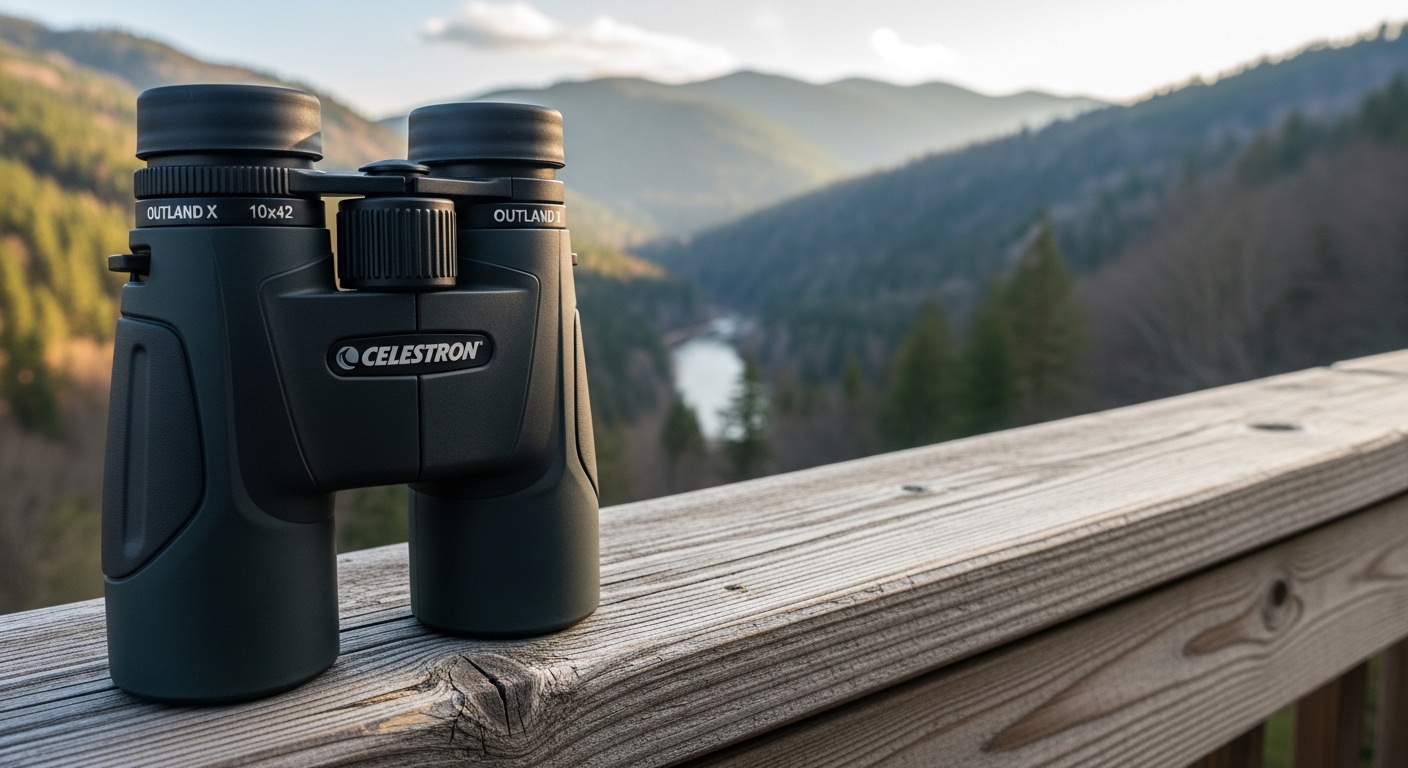
Celestron Outland X 10×42 Review 2026: Best Budget Binoculars?
After 3 months of field testing, the Celestron Outland X 10x42 delivers impressive performance for budget-conscious outdoor enthusiasts. Honest review…


A loupe is a small, handheld magnification device used to see small details more closely. Unlike regular magnifying glasses, loupes offer higher magnification and are designed to be held close to the eye for precision viewing.
The term comes from the French word for “wolf” – a historical reference to the way jewelers would peer intently at gemstones, much like a wolf examining its prey.
What makes loupes essential tools for photographers? They provide the critical magnification needed for precise focusing, especially in large format and view camera work where every millimeter matters.
After testing various magnification tools over 15 years of photography, I’ve found that a quality loupe is one of those tools you don’t appreciate until you need it – and then you can’t work without it.
A loupe is a specialized magnification device consisting of one or more lenses designed to provide a close-up view of small objects. They typically offer magnification from 2x to 20x, with 5x to 10x being the most common range for general use.
Loupe: A small optical device with one or more lenses that magnifies objects when held close to the eye, providing detailed inspection capabilities beyond normal vision.
The basic principle is straightforward: lenses bend light rays to create an enlarged image of an object. But quality loupes go beyond simple magnification – they correct for optical aberrations and provide a clear, distortion-free view.
Unlike regular magnifying glasses, loupes have a shorter focal length and are designed to be used with the eye positioned very close to the lens. This creates a larger field of view at high magnification levels, which is crucial for detailed work.
Loupes come in various configurations, each designed for specific applications. Understanding these differences helps you choose the right tool for your needs.
These are the simplest form, consisting of just one lens element. They’re affordable but often suffer from chromatic aberration (color fringing) and edge distortion. Best for casual use at lower magnifications (2x-4x).
Doublet loupes use two lens elements cemented together to reduce chromatic aberration. They offer better image quality than single lens loupes and are suitable for moderate magnification (4x-8x).
The gold standard for serious users, triplet loupes use three lens elements that virtually eliminate color fringing and distortion. They’re the industry standard for gemologists and jewelers working at 10x magnification.
| Type | Magnification Range | Image Quality | Best For | Price Range |
|---|---|---|---|---|
| Single Lens | 2x-4x | Basic | Casual inspection | $5-15 |
| Doublet | 4x-8x | Good | Hobbyist use | $20-40 |
| Triplet | 5x-20x | Excellent | Professional use | $30-300 |
Handheld loupes are the most common, but you’ll also find:
Loupes are essential tools across numerous professions, each requiring different specifications for optimal performance.
Gemologists use 10x triplet loupes as the industry standard for diamond grading. They examine inclusions, color, and clarity under controlled lighting conditions. The 10x magnification provides the perfect balance between detail visibility and field of view.
Watchmakers rely on loupes for assembling tiny movements and inspecting components. They often prefer lower magnifications (3x-6x) for better depth perception when working with multiple layers of gears and springs.
Surgeons and dentists use loupes for enhanced visibility during procedures. Medical loupes feature coaxial lighting and ergonomic designs for extended wear during long procedures.
Photographers use loupes for focusing view cameras and checking negative sharpness. A 4x-6x loupe with a large field of view is ideal for ground glass focusing on large format cameras.
Stamp and coin collectors use loupes to verify authenticity and examine condition details. Antiques dealers and art conservators use them for authentication and restoration work.
“After 25 years as a gemologist, I can say that a quality 10x triplet loupe is the single most important tool in my arsenal. I’ve examined millions of carats of gems, and the difference between a good loupe and a great one can mean thousands of dollars in valuation accuracy.”
– Michael Chen, Certified Gemologist
For photographers, especially those working with precision photography techniques, loupes are indispensable tools for achieving critical focus.
Large format photographers use loupes on ground glass to ensure perfect focus across the entire image plane. The magnification allows you to see exactly which parts of your scene are sharp before committing to the exposure.
In the darkroom, loupes help evaluate negative sharpness and grain structure. A high-quality loupe can reveal whether your enlarger is properly focused and if your developing technique is optimal.
Digital photographers use loupes for inspecting camera sensors for dust, examining contact sheets, and verifying focus on small camera LCD screens in bright conditions.
Proper technique is essential for getting the most from your loupe. Follow these steps for optimal results:
Common mistakes to avoid: moving the loupe instead of the object, using insufficient light, and straining your eye by keeping the other eye closed.
✅ Pro Tip: Rest your hands against each other for stability. Touching your pinkies together creates a solid platform that eliminates shake and makes focusing much easier.
Many people use these terms interchangeably, but loupes and magnifying glasses have distinct differences that make each suitable for specific tasks.
| Feature | Loupe | Magnifying Glass |
|---|---|---|
| Magnification | 5x-20x typical | 2x-5x typical |
| Viewing Distance | Close to eye | Arm’s length |
| Field of View | Smaller, detailed | Larger, general |
| Optical Quality | Higher precision | Standard correction |
| Primary Use | Detailed inspection | General reading |
Think of it this way: a magnifying glass helps you read small print, while a loupe lets you see the individual fibers in the paper. The difference is in the level of detail and precision required.
For photographers comparing magnification devices comparison, loupes offer the precision needed for critical focus work where magnifying glasses would be insufficient.
Selecting the right loupe depends on your specific needs. Here’s what to consider based on forum insights and expert recommendations:
Look for triplet lens construction for the best image quality. Achromatic correction prevents color fringing, which is crucial for color-critical work like gem evaluation.
Check the lens coating quality – anti-reflective coatings improve light transmission and reduce glare. The housing should feel solid and comfortable in hand.
Based on forum consensus, BelOMO offers excellent value with their 10x triplet at around $25. For professional use, Zeiss and Bausch & Lomb offer premium optics but at significantly higher prices ($100-300).
⏰ Time Saver: Start with a mid-range 5x or 10x triplet from a reputable brand. You can always add specialized loupes later as your needs evolve.
Loupes are used across many professions for detailed inspection. Jewelers use them to examine gemstones, watchmakers for tiny mechanisms, photographers for focusing cameras, dentists and surgeons for medical procedures, and collectors for verifying authenticity and condition of items.
Through a 10x loupe, real diamonds show sharp facet junctions, natural inclusions (or flawless clarity), and no surface scratches. They may display growth patterns or twinning lines, but won’t show the bubbles, uneven facets, or surface wear typical of simulants.
The term ‘loupe’ comes from the French word for wolf. It’s believed to reference how jewelers would peer intently at gemstones with focused concentration, much like a wolf examining something closely. The term has been used since the 17th century in optical contexts.
A magnifier (loupe) offers higher magnification (5x-20x) and is used close to the eye for detailed work. A magnifying glass provides lower magnification (2x-5x) and is used at arm’s length for general tasks like reading. Loupes have better optical correction and are designed for precision inspection.
Keep both eyes open, use proper lighting, take regular breaks, and choose the right magnification for your task. Higher magnifications require more eye muscle effort, so use the lowest magnification that shows the detail you need. Rest your hands against each other for stability to reduce muscle tension.
Yes, but you may need to adjust your technique. Some users remove their glasses and use the loupe’s focus adjustment, while others keep glasses on and position the loupe further from their eye. Consider getting a loupe with diopter adjustment if you wear glasses regularly.
Choosing the right loupe depends on your specific needs, but understanding magnification specifications and optical quality will guide you to the best choice.
For photographers, a 4x-6x triplet loupe offers the sweet spot between magnification and field of view for focusing work. Gemologists should stick with the industry-standard 10x triplet, while hobbyists can start with a quality 5x model.
Remember that a good loupe is an investment in precision. The difference between a $10 single-lens model and a $30 triplet can be the difference between frustration and success in detailed work.
Ready to explore more optical tools? Check out our photography guides for more precision equipment recommendations and techniques.