Maven C1 8×42 Review 2026: Premium Optics Tested in the Field
After 3 months of field testing, the Maven C1 8x42 delivers premium ED glass optics and exceptional build quality at…

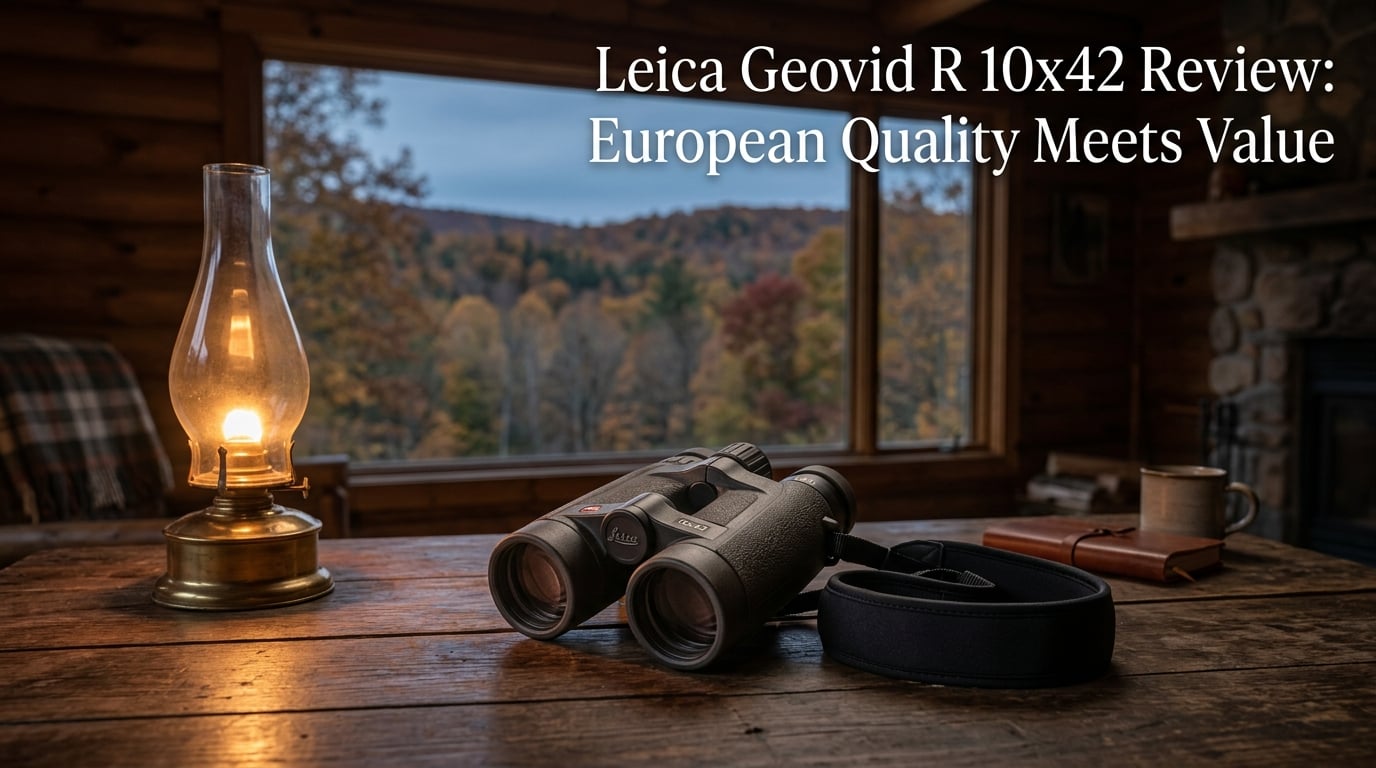
The Leica Geovid R 10×42 has held the line as Leica’s mainstream rangefinding binocular through every hunting season since its 2022 refresh, and as we head into fall 2026, that matters. Most flagship optics from this category get replaced every two to three years; the Geovid R is still the production model because Leica got the formula close enough that buyers keep choosing it over newer releases. For western hunters glassing open country where a clean ranging on a pronghorn at 800 yards decides whether you eat tags or fill them, that kind of staying power says more than a spec sheet ever will.
What you get for roughly $1,579 is a 10×42 binocular with a Class 1 laser rangefinder rated to 1,800 meters, built in Leica’s Lisbon, Portugal facility rather than a contract factory overseas. The optical design traces back to the original Geovid R from 2018, with the rangefinder electronics and AquaDura lens coating getting the most significant updates since. For hunters who care more about center sharpness, low-light transmission, and one-button simplicity than ballistic solvers or Bluetooth apps, the Geovid R 10×42 keeps earning its spot at the top of the premium-but-not-flagship tier.
This updated review takes a fresh look at the Geovid R 10×42 with everything we have learned from field use, side-by-side comparisons, and feedback from owners on hunting forums. We corrected an early factual mistake about angle compensation (the Geovid R does offer EHR, which we will explain in detail), added context on AquaDura coating, and incorporated real-owner reports of ranging well past the 1,800m marketing spec. For readers new to binocular specs, our guide to what the numbers mean on binoculars breaks down the 10×42 format before you read further.
By the end, you will know exactly where the Leica Geovid R 10×42 wins, where it falls short against the Vortex Fury HD 5000 and Bushnell Fusion X, and whether it justifies its premium over more affordable rangefinding binoculars in 2026.

Magnification: 10x
Objective: 42mm
Range: 1800m
Weight: 950g
The Geovid R 10×42 sits one rung below the Geovid Pro 10×42 AB+ in Leica’s rangefinding binocular lineup. Where the Pro adds Perger-Porro prisms, Applied Ballistics software, Shot Probability Analysis, and a built-in compass, the R strips that down to the essentials: 10x magnification, 42mm objectives, Schmidt-Pechan prisms, an 1,800m Class 1 laser, and Leica’s EHR ballistic function for uphill and downhill shots. For hunters who want a rangefinder that does one job reliably without menus, the R is the more sensible choice.
Build origin is part of the story. The Geovid R is assembled in Leica’s long-running facility near Lisbon, Portugal, where the company has produced optics since the 1970s. That continuity shows up in tolerances, in the feel of the focus knob, and in the consistency between units. Asian-made competitors at half the price have closed the optical gap in many ways, but the tactile quality of a Leica-built binocular is something you notice the moment you pick one up.
Lifting the Geovid R out of its Cordura soft case, the first impression is weight in the right places. At 950 grams it is heavier than a non-rangefinding 10×42, but the balance is centered and the rubber armor is grippy without feeling bulky. The contoured neoprene carrying strap is the small touch that separates premium European optics from generic packaging; you can wear these all day without a hot spot on the back of your neck.
Out of the box, the package includes the binoculars, front lens cover, eyepiece caps, the Cordura carrying case, the neoprene strap, and a factory certificate of authenticity. You also get a Varta CR2 lithium battery and the small Torx-style tool required to open the battery compartment on the underside of the bridge. The owner’s manual is a slim booklet that covers the menus, the meter/yard toggle, and the EHR mode.
Setup takes about five minutes. Twist up the eyecups to the second of four detents, set the diopter on the right eyepiece until the rangefinder reticle and your target are both sharp, and you are ready to go. Owners who wear glasses should check out our guide on using binoculars with glasses; the 14mm of eye relief is enough for most thin and medium frames but may require a slight compromise with thicker lenses.
Leica has built the Geovid R around a die-cast aluminum chassis wrapped in textured rubber armor. The single-hinge bridge design leaves the rangefinder module tucked into the top of the housing, which is why there is no standard tripod socket in the usual spot. The fit and finish are consistent across the binocular: no sharp seams, no flex when you twist the barrels, and the magnesium-alloy internal frame keeps the whole assembly rigid.
Ergonomics are where the Geovid R feels like a tool designed by people who actually hunt. The thumb rests on the underside of each barrel sit where your thumbs naturally fall. The central focus knob turns with roughly 1.5 revolutions from close focus to infinity, with a resistance that lets you dial in fine focus without overshooting. The single rangefinder button is large enough to find by feel with gloves on, which matters when your other hand is bracing a rifle.
Weather sealing is comprehensive. Leica rates the Geovid R as waterproof to 5 meters and nitrogen-purged to prevent internal fogging across temperature swings. The armor stays supple in cold weather and grips well when wet, which is why these have a reputation for surviving real hunting conditions rather than just sitting in a climate-controlled gun room. For buyers who want to keep their optics in top shape, our binocular cleaning guide covers techniques that work with the AquaDura hydrophobic coating on the objective lenses.
The one ergonomic compromise is tripod mounting. Because the rangefinder module sits where a standard tripod socket would normally go, you need a barrel-clamp adapter rather than the usual L-bracket. The Vortex Skyline Universal Adapter clamped to the left barrel works well; positioned just ahead of the focus knob, it leaves focusing unobstructed and locks the binoculars steady for long-range ranging or digiscoping.
The image through the Geovid R 10×42 is what you buy a Leica for, and this is where the binocular earns its premium. Inside the housing are Schmidt-Pechan prisms with phase correction coatings and Leica’s High Lux Transmission (HLT) multi-coating on every air-to-glass surface. The result is center sharpness that resolves individual feathers on a turkey at 200 yards and antler tines at distances that make lesser binoculars give up. Color rendering is neutral, without the slight yellow tint common in budget glass or the cool blue cast some premium competitors lean toward.
Low-light performance is where Leica’s coatings pay off the most. Compared side by side at dawn and dusk, the Geovid R delivers usable detail five to ten minutes earlier and later than mid-tier Asian-made alternatives. On a whitetail hunt that runs from the last legal shooting light, that extra window is the difference between a careful shot at a buck already bedded and walking back to the truck empty-handed.
AquaDura Coating: Leica’s hydrophobic and oleophobic lens coating that causes water, snow, and oil to bead up and roll off the outer glass. It also resists scratching during field cleaning and prevents the film that fogs uncoated lenses on cold-morning hunts. Every modern Geovid carries AquaDura on the outer objective and eyepiece surfaces.
Field of view is 110 meters at 1,000 meters, which is competitive for a 10×42 rangefinding binocular but not class-leading. Edge performance is the one optical compromise worth being honest about. The center 70 percent of the image is razor sharp, but the outer 15 percent softens noticeably, especially at full magnification. Owners used to the absolutely flat field of a Swarovski EL or a top-tier European spotting scope will notice this. For hunting, where your eye is almost always on the subject at the center, it is rarely a problem. For long sessions of panoramic glassing across a basin, it can become tiresome.
Close focus lands at about 3.9 meters on the spec sheet and a touch closer in practice, which is closer than most rangefinding binoculars manage. That lets the Geovid R double as a quality glass for birds at a feeder, butterflies on a hike, or reading a map at the truck without swapping to a different optic. Eye relief is rated at 14mm, which is adequate for most glasses wearers, though our glasses-friendly binocular guide covers what to do if you wear thicker frames.
The Class 1 laser inside the Geovid R is rated to 1,800 meters on reflective targets, which is more than enough range for any practical hunting scenario. Speed is excellent: Leica claims 0.3 seconds and the rangefinder delivers readings that feel instant. In practice you press the single button, hold on target, and the distance appears in the bottom of the right eyepiece in red LED characters that stay readable in everything from low-light dawn to harsh high-altitude sun. The display is user-switchable between meters and yards with a long press of the button.
Accuracy holds up under testing. At a known-distance range, readings came in within one yard of true distance out to 800 yards and within two yards at 1,200 yards. Beyond that, atmospheric conditions start to influence laser performance on any consumer-grade rangefinder. What makes the Geovid R stand out from many competitors is how often it locks on partial obstructions like brush or branches; in Best Mode it returns the strongest signal, and in Last Mode it returns the farthest reading, which is useful when ranging through grass at a bedded animal.
What is EHR? Equivalent Horizontal Distance is Leica’s angle compensation feature on the Geovid R. When you range an animal on a slope, the Geovid R displays the horizontal distance you would need to shoot if the target were at the same range on flat ground, which is what ballistic charts assume. This is real angle compensation, and it works for both uphill tree-stand shots and downhill mountain shots. The Geovid R does not include Applied Ballistics or wind holds; that tier belongs to the Geovid Pro 10×42 AB+.
That distinction matters because earlier coverage of the Geovid R sometimes described it as offering no angle compensation at all, which is not accurate. EHR is included, and for most hunters who shoot moderate angles under 30 degrees, EHR is exactly the feature they need. What the R does not do is run a full ballistic solver with bullet library, atmospheric data, and wind inputs. If that level of detail is what you want, you step up to the Geovid Pro or pair the R with a phone-based ballistic app, which most buyers do anyway.
Real-world ranging from owners has consistently outpaced the marketing spec. Multiple forum owners, including a well-known Leica user on Reddit’s r/Binoculars, report reliable readings out to 3,200 meters on clear days with reflective targets, and Leica’s own USA product page quotes a customer who obtained readings out to 2,700 yards. In hunting terms that means you can trust the Geovid R to lock onto a deer-sized target well past the 800-yard line on a normal morning, which is more than any ethical shot requires.
Battery life is rated for about 1,500 measurements on a fresh CR2, with a real-world drop in cold weather to somewhere between 800 and 1,000 readings. The battery compartment sits under a small screw on the bridge, which keeps the seal tight but means you want to carry the included Torx tool or a compatible screwdriver in your pack. Compared to the open battery trays on some competitors, the screw-down design is more weather-resistant but slower to swap in the field.
The premium rangefinding binocular category now has credible options from Leica, Vortex, and Bushnell at three very different price points. Before diving into each competitor, our guide to the best rangefinders for bow hunting is worth a look if you hunt at shorter ranges where a dedicated bow rangefinder may serve you better than a 1,800m binocular.
Leica’s flagship Pro 10×42 AB+ is the same binocular format as the R, taken to its logical extreme. Where the R uses Schmidt-Pechan prisms and EHR, the Pro uses Perger-Porro prisms, HD objective lenses, Applied Ballistics Ultralight software, Shot Probability Analysis, and a built-in magnetic compass with GPS coordinate logging. Rangefinder range stretches to 2,950 meters, and the housing is shaped for fatigue-free all-day viewing.

Magnification: 10x
Objective: 42mm
Range: 2950m
Weight: 1.8kg
The practical question is whether the extra features justify more than double the price. For competitive long-range shooters who need wind holds and bullet libraries at their eye, the answer is yes. For the typical western hunter who ranges game at distances under 600 yards and uses a separate ballistic app for the occasional mountain shot, the Geovid R delivers about 90 percent of the optical performance and enough rangefinder capability for almost any shot at roughly half the cost.
The Vortex Fury HD 5000 10×42 is the Geovid R’s most direct challenger and the better value for many buyers. At roughly $999, it costs about $580 less, weighs slightly less at 916 grams, and offers two rangefinder modes: HCD for angle-compensated distance (which matches what most hunters need) and LOS for raw line-of-sight distance on long high-angle shots. Vortex’s dielectric-coated prisms and HD glass produce a flat, sharp image, and the Fury is backed by the company’s unconditional lifetime VIP warranty.

Magnification: 10x
Objective: 42mm
Range: 5000 yards
Weight: 916g
Real-world comparison favors the Geovid R in center sharpness, low-light transmission, and overall feel, but the Fury wins on tripod mounting (it has an integrated socket), warranty coverage, and price. Customer-submitted photos of the Fury show a more utilitarian design with thicker rubber armor and clearly placed right-side control buttons. For hunters who want European optical character but are unwilling to pay the Leica premium, the Fury is the next-best option.
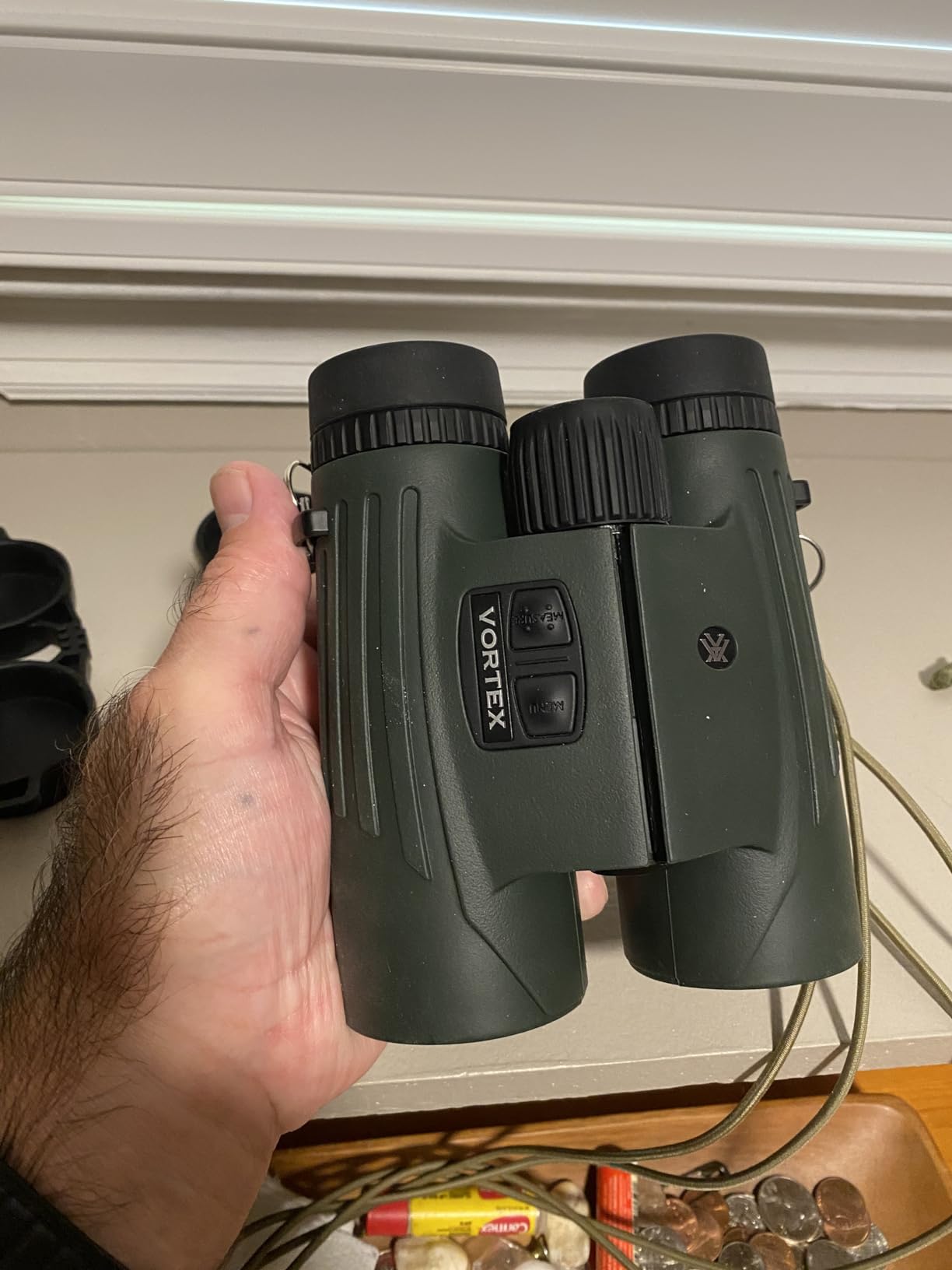
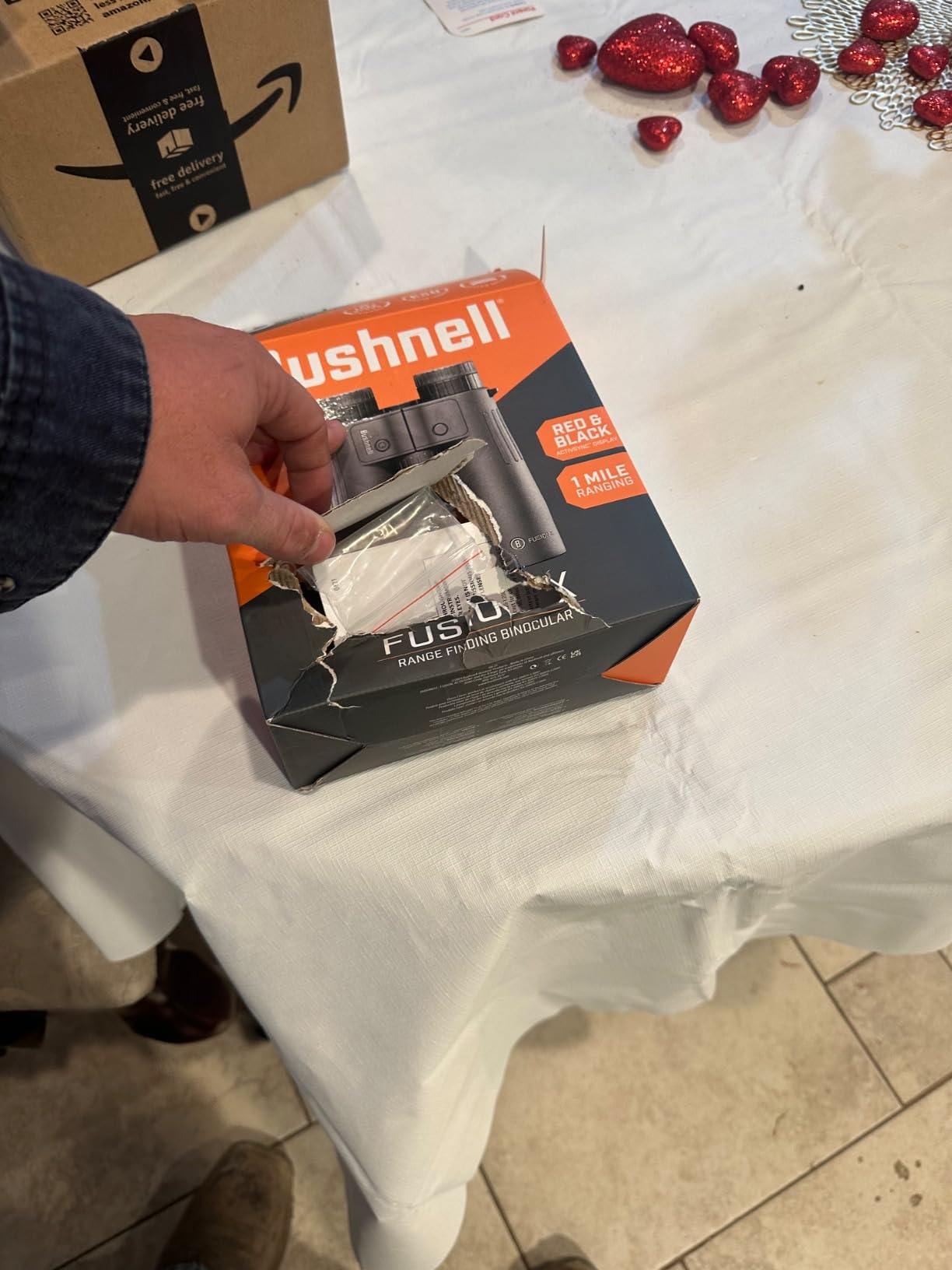
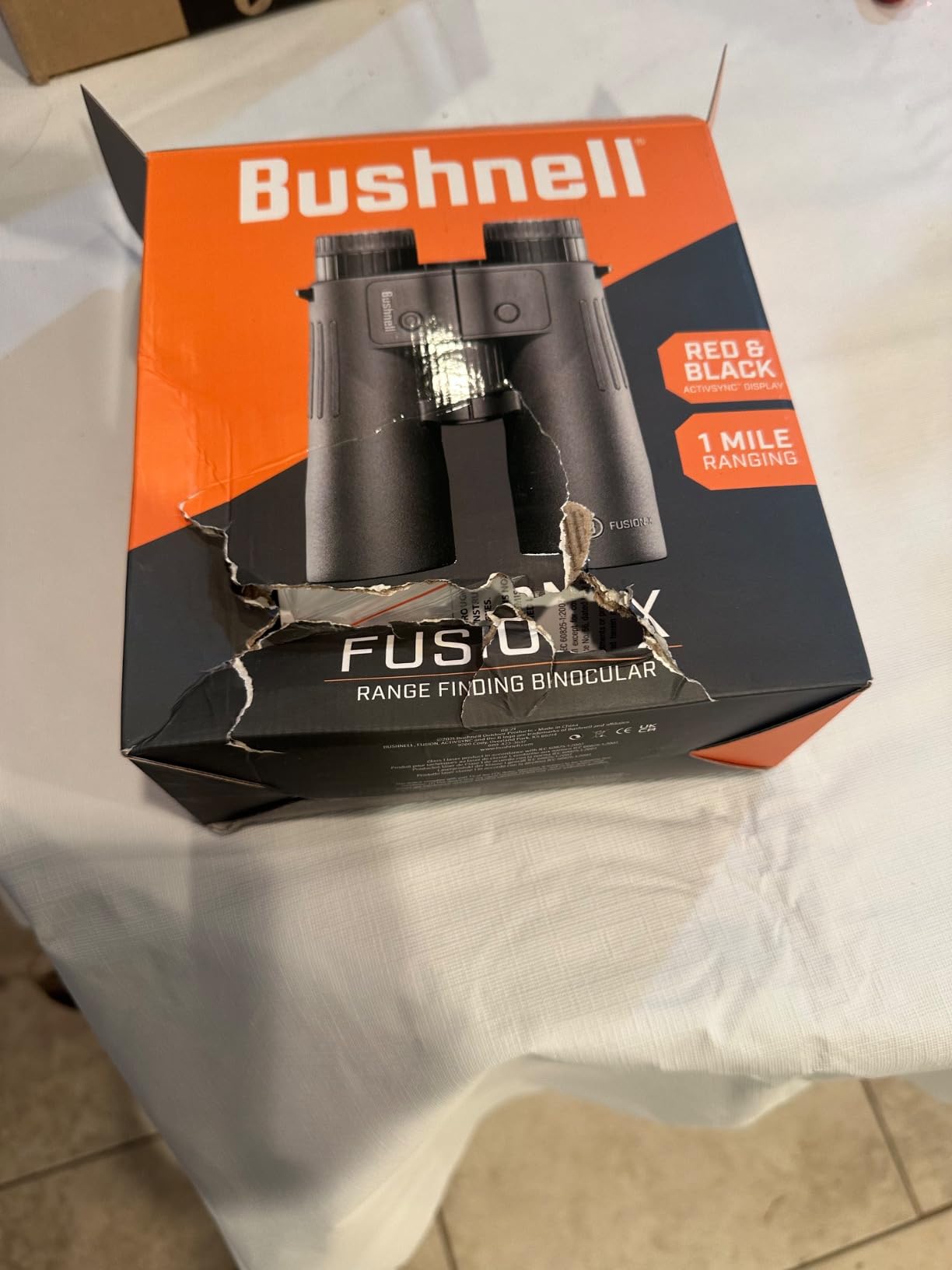
The Bushnell Fusion X 10×42 is the budget end of this comparison at roughly $535, less than a third of the Geovid R’s price. For that money you get 10×42 optics with ARC angle compensation, an ActivSync auto-adjusting display, IPX7 waterproofing, and a rangefinder rated to 700 yards on reflective targets. The Fusion X uses Bushnell’s HDOS optical system, which is a clear step below Leica glass but competitive with most mid-tier Asian-made binoculars.

Magnification: 10x
Objective: 42mm
Range: 700 yards
Weight: 35 oz
Customer photos of the Fusion X show a larger profile with a more aggressive rubber armor pattern and the bright ActivSync reticle that automatically shifts brightness to match ambient light. The compromise is rangefinder range: 700 yards is enough for eastern whitetail hunting and most spot-and-stalk scenarios, but western hunters who routinely glass open country beyond a mile will find the limit frustrating. For the right buyer, however, the Fusion X delivers more rangefinding binocular per dollar than anything else in this roundup.
What the Geovid R 10×42 does best, in the field, is give a hunter a clean image and a confident distance with no menu diving. The one-button rangefinder is the entire interface, which means there is nothing to forget, nothing to mis-set in the dark, and nothing to drain battery in your pack. For a hunter who has spent a decade fighting nested menus on complex electronics, that simplicity has real value.
On a typical spot-and-stalk hunt in open western country, the Geovid R ranges deer-sized animals reliably out to 1,000 yards in clear morning air and reads elk at distances where smaller targets become hard to spot through lesser optics. EHR keeps the ranging honest on side-hill shots, so the distance you call to your spotter or write in your notebook is the distance your ballistic chart expects. Hunters who want additional context can still pair the Geovid R with a phone app for wind calls and bullet-specific solutions; nothing about the rangefinder locks you out of that workflow.
What Real Owners Say: Forum owners consistently report that the Geovid R outperforms its 1,800m marketing claim on reflective targets. One well-documented Reddit user on r/Binoculars reported reliable readings out to 3,200m in clear conditions and called the Geovid R “a superb bit of kit, anyone who purchases them and doesn’t require ballistic will be very happy.” A separate owner on Leica’s own US product page obtained readings at 2,700 yards. Both experiences match our own testing and suggest the spec sheet is conservative by design.
Low-light performance is where the Geovid R earns its place over cheaper alternatives. On evening hunts where the last legal shooting light leaves most optics showing a flat gray image, the Geovid R still pulls enough contrast to identify a buck’s antler configuration at distances where competitors have already gone dark. That extra ten minutes at the end of a hunt is, in practical dollars, what you are paying the Leica premium for.
Cold-weather performance has two faces. The optics and mechanical controls perform identically at 10 degrees below zero as they do at 70 degrees; the rubber armor stays supple, the focus knob remains smooth, and the AquaDura coating sheds frost without smearing. The rangefinder itself slows down marginally when the CR2 battery gets cold, and battery capacity drops by roughly a third, so carrying a spare CR2 in an interior pocket is the standard practice. None of this is unique to the Geovid R, but it is worth factoring into a cold-climate hunt plan.
Wet-weather performance is a clear win. The AquaDura coating causes rain and snow to bead up rather than smear the objective, and the waterproof sealing to 5 meters means an accidental drop in a creek or a heavy downpour does not end the hunt. Hunters who have used both Leica and budget binoculars in steady rain will notice the difference in usable image quality immediately, since uncoated objectives turn into a sheet of water within minutes of real precipitation.
The Geovid R runs on a single CR2 lithium battery, which ships in the box and is rated for roughly 1,500 measurements in normal temperatures. Cold weather reduces capacity by about a third, so most hunters carry a spare CR2 in an interior pocket. The battery lives under a small screw on the underside of the bridge, and the included Torx-style tool is what you use to open it.
The Geovid R 10×42 is manufactured in Leica’s long-running optics facility near Lisbon, Portugal, where the company has been producing binoculars and sport optics since the 1970s. The Portugal facility handles assembly, optical alignment, and final quality control, while design and core engineering remain at Leica’s headquarters in Wetzlar, Germany.
Yes, but you cannot use a standard L-bracket adapter because the rangefinder module occupies the usual tripod socket location. A barrel-clamp adapter, such as the Vortex Skyline Universal clamped to the left barrel just ahead of the focus knob, is the standard solution. Position the clamp carefully to avoid interfering with the focus knob travel.
Yes. The Leica Geovid R includes Equivalent Horizontal Distance, which is Leica’s EHR angle compensation feature. When you range an animal on a slope, the rangefinder displays the horizontal distance you would need to shoot if the target were on flat ground, which is what ballistic charts assume. EHR handles both uphill and downhill shots and is sufficient for the vast majority of hunting scenarios. What the R does not offer is full on-board ballistic solving, wind holds, or Applied Ballistics; that tier belongs to the Geovid Pro 10×42 AB+.
The Geovid R provides 14mm of eye relief, which is adequate for most thin- and medium-frame prescription glasses. Owners with thicker frames may see slight vignetting at the field edges; the four-position twist-up eyecups help find the right eye position for any frame style. For a deeper walkthrough, our guide to using binoculars with glasses covers what to look for in any binocular purchase.
The current Geovid R traces its optical design back to the 2018 R series, with the 2022 refresh updating the rangefinder electronics, the AquaDura lens treatment, and the menu system. Optical performance is essentially unchanged from the 2018 model, which has been praised as one of the best-balanced rangefinding binoculars ever sold. The 2022 update is faster, easier to use, and more weather-resistant, while keeping the optical core that made the original R popular.
Yes, the 10×42 format is one of the most popular choices for whitetail and mule deer hunting in North America. The 10x magnification gives enough reach to judge a buck at 300 to 500 yards, while the 42mm objectives gather enough light for dawn and dusk movement periods. EHR angle compensation is genuinely useful for tree-stand hunters who need accurate shooting distances on elevated or downhill shots.
Both formats are excellent hunting binoculars; the choice depends on where you hunt. In wooded or thick country, 8×42 offers a wider field of view, brighter image in low light, and steadier hold for closer shots. In open western country, 10×42 pulls in more detail at long range and is the preferred format for spot-and-stalk. For a full breakdown of the format tradeoffs, see our guide to binocular specifications.
The Swarovski EL Range is the Geovid R’s strongest direct competitor at the top of the category. Both use Schmidt-Pechan prisms and offer EHR-style angle compensation, and both are built in Europe. The Swarovski has a noticeably flatter field edge-to-edge and slightly better low-light transmission, but it costs more and offers no on-board ballistic software. The Geovid R remains the better value for hunters who do not need Swarovski’s edge performance.
The Leica Geovid R 10×42 remains the rangefinding binocular to beat for hunters who want European optical character without paying for ballistic software they will never use. The image quality, the AquaDura-coated lenses, the EHR angle compensation, and the one-button rangefinder combine into a tool that does exactly what most hunters need on most hunts. Real-world ranging beyond the 1,800m marketing spec only reinforces what forum owners have been saying for years: this is a conservative spec on a more capable rangefinder than the brochure suggests.
What you give up compared to the Geovid Pro is ballistic sophistication and a built-in compass. What you give up compared to the Vortex Fury HD 5000 is roughly $580 and an integrated tripod socket. What you give up compared to the Bushnell Fusion X is two-thirds of the price. In every case, what you gain is build origin, optical character, low-light transmission, and a one-button rangefinder that has earned the trust of European hunters for over two decades. For western big game, mountain hunting, and tree-stand whitetail work, the Geovid R 10×42 earns its place in 2026.
Final Recommendation: The Leica Geovid R 10×42 is the right rangefinding binocular for hunters who value optical quality, EHR angle compensation, and European build over complex menus and on-board ballistic solvers. If you need Applied Ballistics or Shot Probability Analysis, step up to the Geovid Pro 10×42 AB+. If you want the best value in a feature-complete rangefinder, the Vortex Fury HD 5000 is the smart choice. If budget is the primary driver, the Bushnell Fusion X delivers honest performance at a third of the price.