
25 Fascinating Wren Facts: Tiny Birds With Mighty Voices
Discover 25 fascinating facts about wrens - tiny birds with surprisingly loud songs, complex behaviors, and remarkable survival strategies that…

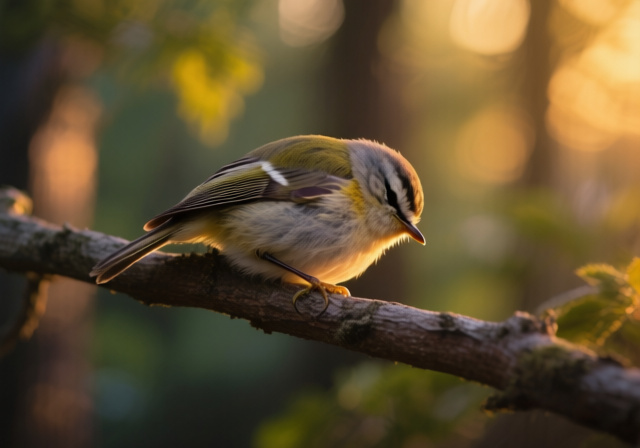
Have you ever wondered how birds can sleep perched on a branch without falling off? It’s one of those questions that, once you learn the answer, reveals just how remarkable avian biology truly is.
Yes, most birds sleep standing up. They possess an automatic tendon mechanism in their feet that locks onto perches without requiring any muscular effort. When a bird bends its legs to perch, specialized tendons tighten around the branch like a natural clamp. This system is so efficient that a bird can fall asleep with completely relaxed muscles and remain securely attached throughout the night.
After years of watching birds in backyards, parks, and wild habitats, I’ve come to appreciate how these sleep adaptations represent evolutionary solutions perfected over millions of years. From the anatomical ingenuity of the flexor tendon system to the ability to sleep while flying, birds have developed some of the most sophisticated rest strategies in the animal kingdom.
This guide covers everything you need to know about how and where birds sleep, including the science behind their remarkable perch-gripping ability, how baby birds sleep differently from adults, and what these behaviors tell us about survival in nature.
The ability of birds to sleep standing up comes down to one of nature’s most elegant mechanical systems: the flexor tendon mechanism. When birds land on a branch and bend their legs, specialized tendons automatically tighten around their toes, creating a vice-like grip that requires zero muscular effort to maintain. The bird’s own weight actually strengthens the grip rather than loosening it.
These tendons work through a simple pulley arrangement. The flexor tendons run from the bird’s toes, through the leg, and behind the ankle. As the bird bends its leg to settle onto a perch, the tendons pull taut, forcing the toes to curl around the branch. The more the bird bends, the tighter the hold becomes. This means a sleeping bird with fully relaxed muscles stays just as secure as an alert one.
Flexor Tendons: Specialized tendons in bird legs that automatically tighten when the leg bends, creating a secure grip without requiring muscular effort.
The hallux, the backward-facing toe that acts like a thumb, plays a crucial role in this system. By opposing the other three toes, it creates a pincer-like grip around branches. This arrangement gives even the smallest songbirds an incredibly secure hold, allowing them to sleep on branches as thin as pencils without losing balance. Combined with a specialized bird balance organ located between the hips, birds can maintain stability even in strong winds.
What makes this mechanism especially remarkable is its involuntariness. Birds do not consciously engage the grip – it happens automatically the moment they settle onto a perch. This allows them to fall asleep immediately without any concern for maintaining their hold. When danger approaches, simply straightening their legs releases the tension, enabling instant flight.
While standing sleep works for most species, birds have evolved an impressive variety of sleep positions tailored to their specific environments and survival requirements. The diversity of avian rest strategies reveals nature’s creative problem-solving at its finest.
| Sleep Position | Bird Examples | Purpose and Benefits |
|---|---|---|
| Standing on one leg | Flamingos, storks, songbirds | Heat conservation, energy saving |
| Floating on water | Ducks, geese, swans, loons | Safety from land predators, rest during migration |
| Lying on stomach | Owl chicks, some adult owls | Comfort, warmth, developmental needs |
| Hanging upside down | Hummingbirds (occasionally) | Torpor recovery, energy conservation |
| Buried in snow | Grouse, ptarmigan | Insulation, camouflage from predators |
| Crouching on ground | Ostriches, emus, shorebirds | Rest during long flights, ground nesting behavior |
Waterfowl have found perhaps the most comfortable arrangement. Ducks, geese, and swans can sleep while floating on water, often tucking one leg into their feathers to conserve body heat. The down feathers insulation in these species is particularly effective at maintaining warmth while resting on water. Some species arrange themselves in protective circles, with sentries keeping watch while others sleep peacefully.
Young birds often sleep very differently from their parents. Owl chicks provide the most charming example – unlike their perching adult counterparts, owlets lie face down on their stomachs with heads turned to the side, much like human babies. This position helps them stay warm and supports proper physical development during rapid growth phases.
As owlets mature, they gradually transition to the adult perching posture. Some young songbirds may also lie down in the nest during early development, though most switch to standing sleep within weeks of hatching. The transition coincides with the full development of the flexor tendon mechanism and the strengthening of leg muscles needed for perching.
Adult owls, while capable of sleeping in the typical perching position, are famous for their ability to rotate their heads nearly 270 degrees while appearing to sleep. This allows them to monitor their surroundings without moving their bodies, providing an additional layer of predator awareness during rest.
One of the most fascinating aspects of avian sleep is unihemispheric slow-wave sleep (USWS) – the ability to rest with one eye open while half the brain remains alert. This adaptation allows birds to get necessary rest while still monitoring for predators. Think of it as a security system that never fully powers down.
Unihemispheric Slow-Wave Sleep (USWS): A sleep state where one brain hemisphere sleeps while the other remains awake and alert, allowing the animal to rest while monitoring surroundings.
During USWS, the eye connected to the awake hemisphere stays open, continuously scanning for threats. Meanwhile, the sleeping hemisphere undergoes essential restorative processes. Birds can control which hemisphere sleeps, often alternating throughout the night to ensure both sides receive adequate rest.
This ability explains why ducks sleeping in a row often have those on the ends keeping one eye open, facing outward for the group. Studies show that birds increase USWS in dangerous situations, trading deeper sleep for greater safety when threat levels are high.
Migrating birds like frigatebirds and swifts have taken this adaptation further, using USWS to sleep while flying. They can rest for seconds or minutes at a time while maintaining flight paths and navigation. This allows them to remain airborne for months during migrations, a feat that continues to astound researchers.
Some species push the boundaries of what sleep can accomplish. These extreme adaptations show just how far evolution can take a basic biological process.
Alpine swifts hold the record for extreme sleep behavior. These remarkable birds can stay airborne for up to 10 months continuously, eating, mating, and sleeping entirely in flight. Research using tiny accelerometers revealed that swifts sleep in short bursts, likely using USWS to maintain flight patterns throughout their aerial lives except during breeding.
Frigatebirds, oceanic travelers capable of flying for weeks without landing, show similarly amazing abilities. GPS tracking demonstrated that these birds sleep while soaring in rising air currents, typically for just seconds at a time but accumulating several hours of sleep per day. They’ve evolved to sleep in both hemispheres simultaneously during brief periods, then immediately return to unihemispheric sleep when navigation demands return.
Amazing Fact: The common swift can fly continuously for 10 months without landing, sleeping, eating, and mating entirely in the air.
Hummingbirds enter a state called torpor to survive cold nights when food becomes scarce. During torpor, their heart rate drops from over 1,000 beats per minute to as few as 50, and body temperature can approach surrounding air levels. They appear lifeless to the touch, but this extreme energy conservation allows them to survive until dawn when they can feed again. Some hummingbirds hang upside down during torpor, which originally led to myths about them dying in that position.
Arctic birds like ptarmigan and grouse burrow into snow banks for sleep. The snow provides excellent insulation despite temperatures that can drop to -40 degrees Fahrenheit. Their white winter plumage offers perfect camouflage, making them nearly invisible to predators hunting by detecting movement or silhouettes against snow.
Watching birds sleep can be both challenging and deeply rewarding. Understanding their sleep behaviors helps us become more observant nature enthusiasts and deepens our appreciation for avian biology.
The best times to observe sleeping birds are early morning before they fully wake and late afternoon as they settle in for the night. During these transition periods, birds display pre-sleep and waking behaviors like stretching, feather fluffing, and head scratching. These moments often reveal the most interesting activity as birds prepare for or recover from rest.
For locating birds in low light conditions, quality binoculars make a significant difference. Many songbirds select their sleeping spots just before sunset, and having proper optics helps you witness this process without disturbing the birds. Maintaining a respectful distance and using your equipment to observe from afar ensures the birds can rest undisturbed.
Ethical observation matters enormously. Never use flash photography, playback calls, or other disruptive methods around sleeping birds. These animals need their rest to survive, and repeated disturbances can have serious consequences for their health and survival.
The evolution of bird sleep mechanisms tells a story of constant adaptation to survive in a world full of predators and environmental challenges. Each sleep strategy represents a solution to specific pressures that have shaped bird behavior over millions of years.
Predator avoidance likely drove the evolution of standing sleep. Ground-dwelling ancestors that could sleep elevated had a significant survival edge. This led to the development of the perching mechanism, allowing birds to rest in locations inaccessible to many predators. The balance organ between birds’ hips, a unique adaptation not found in other animals, provided additional stability that made standing sleep even more reliable.
Energy conservation played an equally important role. By developing sleep mechanisms requiring minimal muscular effort, birds preserve precious calories for foraging, migration, and reproduction. The automatic grip system means birds do not burn energy maintaining their hold while sleeping, a crucial advantage for small species with high metabolisms.
Unihemispheric sleep represents perhaps the most elegant trade-off between rest and vigilance. Species living in environments with constant predator pressure survived better when they could rest while remaining partially alert. This adaptation eventually enabled some birds to push further, sleeping while flying or swimming in situations where stopping would mean certain death.
Climate and habitat also shaped sleep evolution. Birds in cold regions developed communal roosting strategies, with dozens or even hundreds of birds sleeping together to share body warmth. Others evolved seasonal variations, entering deeper sleep periods during winter when food is scarce and activity naturally decreases.
Many bird species practice communal roosting, gathering in groups ranging from a few individuals to thousands to sleep together. This behavior provides several survival advantages that individual roosting cannot match.
Thermal regulation stands as the primary benefit in colder climates. By clustering together, birds reduce heat loss through collective warmth generation. Small songbirds particularly benefit from this strategy, as their high surface-to-volume ratio makes heat conservation challenging. Studies have shown that roosting communally can reduce heat loss by 20-30% compared to solitary roosting.
Predator detection improves dramatically in groups. More eyes and ears mean earlier warning of approaching threats. When one bird detects danger, the entire roost benefits from the alarm. Some species even take turns as sentinels while others sleep, a behavior observed in communities like common redstart flocks.
Information sharing also occurs within roosts. Young birds learn suitable roosting locations by following experienced adults. Roosting sites often offer advantages beyond safety, including microclimates that reduce energy expenditure and social bonds that improve foraging efficiency during daylight hours.
Yes, some birds do lay down to sleep. Owl chicks and some adult owls sleep lying on their stomachs with their heads turned to the side. Large birds like ostriches and emus also lie down to sleep. However, most perching birds sleep standing up using their automatic grip mechanism.
Signs of a sleeping bird include a tucked head (often under a wing), fluffed feathers for warmth, closed eyes or one eye closed (in unihemispheric sleep), reduced movement, and slower breathing. Some birds may also stand on one leg while sleeping.
Birds have diverse sleeping positions: most perching birds sleep standing up, often on one leg; waterfowl sleep floating on water; owls can sleep lying down; some birds sleep in burrows or cavities; hummingbirds may enter torpor and occasionally hang upside down; and Arctic birds sometimes sleep buried in snow.
Birds like swifts and frigatebirds sleep while flying using unihemispheric slow-wave sleep, where one brain hemisphere sleeps while the other remains alert. They sleep in short bursts lasting seconds to minutes, often while soaring in rising air currents.
Yes, birds can sleep with their eyes open during unihemispheric sleep. The eye connected to the awake hemisphere remains open and alert for predators, while the other eye closes. Some birds can control which side of their brain sleeps, alternating throughout the night.
Sleep duration varies among species. Small songbirds typically sleep 8-12 hours at night, while diurnal birds of prey may sleep 10-14 hours. Nocturnal birds like owls sleep during the day. Some migratory birds function on very little sleep during long flights, sleeping in short bursts totaling just a few hours per day.
Most birds do not sleep in nests except during breeding season when raising young. Nests are primarily for eggs and chicks. Adult birds usually sleep on branches, in cavities, or other protected locations.
Birds stand on one leg primarily to conserve body heat. By tucking one leg into their feathers, they reduce heat loss through the unfeathered leg. This position also helps them balance while sleeping and may reduce muscle fatigue. The flexor tendon mechanism keeps them securely perched even on one leg.
Yes, diurnal and nocturnal birds sleep at opposite times and often use different strategies. Diurnal birds like songbirds and waterfowl sleep at night and may use unihemispheric sleep to stay alert. Nocturnal birds like owls sleep during the day, often in concealed locations, and rely more on camouflage and stillness rather than half-brain sleep since they face fewer predators in daylight.
Bird sleep represents one of evolution’s most elegant solutions to the challenge of resting safely in a dangerous world. From the automatic grip that keeps songbirds securely perched through windy nights to the half-brain sleep that allows ducks to rest while watching for predators, these adaptations showcase biological ingenuity at its finest.
What strikes me most after years of observing birds is how these seemingly simple behaviors rest on extraordinary biological machinery. The fact that a small songbird can sleep hanging upside down from a branch in a storm, using only anatomical adaptations refined over millions of years, speaks to the power of natural selection working through countless generations.
The next time you see a bird perched motionless at dusk, take a moment to appreciate what is happening beneath the surface. That bird is using a tendon-locking system that engineers would envy, monitoring its environment with half its brain, and maintaining body temperature through positioning that minimizes heat loss. It is a remarkable biological achievement that makes survival possible in a challenging world.

![Where to See Starling Murmurations in the UK: Complete [cy] Guide](https://revellphotography.com/wp-content/uploads/2026/08/featured-update-4579-1786200415166.jpg)