
25 Fascinating Wren Facts: Tiny Birds With Mighty Voices
Discover 25 fascinating facts about wrens - tiny birds with surprisingly loud songs, complex behaviors, and remarkable survival strategies that…

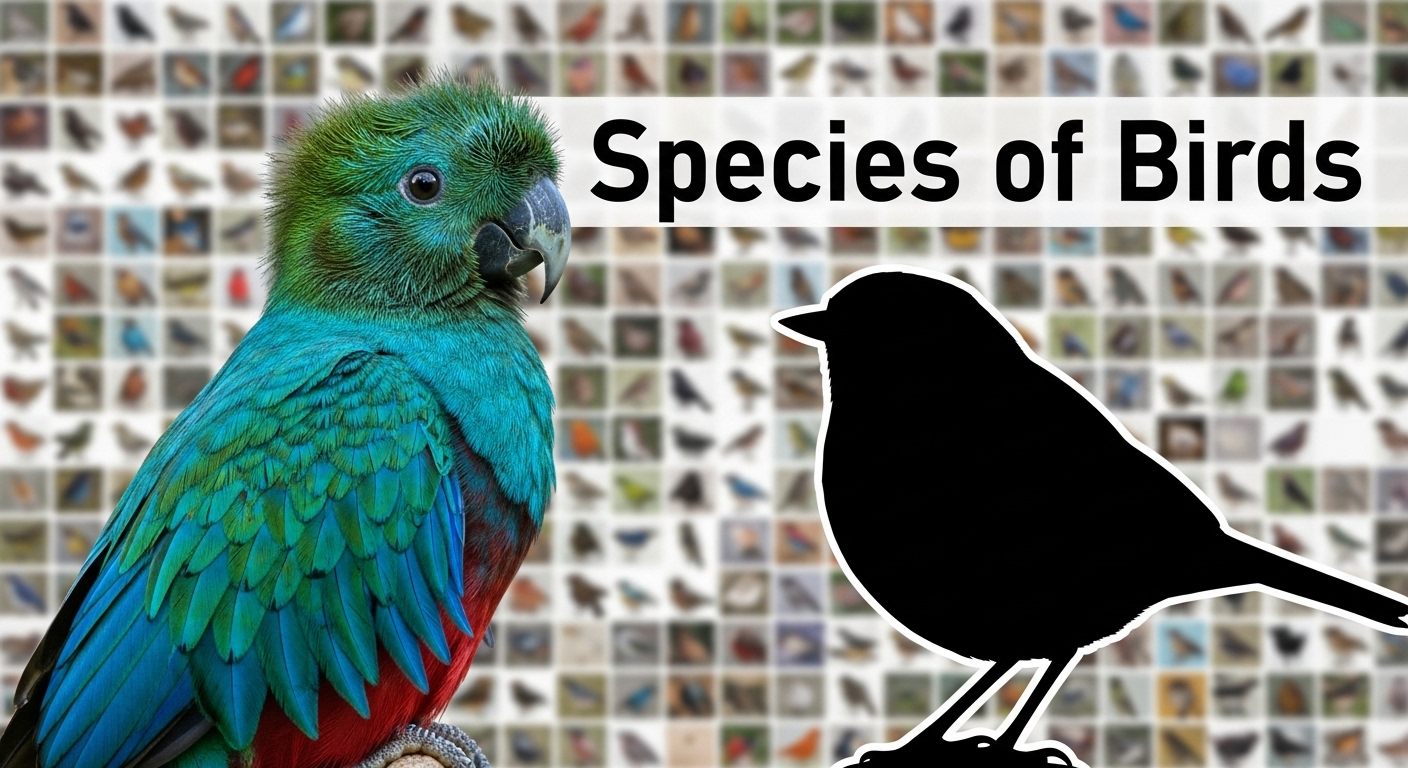
Looking at a common backyard sparrow, you might assume we have bird diversity pretty well figured out. Scientists have been studying birds for centuries, after all. Yet the question “how many species of birds are there in the world?” continues to surprise researchers and bird enthusiasts alike. The answer shifts depending on which ornithological organization you consult, and new genetic research keeps reshaping our understanding of avian classification. This confusion isn’t a flaw in science, but rather a sign of how our tools and methods keep improving, revealing hidden diversity that was invisible to earlier generations.
As of 2026, approximately 11,000 bird species have been formally recognized by major scientific organizations, though the exact number varies between 11,017 and 11,524 depending on which checklist you follow. Some researchers believe the true diversity could be nearly twice that count when we account for populations that look similar but are genetically distinct. Beyond species counts, scientists estimate roughly 85 billion individual birds share our planet, with certain families like Passeriformes containing over 6,000 species alone. Understanding these numbers matters more than you might think, because every taxonomic decision affects conservation priorities, legal protections, and our ability to track whether bird populations are thriving or declining.
This guide will walk you through the current state of bird taxonomy, explain why experts disagree on the exact counts, and reveal how these different classification systems impact conservation efforts worldwide. Whether you’re a student working on a biology project, a birder maintaining a life list, or someone curious about the natural world, you’ll find clear explanations backed by the latest research from leading ornithological institutions.
Accurate bird species identification often depends on having the right optical equipment, especially when observing birds in dense habitats or distinguishing between similar-looking species. Understanding what the numbers on binoculars mean helps you select the appropriate magnification and objective lens size for your specific birding needs.
If you’re looking for a straightforward answer, here are the current species counts from the world’s leading ornithological organizations as of 2026. The Clements Checklist, maintained by the Cornell Lab of Ornithology and integrated with the massive eBird database, lists 11,017 species. BirdLife International, which focuses on conservation applications, recognizes 11,524 species. The IOC World Bird List, used extensively by international researchers and birders, maintains approximately 11,000 species with twice-yearly updates. These variations aren’t mistakes or errors in counting. They reflect genuine scientific disagreements about classification criteria and the interpretation of new genetic evidence.
Quick Summary: Most major bird organizations agree on approximately 11,000 species, but counts vary from 11,017 to 11,524 depending on taxonomic approaches and recent research findings.
| Organization | Species Count | Update Frequency | Primary Focus |
|---|---|---|---|
| Cornell Lab/Clements | 11,017 | Annual | North American focus, eBird integration |
| BirdLife International | 11,524 | Annual | Conservation focus, global coverage |
| IOC World Bird List | ~11,000 | Twice yearly | International research focus |
| AviList Unified | 11,131 | Annual planned | Future global standard |
These differences might seem minor when expressed as percentages, but they represent hundreds of species that could be either combined or split depending on scientific interpretation. The choice of which checklist to follow affects everything from conservation funding decisions to personal birding achievements. For professional ornithologists publishing research or conservation advocates lobbying for endangered species protection, the choice of taxonomy can have real-world consequences.
Beyond species counts, researchers estimate approximately 85 billion individual birds exist on Earth at any given time. This staggering number helps put species diversity into perspective. To further understand the scale of avian diversity, consider that birds belong to approximately 40 orders and around 250 families, with Passeriformes (perching birds) comprising roughly 6,500 species, making them the largest and most diverse order of birds worldwide.
The differences in bird species counts stem from three primary factors: different species concepts, varying research methodologies, and geographic priorities. Think of it like different chefs classifying ingredients. Some might group Granny Smith and Golden Delicious apples together as simply “apples,” while others would emphasize their distinct flavors and textures as warranting separate categories. Both approaches have culinary merit, just as different scientific frameworks for defining species each illuminate important aspects of bird diversity.
Major organizations also prioritize differently. The Clements Checklist, deeply integrated with eBird’s massive citizen science database, tends to be more conservative with taxonomic changes that might affect millions of logged observations. BirdLife International takes a more conservation-oriented approach, sometimes splitting species when doing so helps protect distinct populations that might otherwise be overlooked. The IOC World Bird List, favored by international birders and researchers, often incorporates new scientific findings more rapidly, resulting in updates that can shift species counts up or down throughout the year.
Species Concept: The scientific framework used to determine what constitutes a distinct species, based on factors like reproductive isolation, genetic differences, physical characteristics, and behavioral patterns. Different concepts emphasize different evidence types, leading to legitimate disagreements about classification.
The Rufous-backed Wren provides a perfect example of these ongoing taxonomic debates. Some checklists consider it a single species ranging from Mexico to Costa Rica, while others split it into multiple distinct species based on vocalization differences and DNA evidence. Similarly, the Green-winged Teal is treated as one species by some organizations but split into American and Eurasian species by others, citing differences in male breeding plumage and hybridization patterns where their ranges overlap.
These aren’t merely academic exercises with no practical consequences. When a species is split into two, conservation funding must be divided between the new entities, legal protections require reassessment, and birders must update their life lists accordingly. Peter Kaestner, who became the first person to document 10,000 bird species, understands this challenge intimately. He maintains multiple versions of his life list to accommodate the different taxonomic approaches used by various organizations and countries where he observed his birds.
So how do scientists actually determine whether two bird populations constitute separate species? The answer has evolved dramatically over the past few decades. Traditionally, ornithologists relied heavily on the Biological Species Concept, which defines species as groups that can interbreed and produce fertile offspring under natural conditions. This approach worked reasonably well for many bird populations but created difficulties when geographically separated populations rarely encountered each other yet showed clear differences in appearance or behavior.
Modern ornithology typically employs an Integrative Species Concept that combines multiple lines of evidence. Scientists examine DNA sequences to assess genetic divergence, take detailed physical measurements, analyze plumage patterns across populations, record and compare songs and calls, document breeding behaviors, and map geographic ranges. When enough differences accumulate across these various factors, scientists may recommend splitting a single species into two or more separate species. The opposite can also occur when research reveals that two previously separate species are interbreeding extensively and share the vast majority of their characteristics.
The DNA revolution has been particularly transformative for ornithology. Genetic studies have revealed that many familiar birds actually consist of multiple cryptic species, populations that look nearly identical to human observers but are genetically distinct and reproductively isolated from one another. North American warblers, for instance, were traditionally classified as about 40 species, but genetic analysis suggests the true number might exceed 50 when all distinct populations are properly evaluated. These discoveries explain why species counts have steadily increased over recent decades, even as few entirely new bird species are formally described from unexplored regions.
A fascinating taxonomic footnote: birds are technically dinosaurs. More specifically, birds belong to the theropod group of dinosaurs, which includes famous predators like Tyrannosaurus rex. This isn’t merely a provocative trivia fact but reflects the actual evolutionary relationships revealed by dinosaur research over the past few decades. Birds share numerous skeletal features with their dinosaur ancestors, including wishbones, three-toed feet, and hollow bones. So when you watch a sparrow in your backyard, you’re observing a living dinosaur in the technical, scientific sense of the term.
Taxonomic Revision: The process of reevaluating and updating species classifications based on new scientific evidence, particularly DNA analysis, which can result in species being “split” into multiple distinct species or “lumped” together as a single species when research reveals closer relationships than previously understood.
While species counts capture the diversity of bird types, another remarkable statistic puts avian abundance in perspective. Scientists estimate approximately 85 billion individual birds exist on Earth at any given time. To visualize this number, consider that 85 billion is roughly equivalent to ten times the human population, arranged birds-by-birds across the globe. This abundance isn’t evenly distributed, however. A small number of species account for enormous portions of this total population.
The most abundant bird species include the Red-billed Quelia, estimated at around 1.5 billion individuals, followed by the Common Swallow at approximately 1 billion. The House Sparrow, despite declining numbers in many regions, still numbers around 500 million globally. These abundant species thrive in agricultural and urban environments that provide consistent food sources and nesting opportunities. Meanwhile, thousands of other bird species exist in relatively small populations, with many rare species numbering in the mere hundreds or even fewer individuals.
Understanding both species diversity and individual abundance matters for conservation. A species with 10,000 individuals across a large range faces different threats than a species with only 500 individuals confined to a single mountain range. Conservation organizations use both metrics when prioritizing protection efforts, allocating resources to species that face the greatest risk of extinction relative to their population sizes and habitat requirements.
You might reasonably wonder why it matters whether scientists count 11,000 or 18,000 bird species. The answer connects directly to some of the most pressing conservation challenges facing wildlife today. Species definitions determine which birds receive legal protections, guide how conservation funding gets allocated, and influence how we measure and track biodiversity loss over time. When a widespread species gets split into multiple species with smaller geographic ranges, some of those newly recognized species might immediately qualify as threatened or endangered under international conservation criteria.
The IUCN Red List, which tracks extinction risk for thousands of species worldwide, relies fundamentally on species-level assessments. If a species is split into five distinct species, each new species must be evaluated separately against the Red List criteria. This process can reveal hidden conservation crises that were previously masked when the populations were grouped together. Recent examples include several tropical bird species where DNA analysis uncovered that what ornithologists thought was one widespread species was actually several highly specialized species with small, fragmented populations facing severe habitat threats.
Laws and international treaties designed to protect species also depend heavily on precise taxonomy. As Marshall Iliff from the Cornell Lab of Ornithology explains, “Laws and treaties used to protect species don’t work as effectively when there isn’t consensus on species names and definitions.” International agreements like CITES, which regulates international trade in endangered species, require precise species identification to function properly. When taxonomies conflict between countries, enforcement becomes complicated and potentially ineffective.
Time Saver: Conservation efforts work most efficiently when researchers and policymakers agree on species classifications. This is why major organizations are actively working toward unified checklists through initiatives like AviList, which aims to resolve the current fragmentation in global bird taxonomy.
Perhaps the most compelling reason to care about species counts is their direct connection to preventing extinctions. Currently, approximately 13% of bird species worldwide are classified as threatened with extinction, but this percentage shifts with taxonomic revisions that either split species into smaller, more vulnerable populations or lump distinct populations together under a single, more robust species classification. Some conservation professionals worry that splitting species might dilute limited conservation resources across more entities. Others argue that taxonomic splitting actually reveals hidden diversity that demands protection before it’s too late.
The statistics on bird population decline are sobering. Research published in leading ornithological journals indicates that North American bird populations have declined by approximately 3 billion individuals since 1970, representing roughly a 30% reduction in total abundance across all species. This decline spans both common and rare species, suggesting that the pressures facing birds extend beyond the threatened species typically highlighted in conservation campaigns. Habitat loss, pesticide use, climate change, and window collisions all contribute to this ongoing crisis.
Additionally, studies suggest that approximately 75% of bird species worldwide are experiencing some level of population decline, though the severity varies enormously between species. Some populations are declining slowly due to mild habitat pressure, while others are collapsing rapidly toward extinction without immediate intervention. The exact percentage depends on which population trends are measured, which time periods are considered, and which species classifications are applied.
The stories of the world’s rarest birds illustrate both the challenges and possibilities of species-focused conservation. The Stresemann’s Bristlefront, with only one known individual remaining in its Brazilian habitat, represents a conservation emergency. Spix’s Macaw, which became extinct in the wild but is the focus of intensive captive breeding and reintroduction efforts, demonstrates how species-targeted conservation can potentially reverse extinction trajectories. These species would be effectively invisible to conservation programs without proper taxonomic recognition and the legal protections that follow formal endangered species designations.
Monitoring bird populations effectively requires appropriate observation tools and methodologies. For conservation work and field research, choosing between spotting scopes vs binoculars for bird watching depends on your specific monitoring needs, target species, and observation environment.
Bird diversity isn’t distributed evenly across the globe. Certain regions harbor extraordinary concentrations of species, making them priorities for ornithological research and conservation attention. The countries with the highest bird species counts are consistently found in the tropics, where warm temperatures, complex ecosystems, and evolutionary history have produced remarkable avian diversity.
Colombia tops the world list with approximately 1,900 recorded bird species, more than any other country despite its relatively modest geographic size. This extraordinary diversity reflects Colombia’s position at the intersection of North and South America, its multiple mountain ranges including the Andes, and its range of habitats from tropical rainforests to high-altitude paramo grasslands. Peru follows closely with around 1,900 species, its Amazon basin and Andean foothills providing crucial habitat for countless species found nowhere else.
Brazil, the largest country in South America, hosts approximately 1,800 species across its vast territory, including the Amazon rainforest that holds enormous concentrations of bird life. Indonesia, spanning thousands of islands across Southeast Asia, records roughly 1,700 species, while Ecuador, despite its small size, claims around 1,600 species thanks to its position along the Andes mountain chain and its access to Amazonian and Pacific coastal habitats. These tropical nations together harbor the majority of Earth’s bird species and face significant conservation challenges from deforestation, agricultural expansion, and climate change.
The concentration of bird diversity in these regions has practical implications for birders and researchers planning fieldwork. A week in Ecuador or Colombia can yield hundreds of species, while equivalent effort in temperate regions might produce far fewer species encounters. This biodiversity gradient also means that tropical countries bear disproportionate responsibility for global bird conservation, often with limited financial resources to protect their natural heritage.
You don’t need to be a professional ornithologist to contribute meaningfully to our understanding of bird species. Citizen science platforms like eBird have transformed how scientists track bird populations, document distributions, and monitor changes over time. When you submit your bird observations with photos or audio recordings, you’re providing real data that helps researchers understand species ranges, migration patterns, breeding phenology, and even discover potential new species or unusual hybridization events.
The birding community has produced remarkable contributions through citizen science. Photographs documenting unusual plumage variations have revealed previously unknown hybrid zones where species interbreed. Sound recordings of bird songs have uncovered cryptic species that appear identical to human observers but produce distinctly different vocalizations that prevent interbreeding. Even simple checklists submitted from your backyard provide valuable data showing how species respond to seasonal changes, urban development, and climate shifts.
If you’re new to bird watching, having appropriate equipment makes identification easier and more accurate. Our guide comparing 8×32 vs 8×42 binoculars for birding can help you choose the right specifications for your birding adventures. For those just starting out, budget binoculars under $200 provide excellent quality and durability without requiring a large investment.
Pro Tip: Document unusual birds with photographs and share your observations on platforms like iNaturalist and eBird. Even common species might display unique characteristics that interest researchers studying local adaptations or rare plumage variations.
For serious birders targeting rare species or challenging identification situations, specialized optics become essential. Many experienced birders use both angled vs straight spotting scopes depending on their observation needs, target species, and personal preferences for glass placement and stability.
Bird species identification often requires high-quality optics, particularly in challenging lighting conditions like dense forest canopy or low-light situations at dawn and dusk when many species are most active. Our guide to best low-light binoculars covers options specifically designed for these challenging observation conditions.
Recognizing that fragmented taxonomy creates practical problems for conservation, research, and birding communities, several major ornithological organizations have been working toward a unified global bird checklist. The AviList initiative, launched with significant organizational support, aims to create a single authoritative list that resolves conflicts between the Clements Checklist, BirdLife International, and the IOC World Bird List.
The AviList project represents a major 2024-2025 development in ornithological taxonomy. Rather than one organization simply imposing its taxonomy on others, the initiative seeks to build consensus through systematic comparison of all major checklists, identification of specific disagreements, and collaborative resolution based on the best available scientific evidence. The goal is not to eliminate all taxonomic differences, since some disagreements reflect genuine scientific uncertainty, but to standardize the baseline list used for conservation planning, legal protections, and international trade regulation.
As of 2026, AviList has published a unified checklist containing 11,131 species, positioning itself as a potential future standard while acknowledging that adoption by all major organizations will require continued negotiation and scientific consensus-building. The initiative represents a significant step toward reducing the confusion that birders, researchers, and conservationists face when different sources present conflicting species lists.
As of 2026, there are approximately 11,000 recognized bird species worldwide, though counts vary by organization. The Clements Checklist lists 11,017 species, BirdLife International recognizes 11,524, and the IOC World Bird List maintains about 11,000 species.
Yes, there are over 10,000 bird species – currently about 11,000 recognized species. The scientific community passed the 10,000 species milestone in the early 2000s as DNA analysis revealed many cryptic species that were previously grouped together under single classifications.
The Stresemann’s Bristlefront is considered the world’s rarest bird, with only one known individual remaining in its Brazilian habitat. Other extremely rare species include the Kakapo (around 200 individuals in New Zealand) and the California Condor (about 500 individuals including captive birds in the recovery program).
Since 1500, approximately 187 bird species have gone extinct globally, including the Dodo, Passenger Pigeon, and Carolina Parakeet. Currently, 159 bird species are classified as extinct in the wild, though some have active captive breeding programs working toward eventual reintroduction to natural habitats.
The best checklist depends on your specific needs: eBird users typically follow the Clements Checklist, European birders often prefer BirdLife International taxonomy, and international researchers frequently use the IOC World Bird List. For casual birding, any major checklist provides accurate and useful information – consistency in your own record-keeping matters more than which specific checklist you choose.
Yes, scientists discover approximately 5-10 new bird species each year, mostly in remote tropical regions where fieldwork is challenging. These discoveries typically involve cryptic species – populations that were previously classified as subspecies but genetic analysis has revealed are actually distinct species that should be formally described and named.
Research indicates that approximately 75% of bird species worldwide are experiencing some level of population decline, though the severity varies significantly between species. In North America alone, studies show a loss of approximately 3 billion individual birds since 1970, representing roughly a 30% reduction in total bird abundance across all species combined.
Yes, birds are technically dinosaurs in the scientific sense. Birds belong to the theropod group of dinosaurs, the same lineage that included Tyrannosaurus rex and other famous dinosaur predators. This evolutionary relationship is supported by extensive fossil evidence and modern genetic analysis showing that birds share numerous anatomical features with their dinosaur ancestors, including wishbones, three-toed feet, and hollow bones.
The question of how many bird species exist reveals more about science as a process than it does about birds themselves. It demonstrates how our understanding of nature evolves continuously with improving technology and accumulating evidence. Rather than being frustrated by the different numbers you’ll encounter from various sources, I find it genuinely exciting that there’s still so much to learn about the natural world around us. Each taxonomic revision isn’t merely changing a number on a list. It’s revealing new stories about evolution, adaptation, and the remarkable diversity of life that has emerged over millions of years.
Whether you’re satisfied knowing there are approximately 11,000 bird species or fascinated by the nuances that separate one checklist from another, remember that these numbers represent real living creatures facing genuine challenges. Understanding and protecting them starts with accurate knowledge, but it continues only with the curiosity and passion that drives us to look more closely, ask deeper questions, and appreciate the extraordinary diversity of birds that share our planet. The next time you hear a bird singing outside your window, take a moment to consider that you might be listening to a dinosaur, one of approximately 85 billion individual birds, representing one of approximately 11,000 species, each with its own evolutionary history stretching back millions of years.

![Where to See Starling Murmurations in the UK: Complete [cy] Guide](https://revellphotography.com/wp-content/uploads/2026/08/featured-update-4579-1786200415166.jpg)