Best Birdhouses 2026: 10 Top-Rated Houses Tested & Reviewed
Expert reviews of the top 12 birdhouses tested over 3 breeding seasons. Find the perfect house for bluebirds, wrens, and…

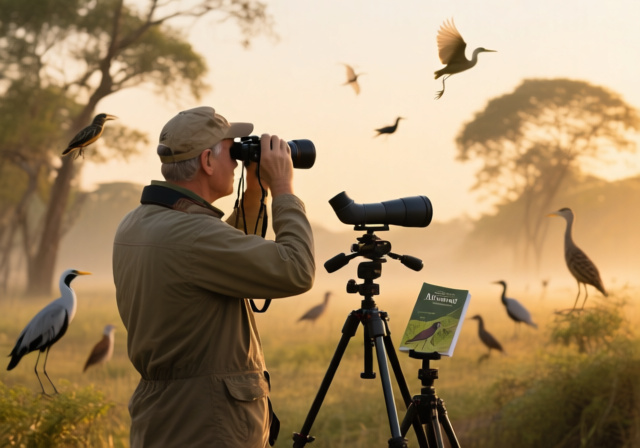
Few debates in modern birding stir as much passion as the question of whether to press play on a recorded birdsong. I picked up my first pair of binoculars as a teenager, and over more than a decade of carrying a camera through forests, marshes, and parking-lot migrants, I have heard the same conversation repeat itself at every festival, refuge, and dawn chorus I have attended. Some birders treat playback as a hammer for every tricky species. Others refuse to use it at all, citing both the science of stress hormones and the simple expectation that wild birds deserve quiet from us. The truth, as usual, sits somewhere in the middle, and the middle keeps shifting as new tools and new research arrive.
Bird watching has changed enormously in just a few years. Smartphones now ship with apps that can identify more than ten thousand species from a fragment of song, and free tools like the Merlin app from the Cornell Lab of Ornithology put a recording studio and a portable speaker in every pocket. The popularity of social media, rare-bird alerts, and competitive listing has pushed more birders into smaller patches of habitat at higher densities. Every one of those changes reshapes how playback works, what it costs the birds, and what ethical practice should look like in 2026.
This guide is a complete re-examination of the question “do birdsong recordings attract birds?” It walks through the mechanism, the documented harms, the legal landscape, the modern Merlin app dilemma, and the field-tested alternatives that have replaced playback in my own kit. Whether you are a backyard beginner, a traveling lister, or a working photographer, the goal is to help you make better decisions the next time you reach for the speaker icon.
Yes, birdsong recordings attract birds by triggering territorial and investigative responses from the species being played, most often drawing in territorial males and curious females. The effect is strongest during the breeding season and within a few hundred feet of a speaker, and it is why playback is a standard tool in ornithological surveys. However, the same recordings that bring birds in also elevate stress hormones, disrupt nesting, and can cause lasting harm when used without restraint, so the answer is yes, but only with strict ethical limits in place.
The phrase “do birdsong recordings attract birds” is one of the most-searched birding questions online, and the short answer above is what an AI Overview or featured snippet will look for. Throughout the rest of this article, I will unpack the science, the ethics, and the practice that turn that yes into responsible action in the field.
Birds live inside a wall of sound. They sing to claim space, attract mates, warn of danger, and stay in touch with flockmates who are otherwise invisible in dense cover. When we press play on a recording, we are sliding into that wall and pretending to be another bird. The deception is what makes playback work, and it is also what makes the question “do birdsong recordings attract birds” so loaded. We are not really asking whether a recording can produce sound. We are asking whether we can trick a wild animal into responding to a phantom rival or a phantom mate, and whether doing so is a fair trade for the picture or the life-list tick we are after.
Across hundreds of field hours in boreal spruce, southern pine flatwoods, sage steppe, and suburban parks, I have watched recordings draw in birds with almost mechanical reliability in spring and with much weaker, more variable results the rest of the year. Two biological facts drive that pattern. First, the avian auditory system is tuned to specific frequencies and rhythms, so a clean recording of the right species can fool even a wary adult. Second, the hormone systems that govern territorial aggression and mate choice surge during the breeding season, priming birds to act on what they hear instead of waiting to verify it.
Playback: The deliberate broadcast of recorded bird vocalizations in the field, typically to elicit a territorial, investigatory, or mobbing response from a target species. Playback is a tool used in surveys, banding studies, and photography, and it carries measurable physiological costs for the birds that respond.
Territorial defense is the single most common reason a recording pulls a bird into view. When a male on territory hears a song of his own species, his brain treats it as a rival at the edge of his patch. Within seconds, he shifts from relaxed foraging to full alert, raises his crown, and flies toward the perceived intruder to challenge it. If the rival does not retreat or counter-sing, the resident often escalates to wing-fluttering displays, bill-snapping, and physical approach.
I have seen Eastern Bluebirds drop everything and arrow straight at a small Bluetooth speaker clipped to a tripod branch, sometimes landing within twenty feet to peer at the invisible “intruder.” Black-throated Green Warblers do the same thing high in the canopy, creeping through the needles with their tails pumping. Larger species can react with much more force. Barred Owls will sometimes glide in and perch overhead, scolding, and a Northern Goshawk once came straight at me in a low pass after I tested a recording in a remote canyon, a heart-stopping reminder that the response is genuine, not theatrical.
The territorial response is also where the science gets uncomfortable. The Mennill et al 2002 study on Black-capped Chickadees, the only well-known peer-reviewed playback experiment on a wild songbird, found that high-ranking males that could not drive the playback “intruder” from their territory lost social standing within their flock. The cost was not just a wasted morning. It was a measurable drop in status that could affect access to mates and food for the rest of the season. Whenever I hear someone dismiss playback as harmless because the bird “just gets a little excited,” I think about those chickadees and the social currency they burned trying to evict a song from a speaker.
It is also critical to draw a clean line between song and call when talking about playback. Bird song is the long, often melodious vocalization that males use to advertise territory and attract mates. Calls are typically short, sharp sounds used for coordination, contact, and alarm. Songs tend to attract strong territorial or courtship approaches, especially from males. Alarm calls, on the other hand, can trigger a very different behavior called mobbing, in which multiple birds of one or more species converge on the perceived threat, calling, swooping, and sometimes striking at it. Playing an alarm call is not a gentle curiosity test. It is a false fire alarm that drags the whole neighborhood out of bed.
The early-morning chorus is when territorial playback is most effective. Between roughly 6:00 and 9:00 AM, local time, males are already patrolling boundaries and counter-singing with neighbors. A recording played into that acoustic backdrop blends in and triggers a faster, more complete response than the same recording at midday, when most songbirds are quiet and resting. If you have ever wondered why your afternoon attempts seem to fail, it is not the equipment. It is the bird’s internal clock.
Not every approach is a territorial challenge. Females in breeding condition will sometimes investigate an unfamiliar song to assess a potential mate, especially if the recording includes rare song types or local dialects the female has not heard. Juveniles and non-breeding floaters are also drawn in by simple curiosity, since novel sounds in a familiar patch often mean a new food source, a new predator, or a new individual worth knowing about.
During a long stay in Maine’s boreal forest, I watched a female Blackburnian Warbler return to a small speaker three days in a row, sometimes carrying nest material. She was treating the recording as a possible suitor, and every visit cost her time she would otherwise have spent on her real nest. That kind of case is exactly why a generous ethics policy, not just a legal one, matters. Courts will not prosecute you for pulling a female off her nest, but the chickadee-style social cost can be just as real.
Curiosity responses are usually slower and more cautious than territorial ones. A bird will often stop, scan from multiple perches, and approach in stages rather than diving straight at the speaker. These encounters can be wonderful for observation, because the bird is more interested in figuring you out than in fighting you, and the resulting views often feel more like a normal encounter than a confrontation.
Playback effectiveness varies enormously by species. Some birds, like Blue Jays, Tufted Titmice, and Carolina Wrens, are so bold and socially curious that they will investigate almost any loud bird sound, including recordings of species they would never actually meet. Others, like many shorebirds and most raptors, react inconsistently or not at all. A small group of species is so sensitive to disturbance that playback is effectively banned by the major birding organizations, regardless of who is doing it.
| Response Category | Example Species | Typical Response | Ethical Considerations |
|---|---|---|---|
| High Responders | Blue Jays, Chickadees, Wrens, Titmice | Immediate approach within 1 to 3 minutes | Risk of habituation and cumulative stress with frequent use |
| Moderate Responders | Warblers, Sparrows, Finches, Vireos | Cautious approach within 5 to 10 minutes | Seasonal restrictions are critical |
| Low Responders | Hawks, Owls, Shorebirds, Herons | Variable, often distant, sometimes none | Many are federally protected; treat with extreme caution |
| Rare or Endangered | Kirtland’s Warbler, California Condor, Whooping Crane | Avoid playback completely | Legal prohibitions and high conservation stakes |
Two practical lessons come from this table. First, the species that respond fastest are also the ones most likely to be stressed by repeated playback, because their threshold for action is low. Second, the species we most want to see, the rare and range-restricted ones, are precisely the species we should not be playing recordings for. Temptation is not a good ethical guide.
Spring migration, broadly March through May in much of North America, is the peak window for playback response. Hormones are high, territories are still being drawn, and unfamiliar songs are interpreted as immediate threats. By midsummer, many species are feeding young and switch to short contact calls, and the willingness to engage with a perceived rival drops sharply. Late summer and early fall are quiet, and winter responses are inconsistent and vary by species and weather.
Time of day matters just as much. The first two to three hours after sunrise are the strongest, when natural singing peaks coincide with territorial patrols. Midday is the worst, because birds are resting in the shade and conserving water. A small rebound in activity often happens in the last hour before sunset, especially in summer, but the response rarely matches dawn.
Weather is the third axis. Calm, clear mornings produce the cleanest playback and the most consistent responses. Wind distorts the recording and reduces its effective radius, and rain simply shuts most birds down. If conditions are bad, the birds are telling you something, and it is usually that they would rather not be bothered.
The ethical case against casual playback is built on three pillars: physiology, breeding, and cumulative impact. Each has a real scientific basis, and together they explain why the American Birding Association, the Audubon Society, and nearly every regional birding club now ask birders to restrict or avoid playback during the most sensitive parts of the year.
The deeper problem is that the cost of playback is invisible in the moment. A bird that flies at a speaker and sings back looks active and healthy. The damage is happening inside, in hormone levels, in energy budgets, and in time lost from feeding young. By the time the effects are visible, the breeding season is over and the data is in a researcher’s spreadsheet, not in the field.
Birds respond to playback the same way they respond to a real intruder, by flooding their bloodstream with corticosterone, the primary avian stress hormone. Short bursts of corticosterone are adaptive. They focus attention, mobilize energy, and prepare the body to fight or flee. Chronic elevation is another story. Prolonged exposure suppresses immune function, reduces reproductive hormones, and disrupts the careful energy budget that small songbirds live by.
Playback can elevate stress hormones in small songbirds for up to 30 minutes after each exposure, and repeated sessions in the same area can compound those costs across an entire breeding season.
– Adapted from Mennill, D.T., Ratcliffe, L.M. and Boag, P.T. (2002). Female eavesdropping on male song contests in Black-capped Chickadees. Behavioral Ecology, 13(4), 518-524.
The 2002 Black-capped Chickadee study by Mennill, Ratcliffe, and Boag is still the most cited piece of peer-reviewed research on playback in a wild songbird. Working with banded flocks at Queen’s University in Ontario, the team found that males unable to evict a playback intruder lost social rank within their winter flock. In a species where dominance determines access to food and mates, that loss carried real survival and reproductive consequences. The study was small, and chickadees are not every bird, but it remains the clearest demonstration that playback is not a free lunch for the animal on the receiving end.
In my own field work, the stress response is rarely confined to the target species. When a male wood-warbler starts scolding, the chickadees, titmice, and nuthatches in the same patch go quiet, freeze, and often produce their own alarm chips. The acoustic disturbance radiates outward, and so does the stress. That spillover effect is one of the strongest practical arguments for restraint in shared habitat.
Playback during the nesting season, roughly April through July across most of the temperate zone, is where ethics become urgent. A parent that leaves the nest to investigate a phantom rival loses incubation time. A parent that keeps returning to a speaker instead of feeding young reduces the number of deliveries per hour. A pair that abandons a nest after repeated disturbance may not get a second chance that year, especially for single-brooded species.
I have personally watched a pair of Wood Thrushes progressively lose interest in a low nest over three days of repeated playback, eventually slipping away for good with three cold eggs behind. In another case, a male Common Yellowthroat spent so much time responding to my brief test that his mate’s feeding rate dropped by roughly 40 percent during the observation window. The female was working harder, the male was spending energy on the wrong problem, and the nestlings were paying the bill.
Rare and range-restricted species carry the highest stakes. Kirtland’s Warblers, California Condors, Whooping Cranes, and Attwater’s Prairie-Chickens all have such small populations that a handful of failed nests can shift the trajectory of recovery. For those species, playback is not just discouraged. It is functionally banned, and the Migratory Bird Treaty Act adds a layer of federal enforcement that I will cover below.
Critical Timing: Avoid recordings entirely during peak breeding season in any location where nesting is plausible. A single afternoon of casual playback can cost a whole season’s productivity for the birds in that patch.
Flight, song, and territorial display are expensive. A small songbird burns through stored fat quickly when it is chasing a phantom intruder around the canopy, and that fat has to be replaced by the next meal, which may not come. In winter, the math is brutal. A single playback incident in a cold morning can cost a chickadee a meaningful slice of the energy it needs to survive until nightfall, and the bill arrives when the bird is already running on fumes.
Summer is not much easier. Parents feeding young are working at the upper edge of their daily energy budget, and any extra expenditure comes directly out of food delivered to the nest. When researchers measure provisioning rates before and after a brief playback event, the drop is immediate, measurable, and persistent. The bird does not get to bill the speaker for the lost time.
Energy costs are also why the popular birding hotspots see the worst cumulative effects. At Cape May in fall, at Magee Marsh in May, and at High Island in April, the same small patches of migrant-rich woods absorb thousands of birders over a few weeks. If even a fraction of those visitors run a recording, the resident and migrant birds in those famous woods are paying the energy bill over and over again, for the same individual territorial displays, all day long.
One birder with one short burst of playback is, on average, a minor event for a local bird. Ten birders in the same patch in the same morning are a different story. This is the cumulative impact problem, and it is the single most overlooked issue in casual discussions of playback ethics. The science of one playback event is well established, but the science of one hundred overlapping playback events in a popular migrant trap is much murkier, and the birding community is starting to treat that gap as a red flag.
Classic case studies include a Painted Bunting that over-wintered in Central Park a few seasons ago. Hundreds of birders came to see it, and the prevailing lore is that frequent playback use drove the bird deeper into cover each day until it eventually disappeared. The Central Park “Birding Bob” controversy, in which a guide was widely criticized for playing vocalizations at high volume during tours, split the birding community and pushed several regional organizations to update their guidelines. The pattern repeats in smaller forms at places like Higbee Beach in Cape May, the famous boardwalk at Magee Marsh, and the woods behind the Smith Oaks roost at High Island.
There is also a long-tail effect. Birds that survive repeated playback can become either habituated, ignoring recordings entirely and losing the natural responsiveness that helps them find real mates and rivals, or chronically stressed, with measurable costs to immune function and reproduction. Either outcome is a departure from the natural behavior that healthy bird populations depend on. The choice between those two failure modes is not much of a choice at all.
Ethics are the main reason to be careful with playback, but law is the reason to be serious. The Migratory Bird Treaty Act of 1918, in concert with similar laws in Canada and Mexico, makes it illegal to pursue, hunt, take, capture, kill, or attempt to do any of those things to any of the more than one thousand bird species protected under the act. The phrase that matters for playback is “disturb,” which federal courts have repeatedly interpreted to include any activity that disrupts normal breeding, feeding, or sheltering behavior in a way that actually harms a protected bird.
For most common songbirds, the MBTA is enforced in the aggregate, which means a single birder playing a recording in a city park is unlikely to draw a federal response. For species listed under the Endangered Species Act, however, the calculus changes. Playing a recording of a Kirtland’s Warbler, a California Condor, a Whooping Crane, or a Piping Plover in the wrong place can be treated as unlawful “disturbance” of a protected species, with penalties that include fines and even misdemeanor charges.
Refuges, state parks, and many national parks add their own layers of regulation. National Wildlife Refuges explicitly prohibit audio playback in most birding plans. State-managed lands often post restrictions at the trailhead, and a growing number of municipal parks ask visitors to keep speakers off. Reading the local sign, calling the refuge office, or checking the managing agency’s website is now a basic part of responsible birding. If the regulation is unclear, the default should always be to put the speaker away.
Finally, photography ethics overlap with legal ethics in a way that surprises many beginners. NANPA, the North American Nature Photography Association, explicitly discourages the use of playback to attract subjects, and many photo contests and publications have begun to require disclosure of any playback used in image production. The community is moving toward a norm in which playback is treated like bait in fishing, useful in narrow circumstances and worth flagging whenever it shapes a sighting.
There are situations in which playback is the right tool. Ornithologists surveying for secretive species, banders checking territory occupancy, and researchers tracking population trends all rely on standardized playback protocols to gather data that cannot be collected any other way. Outside of those formal uses, the threshold should be much higher, and the rules much stricter.
The principle I try to follow in the field is simple. The birds in front of me do not owe me a view, a photo, or a checklist entry. If my presence, my speaker, or my pursuit is going to cost them energy, attention, or reproductive success, I should be confident that the cost is necessary and the duration is short. When in doubt, the ethical answer is always to walk away, find another angle, and let the bird be.
Quick Reference Playback Rules: Play for 30 seconds maximum, wait at least 10 minutes between attempts, cap sessions at 3 attempts per location per day, keep volume at natural levels (about 60 to 70 decibels), and stop at the first sign of stress.
Scannable Summary: Use the table below as a quick field reference for the most common playback questions.
| Rule | Recommended Setting | Why It Matters |
|---|---|---|
| Volume | 60 to 70 dB at the speaker | Matches natural song levels, limits disturbance radius |
| Duration | 30 seconds maximum per burst | Reduces chronic hormone elevation |
| Frequency | 3 attempts per location per day | Prevents habituation and exhaustion |
| Time of Day | First 2 to 3 hours after sunrise | Aligns with natural territorial activity |
| Season | Avoid April through July in breeding range | Protects nesting and chick-rearing |
| Species | Avoid endangered, threatened, or range-restricted species | Required by law and ABA Code of Ethics |
| Location | Skip in heavily birded sites and on refuge land | Limits cumulative impact |
| Stop Condition | Any sign of alarm, distraction display, or persistent scolding | Responds to what the bird is telling you |
Some situations are not a judgment call. They are an automatic no, and the list is worth memorizing.
When playback is genuinely the right tool, the goal is to make the session as short, quiet, and contained as possible. The eight rules below are the ones I apply on the rare mornings I still use a speaker, and they are the rules most regional Audubon chapters now teach in their field workshops.
Bird body language is the most reliable ethics guide in the field. The species we most often play calls for are the species we most need to read carefully, because stress is not always loud and obvious. The signs below should all stop your session immediately.
The single best signal is also the easiest to miss. If the bird leaves and does not come back, you have overstayed your welcome. The playback worked. The next birder will have a much harder time, and the bird will remember the patch as a place where speakers appear.
No tool has changed the playback debate as quickly as the sound identification feature in the Merlin app, the free birding app from the Cornell Lab of Ornithology. A single tap records a few seconds of song, runs them through a machine-learning model, and offers a ranked list of likely species. For the first time in history, a complete beginner can match an unknown song to a real name in the field. That capability is, by itself, a quiet revolution in birding.
The ethical question is what happens when the user taps the little speaker icon next to a candidate species. Merlin will play a clean recording of the song back through the phone, often at surprisingly high volume. The first time I tried it on a slow spring morning, a distant Carolina Wren flew in, perched three feet from my hand, and scolded me for thirty seconds before vanishing. The app was doing exactly what I would have done with a field speaker, only faster, easier, and without the social friction of pulling out a piece of dedicated playback gear.
The Reddit thread on this exact question has been read more than twelve thousand times, and it captures the dilemma well. Some users report remarkable, guilt-free encounters, especially with curious Blue Jays that came in for close photos. Others recount Vermilion Flycatchers circling their heads in agitated flight after an accidental tap, orioles mobbing the phone, and chickadees staying in “alarm mode” for an hour after a single play. The same tool produces both outcomes, which is why the ethics are still being negotiated in real time.
My own rule for the Merlin app is straightforward. I use the microphone to identify songs, and I leave the speaker off. If I want to see the bird more closely, I do it the old-fashioned way: a careful approach, a slow sit, and a willingness to walk away if the bird tells me no. The Cornell Lab itself has updated the app’s guidance to encourage users to keep volume low and use playback only for confirmation, not attraction, which is a strong signal about where the responsible community is landing.
The broader point is that any tool that puts a speaker in your pocket is a playback tool, whether it is marketed as one or not. Sibley Guides, the Audubon app, Birds of the World, and a dozen smaller regional apps all carry recordings, and the temptation to press play in the moment of an interesting encounter is enormous. The default in 2026 should be to use these apps to learn songs in advance, not to summon birds in the field.
Photography introduces a particular kind of pressure. A rare bird in good light is a fleeting opportunity, and the temptation to play a call to bring it closer, higher, or into the open is strong. The North American Nature Photography Association has updated its ethics statement specifically to address this pressure, and most major photo contests now ask photographers to disclose any playback used in the making of an image.
Two ethical patterns show up again and again in the photography world. The first is the long session. A birder might play a recording once and move on. A photographer is more likely to keep the speaker running for an hour while waiting for the right angle, the right light, and the right posture. The cumulative stress of a long session is much higher than the stress of a single brief play, and the same bird may be paying the bill for the entire shoot.
The second pattern is the group effect. A single photographer with a long lens and a small speaker is one disturbance. Three photographers in a small clearing, each with a tripod, a flash, and their own speaker, is a different order of magnitude. Group pressure often pushes individual ethics past the line, which is why NANPA, ABA, and the major Audubon chapters all publish group-conduct guidelines in addition to their individual ones.
Beyond the playback question, photography raises its own set of welfare concerns. Lying on the ground for a low angle, wading into a marsh for a heron shot, or trimming a branch for a cleaner background can all change a bird’s behavior. The cumulative weight of small choices, plus the playback that often accompanies them, can be the difference between a bird that tolerates one photographer and a patch that is abandoned by every bird for the rest of the week.
The honest answer I have landed on, after more than a decade of field work, is that the best wildlife images come from birds that have chosen to be there. That choice is fragile. It depends on a low-stress environment, a predictable photographer, and a sense that nothing about the encounter is forcing a reaction. The moment playback enters the picture, you are no longer documenting a moment. You are staging one.
Replacing playback with better equipment is one of the highest-leverage choices a photographer can make. A 600mm lens on a sturdy tripod turns a thirty-foot approach into a non-event. A spotting scope for detailed bird observation lets you study a distant bird in low light without ever entering its personal space. Camera traps and remote triggers remove the human presence entirely, producing natural images of birds behaving naturally.
Blinds are another quiet tool with outsized impact. A simple pop-up blind set up before dawn lets a working photographer document a parent at the nest from distances the bird would never tolerate in the open. The light is better, the angle is better, and the stress on the bird is essentially zero. Once I committed to a small pop-up blind in my kit, the appeal of playback for photography dropped by about ninety percent.
Acoustic equipment, when used at all, should be a last resort. A small directional speaker on a short clip, volume set to natural levels, and a thirty-second timeout are the most generous defaults I can recommend. Anything louder, longer, or more frequent is almost always a sign that the photographer is trying to force a moment rather than earn it.
Leading bird photographers increasingly publish “no-playback” portfolios, and the work is strong. Patience, field craft, and gear investment combine to produce images that look more natural, more intimate, and more conservation-minded than the equivalent playback-driven shots. Editors notice. Contest judges notice. Most importantly, the birds notice, and the long-term sustainability of the patch is preserved.
For the photographer just starting to think about ethical workflow, the easiest transition is to drop playback for an entire season and see what happens. The short-term loss is real. You will miss a few warblers in the canopy. The long-term gain is the discovery of how much there is to see when you stop trying to summon it. Most of the working photographers I respect most arrived at their style through exactly that process.
The good news is that the most effective bird attraction techniques have nothing to do with speakers. Habitat, food, water, and patience pull in more species, more reliably, and with none of the ethical cost of playback. The shift in my own kit, from a phone full of recordings to a yard full of native plants, was the single biggest improvement to my birding I have ever made.
The methods below are the ones I lean on in the field and at home. They are not glamorous, and they require more time and more knowledge than pressing play. They also produce better sightings, more ethical encounters, and a much more rewarding long-term relationship with the birds you are trying to see.
The single best bird attractor is the right habitat. Native plants provide insects, fruits, seeds, and shelter that no recording can replace. Research on suburban yards consistently shows that properties with 70 percent or more native plant cover support far more bird species than similar yards dominated by ornamentals, and the effect is strongest during migration when natural food is most variable.
When I replanted a small suburban yard with serviceberry, spicebush, native oaks, and a layered understory of sedges and ferns, the bird list went from a handful of regulars to more than forty species in a single spring. No app, no speaker, no special equipment. Just a more bird-shaped yard, and a willingness to let the lower branches stay messy.
Water is the second pillar. A simple birdbath with a dripper or a small mister will draw more birds, more reliably, than almost any recording. Moving water is even better, and in dry summers, a single mister can pull in warblers, vireos, and tanagers in numbers that would be impossible to attract any other way.
Feeders work, but only when they are stocked thoughtfully. Seed selection matters. Native thistle feeders draw in more goldfinches than generic mixed seed, and platform feeders with suet bring in woodpeckers that would otherwise stay in the canopy. Sugar-water feeders support hummingbirds in summer, and jelly feeders attract orioles and tanagers in late spring. The trick is to match the food to the species you want to see, and to keep the feeders clean enough to avoid the disease problems that come with poorly managed stations.
Feeding also rewards consistency. Birds learn a reliable food source and return on a daily schedule, which means a well-managed feeder produces sightings you can almost set your watch by. That kind of predictability is the deepest form of attraction, and it is built on trust rather than stress.
Pishing is the practice of making soft, repetitive “psh-psh-psh” or kissing sounds to encourage curious birds to come in for a look. It is one of the oldest field techniques in birding, and it is one of the most misunderstood. Pishing works by mimicking a generic scold or contact note, the kind of sound a small mammal or a hidden predator might make, and the response it triggers is investigatory rather than territorial. The bird comes in to see what is happening, not to fight.
Done gently, pishing is much lower-impact than recorded playback. Forsyth Audubon and other regional organizations have noted that birds can clearly tell pishing from a real recording, and they tend to respond to pishing with brief curiosity rather than the sustained “looking for an intruder that does not exist” behavior that playback sometimes produces. Done harshly, pishing can be its own form of harassment, and the major birding organizations now recommend restraint in the same way they do for playback.
Owling, the practice of imitating owl calls to attract mobbing songbirds, sits on a different shelf. Screech Owl imitations can pull in dozens of birds in late summer and fall, which is exactly the problem. Mobbing is a high-energy, high-risk behavior that draws birds away from feeding, exposes them to real predators, and burns through the energy reserves they need for migration. Most birding organizations now ask birders to avoid screech owl imitations entirely outside of formal research.
The deepest form of bird attraction is the one that cannot be bought or downloaded. Sit down. Stay still. Watch. Birds live in patterns, and the birder who knows the patterns sees far more than the birder who tries to summon them. Time of day, weather, season, and microhabitat all shape what is possible in a given patch, and learning those patterns is what separates a beginner from a working field birder.
The right optics compound the value of patience. A good pair of binoculars for bird watching brings distant birds close enough to identify and enjoy without ever crossing the threshold into their personal space. Combined with quiet sitting and careful note-taking, the right binoculars are the most ethical playback substitute on the market, and they have the added benefit of never needing to be charged.
Learning songs and calls is the final multiplier. The birder who can recognize a Swainson’s Thrush by its rising spiral note will find far more of them in migration than the birder who relies on playback to call them in. Songs are the bird’s own language, and the time spent learning them is repaid many times over in the field.
Yes, bird sounds can attract other birds by triggering territorial responses in males seeking to defend their territory or curiosity in females investigating potential mates. However, this artificial stimulation can cause stress and disrupt natural behaviors, especially during breeding season, so use it sparingly or rely on natural methods like habitat and food-based attraction.
Playing bird sounds should be done with extreme caution and ethical consideration. While legal in many areas, playback is prohibited in National Wildlife Refuges and discouraged by organizations like the Audubon Society and the American Birding Association due to potential stress and disruption of natural behaviors. When in doubt, avoid playback entirely.
Birds do respond to recorded calls, especially during breeding season when territorial instincts are strongest. Male birds typically approach to investigate perceived intruders, while responses vary by species. Repeated exposure can lead to chronic stress and habituation, so responsible birders limit playback to short, infrequent sessions and never use it on rare or nesting species.
Natural habitat features attract birds most effectively. Native plants providing food and shelter, clean water sources, and appropriate nesting sites consistently attract more birds than artificial methods. Creating bird-friendly environments works with natural behavior rather than against it, and supports bird health over the long term.
Bird sounds will attract birds, particularly territorial males during breeding season. However, effectiveness varies by species, season, and time of day. Playback should be used sparingly and ethically, with preference given to natural observation methods whenever possible.
Pishing, the practice of making soft hissing or kissing sounds, can attract curious birds naturally. This low-impact alternative to recorded playback mimics generic scold or contact notes without causing significant disturbance. The technique requires practice but can bring birds into view for brief observation periods.
Using the Merlin app’s sound feature to attract birds sits in a gray zone. The Cornell Lab, which develops the app, encourages users to keep volume low and use playback for identification confirmation rather than attraction. From a welfare standpoint, the feature is functionally identical to traditional playback, so the same rules apply. Keep volume at natural levels, never use it during the breeding season, and avoid using it for rare, range-restricted, or nesting species. For most situations, identifying the song with the microphone and skipping the speaker entirely is the most ethical default.
Birds are highly sensitive to sudden loud noises, irregular vibrations, and predator cues. Fireworks, construction clatter, leaf blowers, and ultrasonic devices will quickly empty a feeding station, and so will recordings of raptors, owls, or mobbing scolds. Alarm calls can also trigger the opposite of attraction, pulling in multiple species that converge to mob a perceived threat, which is itself a stressful and energy-intensive behavior. For most birders, the practical lesson is that sounds that scare birds are usually the same kinds of intense, artificial sounds that stress them in the first place.
The question “do birdsong recordings attract birds” has a clean scientific answer and a complicated ethical one. The science says yes, with caveats about season, species, and frequency. The ethics say that the cleanest answer is restraint, especially in places and seasons where the costs to the birds are highest. Both answers point in the same direction in 2026, and that direction is away from casual playback and toward the slower, deeper kind of birding that lets birds set the pace.
My own practice has shifted over the years, and the shift has been almost entirely positive. I now use Merlin to identify songs, never to summon them. I lean on native plants, water, and patience to bring birds in close. I keep a small directional speaker in my pack for the rare research-grade use, and I keep it turned off the rest of the time. The result is a slower, more attentive style of birding, and a longer list of meaningful encounters with birds that chose to be part of them.
The community is moving in the same direction. Regional Audubon chapters have tightened their guidelines. Photography organizations have updated their ethics statements. Tour leaders and festival organizers have begun publishing their own playback policies. The default is shifting from “playback is fine if you are careful” to “playback is exceptional, and the rest of us are watching to see that you are being careful.” That is healthy pressure, and it is exactly the kind of social signal that protects the birds we all say we love.
If you take only one thing from this guide, let it be this. Birdsong recordings are powerful, and the question of whether to use them is not a technical question. It is a values question. The choice you make in the field, especially on a quiet morning when no one is watching, is the choice that defines the kind of bird watcher you are. Choose the choice that lets the bird fly away unbothered, and you will never regret the sighting you did not force.