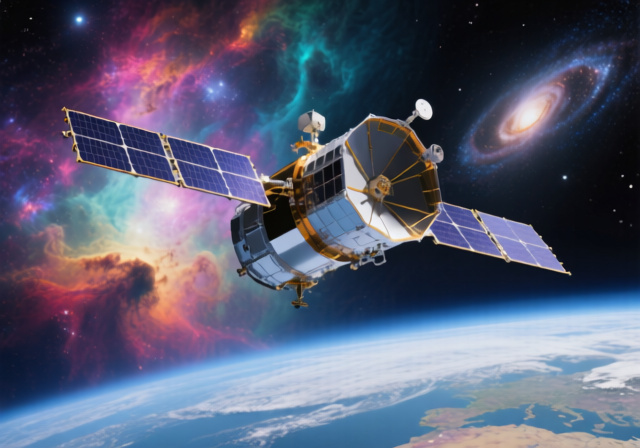
15 Hubble Space Telescope Facts (September 2026) Amazing Things to Know
Explore 15 amazing Hubble Space Telescope facts about its discoveries, technical specifications, and profound impact on our understanding of the…


Few celestial phenomena capture human imagination quite like eclipses. When the Sun vanishes in broad daylight or the Moon turns an eerie shade of red, these events remind us of our place in the vast cosmic dance. Whether you are an aspiring astronomer or simply curious about what happens in the sky above, understanding the difference between solar and lunar eclipses opens a window into the remarkable mechanics of our solar system.
The distinction between these two events shapes everything about how we experience them. A solar eclipse occurs when the Moon slides between Earth and the Sun, casting darkness across the landscape. A lunar eclipse happens when Earth positions itself directly between the Sun and Moon, casting our planet’s shadow across the lunar surface. This fundamental difference affects viewing safety, geographic visibility, and the overall character of each event.
Many people first encounter the question “what is the difference between solar and lunar eclipse?” during a significant upcoming event. The March 14, 2027 total lunar eclipse will grace skies across North and South America, while the August 12, 2027 total solar eclipse will draw crowds to Greenland, Iceland, and Spain. These upcoming events make now the perfect time to understand what makes these eclipses distinct.
This guide covers the mechanics behind each eclipse type, essential safety information for solar eclipses, and the fascinating patterns that govern when these events occur. You will learn why eclipses happen, how to view them safely, and what makes each type unique among astronomical phenomena.
| Aspect | Solar Eclipse | Lunar Eclipse |
|---|---|---|
| When it occurs | New Moon | Full Moon |
| What blocks what | Moon blocks Sun from Earth | Earth blocks Sun from Moon |
| Viewing safety | Requires eye protection | Safe for naked eyes |
| Visibility | Only from specific regions | Visible from entire night side |
| Duration | Minutes (totality) | Hours (entire eclipse) |
| Frequency | 2-5 times per year globally | 2-4 times per year globally |
Standing within the path of totality during a solar eclipse ranks among the most profound experiences nature offers. The 2017 total solar eclipse across the United States introduced millions of Americans to this phenomenon, while the October 2, 2026 annular eclipse will treat South American observers to the characteristic “ring of fire” effect. What makes these events so extraordinary is the precise cosmic coincidence that makes them possible.
The Sun dwarfs both Earth and Moon in size, yet the Moon sits at just the right distance to appear nearly identical in angular size to the Sun when viewed from Earth. This coincidence allows the Moon to completely cover the Sun’s disk during totality, revealing the magnificent corona that astronomers study intently. Without this fortunate alignment, total solar eclipses would be impossible.
Solar eclipses occur exclusively during the new moon phase, when the Moon positions itself precisely between Earth and the Sun. The Moon’s orbit carries it across our sky while fully illuminated on its far side. As the Moon traverses its path, it casts two distinct shadows onto Earth.
The umbra represents the cone of complete darkness where the Sun is entirely hidden from view. Anyone standing within this shadow experiences totality, the brief moment when the corona blazes into view. The penumbra surrounds the umbra as a region of partial shadow, where observers see only a partial obscuration of the Sun. The difference between standing in the umbra versus the penumbra defines whether you witness a total or partial eclipse.
During the brief window of totality, the experience defies description. Temperatures drop noticeably as solar radiation diminishes. Birds often fall silent, behaving as they would at dusk. Stars emerge in the darkened sky while planets become prominently visible. The corona extends outward in white streamers that dance with magnetic activity.
Many observers describe an emotional and almost primal response to witnessing totality. The sudden return of daylight after mere minutes of darkness creates a visceral reminder of our connection to these celestial mechanics. The August 12, 2027 eclipse promises similar experiences for observers in Greenland, Iceland, and Spain.
Lunar eclipses offer a dramatically different experience that prioritizes accessibility and safety. Unlike solar eclipses, you can observe a lunar eclipse with complete confidence that viewing poses no risk to your eyes. The March 14, 2027 total lunar eclipse visible across the Americas provides an ideal opportunity for beginners to experience this phenomenon without specialized equipment.
The experience of watching a lunar eclipse unfolds gradually over hours rather than the fleeting minutes of solar totality. The Moon’s slow passage through Earth’s shadow creates a contemplative atmosphere suitable for relaxed observation and photography. This accessibility makes lunar eclipses particularly popular among families and casual sky watchers.
Lunar eclipses require a full moon, when the Moon sits opposite Earth relative to the Sun. Rather than the Moon casting a shadow on Earth, our planet intercepts sunlight and projects its shadow across the lunar surface. The geometry mirrors that of solar eclipses but with Earth positioned between the Sun and Moon.
Earth’s shadow, like the Moon’s, divides into umbra and penumbra regions. When the Moon fully enters the umbra, we witness a total lunar eclipse. Partial eclipses occur when only part of the Moon enters the darkest shadow region. Penumbral eclipses happen when the Moon passes through only the outer, lighter shadow, creating subtle dimming that many observers miss entirely.
The blood moon represents one of nature’s most striking color displays, yet the science behind it proves equally fascinating. When total lunar eclipses occur, the Moon does not vanish into complete darkness. Instead, it transforms into a reddish orb that has captivated humanity throughout history.
Earth’s atmosphere acts as a lens, bending red and orange wavelengths of sunlight into the shadow region while scattering blue wavelengths outward. This process, called atmospheric refraction, ensures that some sunlight always reaches the Moon during totality. The precise color depends on multiple factors including dust particles, cloud cover, and volcanic aerosols suspended in the upper atmosphere.
Scientists use blood moon observations to study Earth’s upper atmosphere and monitor changes in air quality across the planet. Each total lunar eclipse provides data about atmospheric composition that would otherwise require expensive satellite missions. This makes citizen science contributions to lunar eclipse observation particularly valuable.
The February 10, 2028 penumbral lunar eclipse will offer observers worldwide an opportunity to observe how even subtle shadow transitions affect the Moon’s appearance. While not producing the dramatic blood moon colors, penumbral eclipses demonstrate the graduated nature of Earth’s shadow in space.
| Feature | Solar Eclipse | Lunar Eclipse |
|---|---|---|
| Moon Phase | New Moon | Full Moon |
| Alignment Order | Sun-Moon-Earth | Sun-Earth-Moon |
| Shadow Direction | Moon’s shadow on Earth | Earth’s shadow on Moon |
| Viewing Safety | DANGEROUS without protection | Completely safe |
| Required Equipment | Solar glasses, filters, indirect viewing | None needed (binoculars optional) |
| Visibility Range | Narrow path (50-170 km wide) | Entire night side of Earth |
| Duration of Maximum | Up to 7.5 minutes | Up to 106 minutes |
| Frequency at Same Location | Every 375 years on average | Every 2.5 years on average |
| Visual Effects | Corona, Bailey’s beads, diamond ring | Blood moon, gradual darkening |
The safety distinction carries life-altering consequences. Staring at the Sun, even during partial phases of a solar eclipse, causes permanent retinal damage within seconds. The intense solar radiation overwhelms and destroys light-sensitive cells in the retina. Lunar eclipses present no such hazard because you observe reflected sunlight from a safe distance.
Geographic visibility creates another fundamental difference. Solar eclipses restrict observers to narrow pathways, often just fifty to one hundred miles wide. The August 12, 2027 total solar eclipse will only be observable from a thin corridor crossing Greenland, Iceland, and Spain. Lunar eclipses flip this script, visible from every location on Earth’s night side simultaneously.
This visibility difference explains why total solar eclipses inspire such devoted followings willing to travel across continents. The rarity from any given location, combined with the brief duration, creates events that eclipse chasers plan years in advance. Lunar eclipses, by contrast, invite casual observation from backyards and balconies.
CRITICAL SAFETY WARNING: Never look directly at the Sun during a solar eclipse without certified solar eclipse glasses or proper solar filters. Permanent eye damage can occur in seconds. This warning applies during all partial phases and whenever any portion of the Sun remains visible.
Safe solar eclipse viewing demands equipment meeting the ISO 12312-2 international standard. This specification ensures eclipse glasses block 99.9997% of incoming sunlight. Always verify that your glasses bear the ISO certification label and show no signs of damage before use.
For equipment recommendations, check out our guide on telescope filters for eclipse viewing to ensure you have the right protection for your optical equipment.
Lunar eclipses require no protective equipment, making them the ideal introduction to astronomical observation. However, several enhancements can dramatically improve your experience:
When choosing equipment, understanding the differences between binoculars and telescopes can help you make the right choice for your viewing preferences and budget.
City residents need not miss celestial events. For solar eclipses, seek elevated positions with clear western horizons, as most solar eclipses occur near sunset. Urban parks away from tall buildings provide suitable locations. Lunar eclipses prove even more forgiving, as the Moon’s brightness easily penetrates light pollution.
Public observatories and astronomy clubs frequently host viewing events during significant eclipses, offering access to specialized equipment and expert guidance. These gatherings provide excellent opportunities for beginners to experience their first eclipse safely.
Pro Tip: Start with a smartphone on a tripod for lunar eclipses. Use night mode if available and experiment with exposure settings. For solar eclipses, never point your camera directly at the Sun without a certified solar filter attached to the lens.
Lunar eclipse photography rewards patience and experimentation. Begin with short exposures and gradually increase duration as you observe results on your camera screen. The blood moon’s colors often appear more vivid in photographs than to the naked eye.
The Moon orbits Earth every 27.3 days, and every month it passes between Earth and the Sun (new moon) and again on the opposite side (full moon). If eclipses happened during every such alignment, we would witness six or more eclipses annually. Instead, we typically see between two and seven eclipses each year, divided between solar and lunar types.
The answer lies in the 5-degree tilt of the Moon’s orbit relative to Earth’s orbital plane, called the ecliptic plane. Most months, the new moon passes above or below the Sun as seen from Earth, missing the precise alignment necessary for a solar eclipse. Similarly, full moons typically miss Earth’s shadow.
Eclipses only occur when the Moon’s orbital path crosses the ecliptic plane at the precise moment of new or full moon. These crossover points, called lunar nodes, define the roughly 34-day “eclipse seasons” when eclipses become possible. Two eclipse seasons occur each year, spaced approximately six months apart.
Ancient astronomers discovered that eclipses follow remarkably predictable patterns spanning centuries. The Saros cycle, a period of approximately 18 years, 11 days, and 8 hours, represents the time required for the Sun, Moon, and Earth to return to nearly identical relative positions. This predictable rhythm enables modern astronomers to forecast eclipses centuries into the future.
During each Saros cycle, roughly 40 solar eclipses and 29 lunar eclipses occur in specific sequences. Solar eclipses within a given Saros series share similar characteristics, including the geographical regions they cross. The August 12, 2027 total solar eclipse belongs to Saros series 146, which last produced a total solar eclipse in 2009.
Understanding the Saros cycle explains why eclipses seem to “cluster” in certain years. When multiple Saros series align, a particular year might witness five or more eclipses. Conversely, years with fewer eclipses simply experience less favorable Saros series alignments.
This cyclical nature informed ancient eclipse prediction and mythology. Many cultures considered eclipses omens precisely because their occurrence followed such long, mysterious cycles that only dedicated observers could track. Today, the Saros cycle helps scientists plan observation campaigns and photographers position themselves for optimal viewing.
Throughout human history, eclipses have inspired wonder, fear, and fascination in equal measure. Ancient Chinese astronomers recorded eclipses on oracle bones more than 4,000 years ago, developing some of humanity’s earliest predictive astronomy. Greek historians documented eclipses as chronological markers in their chronicles of warfare and politics.
Many cultures developed mythological explanations for eclipses. Chinese traditions spoke of a celestial dragon devouring the Sun or Moon. Hindu mythology featured the demon Rahu, who chasing the Sun and Moon occasionally catches and swallows them. Scandinavian folklore described wolves chasing celestial bodies, occasionally catching the Sun or Moon.
Some of these cultural narratives carried grains of scientific truth. The ancient Greek understanding that Earth is round may have emerged partially from observations of lunar eclipses, where Earth’s shadow always appears circular regardless of orientation. This consistent observation demonstrated Earth’s spherical nature centuries before direct confirmation.
Modern eclipse observations continue producing significant scientific discoveries. The 1919 total solar eclipse confirmed Einstein’s theory of general relativity by demonstrating how starlight bends around massive objects. Contemporary solar eclipses allow astronomers to study the corona and solar wind without expensive specialized equipment.
Lunar eclipses have proven valuable for atmospheric science. When sunlight passes through Earth’s atmosphere during totality, it reveals the composition of our air through spectral analysis. Volcanic eruptions and pollution events create measurable effects on blood moon coloration, providing data for climate monitoring.
The coming years offer exceptional eclipse viewing opportunities across the globe. Mark these dates on your calendar and begin planning your observations:
Planning Tip: Eclipse paths are often narrow. Book accommodations early as hotels in the path of totality sell out months in advance for major solar eclipse events. Consider joining astronomy club expeditions for optimal positioning and expert guidance.
A solar eclipse occurs when the Moon passes between the Sun and Earth, blocking sunlight and casting a shadow on Earth. A lunar eclipse occurs when Earth passes between the Sun and Moon, casting Earth’s shadow on the Moon. The key difference lies in which celestial body blocks sunlight from reaching the other.
Total solar eclipses are rarer from any given location. While solar and lunar eclipses occur about the same number of times globally each year (2-5 solar and 2-4 lunar), the path of a total solar eclipse is very narrow. A specific location might wait 375 years on average to witness a total solar eclipse, but sees a total lunar eclipse roughly every 2.5 years.
Lunar eclipses are completely safe because you are looking at the Moon reflecting sunlight, not directly at the Sun itself. During a solar eclipse, you would be staring directly at the Sun, which emits intense solar radiation that can permanently damage your retina within seconds without proper eye protection.
The four main eclipse types are: 1) Total solar eclipse – the Moon completely covers the Sun, 2) Annular solar eclipse – the Moon leaves a ring of Sun visible around its edges, 3) Partial solar eclipse – the Moon only partially covers the Sun, 4) Total lunar eclipse – Earth’s shadow completely covers the Moon, often creating a blood moon effect.
For lunar eclipses, yes – use a tripod and night mode for best results. For solar eclipses, never point your smartphone directly at the Sun without a certified solar filter. You can photograph the Sun through eclipse glasses using your phone’s camera app, or use the pinhole projector method for indirect imaging.
For solar eclipses, certified ISO 12312-2 solar glasses are essential. Optional equipment includes solar filters for binoculars or telescopes. For lunar eclipses, no special equipment is needed – your naked eyes work perfectly. Binoculars or a telescope enhance the view considerably. Check our guide on choosing astronomy equipment for specific recommendations.
On March 14, 2027, a total lunar eclipse will be visible across North and South America. The Moon will pass completely through Earth’s umbra, creating a blood moon that may display copper, orange, or deep red coloration depending on atmospheric conditions.
On August 12, 2027, a total solar eclipse will cross Greenland, Iceland, and Spain. Observers within the path of totality will witness the complete obscuration of the Sun, experiencing totality for up to several minutes and seeing the magnificent solar corona.
Eclipses do not occur every month because the Moon’s orbit is tilted about 5 degrees relative to Earth’s orbital plane. Most new moons and full moons pass above or below the line between Earth and Sun, missing the precise alignment required for an eclipse. Eclipses only occur during eclipse seasons, roughly 34-day periods when the Moon’s orbit crosses the ecliptic plane.
The Saros cycle is an approximately 18-year, 11-day cycle after which the Sun, Moon, and Earth return to nearly identical positions. This predictable pattern allows astronomers to forecast eclipses centuries in advance. Each Saros series contains roughly 40 solar eclipses and 29 lunar eclipses occurring in specific sequences.
A blood moon is the reddish coloration the Moon displays during total lunar eclipses. This color results from Earth’s atmosphere bending red and orange wavelengths of sunlight into the shadow region while scattering blue wavelengths. The exact shade varies based on atmospheric conditions including dust, clouds, and volcanic aerosols.
Both solar and lunar eclipses offer uniquely compelling astronomical experiences, though they demand different approaches from observers. Solar eclipses require careful preparation, certified safety equipment, and often significant travel to reach the path of totality. When you witness that corona blazing against the darkened sky, the effort proves worthwhile many times over.
Lunar eclipses welcome everyone with open arms. No special equipment is required, no dangerous radiation threatens your eyesight, and the event unfolds gradually enough to enjoy without stress. The March 14, 2027 total lunar eclipse across the Americas represents an ideal introduction to eclipse observation.
Understanding the difference between solar and lunar eclipses transforms you from a confused spectator into an informed observer capable of appreciating the precise celestial mechanics at play. Whether you find yourself watching a blood moon rise over your city or planning travel to witness a future total solar eclipse, this knowledge enriches every moment.
Start preparing now for upcoming eclipses. Secure certified solar glasses well in advance of any solar eclipse viewing. Consider joining your local astronomy club for guidance and community observation events. The universe offers these spectacles freely to those who seek them safely.
The cosmos continues its ancient dance above us, predictable yet endlessly fascinating. Eclipses remind us that we participate in something larger, part of a celestial machinery operating across mind-bending scales of distance and time. Look up, stay curious, and never stop wondering.