![What Is A Converging Lens: Complete Guide [cy]](https://revellphotography.com/wp-content/uploads/2026/09/featured-update-4555-1788717094362.jpg)
What Is A Converging Lens: Complete Guide 2026
Complete guide to converging lenses - learn how these optical elements bend light to form images, understand ray diagrams, and…

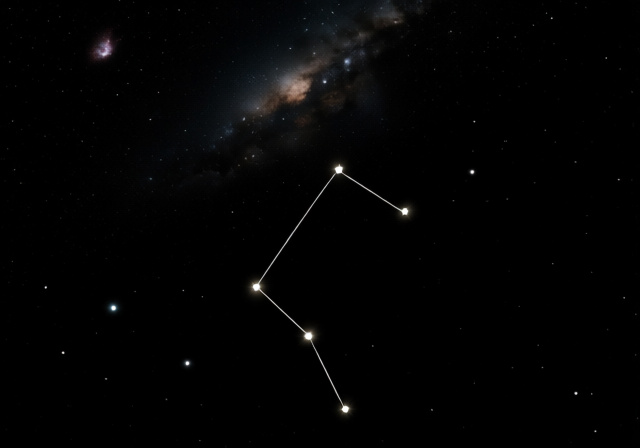
The Sagittarius constellation anchors the brightest, most dramatic section of our summer night sky. Every August, observers across both hemispheres turn south to follow the steam of the Milky Way rising from a small group of stars shaped unmistakably like a teapot. That familiar pattern points our eyes, and our telescopes, directly into the heart of the Milky Way galaxy.
Sagittarius is the ninth sign of the zodiac, a centaur archer in Greek mythology, and the largest constellation in the Southern Hemisphere. It covers 867 square degrees, hosts 15 Messier objects, and contains the radio source Sagittarius A* at the core of our galaxy. Modern star catalogs list roughly 220 Bayer and Flamsteed designated stars within its boundaries, plus several named asterisms that every stargazer should learn to recognize.
This 2026 guide collects the most current data on the constellation, the deep sky treasures that fill it, and the practical observing and photography windows you can use this year. We have integrated the latest Event Horizon Telescope findings, JWST observations of nearby nebulae, and updated star counts from the IAU Working Group on Star Names. The Sagittarius region of the sky rewards patience, dark skies, and a wide-field eyepiece, and the rewards grow every year as new instruments probe deeper into the galactic core.
By the end of this article, you will know how to identify the Teapot asterism, name the seven brightest stars that outline it, find the Milky Way center with the naked eye, and plan a 2026 observation session around the best new moon windows. You will also learn which deep sky objects are visible with binoculars versus a small telescope, and which Messier targets deserve a place on your summer observing list.
Sagittarius is one of the most studied and photographed regions in the entire sky. The following ten facts capture what makes it scientifically and culturally significant, from ancient mythology to cutting-edge black hole imaging.
Sagittarius sits in the southern celestial hemisphere, with its center near right ascension 19 hours and declination -29 degrees. The constellation covers a roughly rectangular region from RA 17h 44m to 20h 21m and from declination -11.6 degrees to -45.0 degrees. From mid-northern latitudes, it never climbs more than 20 to 30 degrees above the southern horizon, so an unobstructed view to the south is essential.
Step-by-step locating guide: Find a dark location and face south about an hour after sunset during July, August, or September. Identify the bright red star Antares in Scorpius, then look to the left (east) of the Scorpion’s stinger. The bright stars of the Teapot sit low in the sky, with steam from the Milky Way rising out of the spout on the right side of the pattern.
The Teapot asterism is your primary landmark. Eight stars outline the body and lid: Kaus Australis, Kaus Media, Kaus Borealis, Alnasl, Ascella, Nunki, Phi Sagittarii, and Tau Sagittarii. From the Northern Hemisphere, the Teapot appears tilted with the handle on the left and spout pointing right. From the Southern Hemisphere, the same asterism stands upright and even higher in the sky.
To locate the galactic center, draw an imaginary line from the top of the lid (Kaus Borealis) through the spout (Alnasl) and extend it about 30 degrees. This line lands directly on Sagittarius A* and the brightest, dustiest region of the Milky Way. Binoculars will reveal dense star fields and dark nebulae along this line. The 2026 galactic center culmination occurs near midnight local time on August 1, and again one hour earlier each month as the year progresses.
Sagittarius contains 17 officially named stars and over 200 fainter Bayer and Flamsteed designations within its boundary. The seven brightest stars all sit at or above magnitude 3.0, making the Teapot one of the easiest asterisms to recognize even in moderately light-polluted skies. Each named star carries a story rooted in Arabic, Latin, or modern IAU tradition.
| Star Name | Designation | Magnitude | Distance (ly) | Spectral Type |
|---|---|---|---|---|
| Kaus Australis | Epsilon Sagittarii | 1.79 | 145 | Blue-white binary |
| Nunki | Sigma Sagittarii | 2.02 | 228 | Blue-white dwarf |
| Ascella | Zeta Sagittarii | 2.60 | 89 | Binary star |
| Kaus Media | Delta Sagittarii | 2.72 | 306 | Orange giant |
| Kaus Borealis | Lambda Sagittarii | 2.82 | 77 | Orange giant |
| Alnasl | Gamma-2 Sagittarii | 2.98 | 96 | K-type giant |
| Rukbat | Alpha Sagittarii | 3.97 | 170 | Blue-white dwarf |
| Polis | Mu Sagittarii | 3.86 | 3,000+ | Multiple star |
| Pistol Star | V4647 Sgr | variable | 25,000 | Luminous blue variable |
The name Kaus Australis means the southern part of the bow, and the three Kaus stars (Borealis, Media, and Australis) trace the curved archer’s bow. Kaus Australis is actually a spectroscopic binary with an orbital period of 21.6 years, and its components are 250 times and 70 times the Sun’s luminosity. Nunki, the constellation’s second brightest star, is a fast-rotating blue-white dwarf that completes one rotation every 1.14 days, slightly faster than its breakup velocity.
Alpha Sagittarii is officially named Rukbat, meaning the archer’s knee. Despite its Alpha designation, Rukbat shines at only magnitude 3.97 and is the 21st brightest star in the constellation. This naming confusion is a reminder that Bayer designations were assigned in 1603 based on rough position rather than brightness. The brightest star, Kaus Australis, is properly Epsilon Sagittarii.
Near the galactic center, hidden behind 25,000 light-years of dust, lies the Pistol Star, one of the most luminous stars ever cataloged. Discovered in the 1990s using the Hubble Space Telescope, the Pistol Star radiates around 1.6 million times the Sun’s luminosity in visible light and over 10 million times across all wavelengths. It sits at the heart of the Pistol Nebula, a small emission nebula lit by the star’s fierce ultraviolet radiation.
The Pistol Star is a member of the Quintuplet Cluster, a dense young star cluster also located near the galactic center. The cluster gets its name from five infrared-bright stars discovered in 1990, and it is one of only a handful of massive young clusters in the central 100 parsecs of the Milky Way. The cluster is about 4 million years old and contains several luminous blue variables and Wolf-Rayet stars, all shrouded in dust that makes them invisible at optical wavelengths.
Beyond the Teapot, Sagittarius contains three smaller named asterisms. The Milk Dipper, sometimes called the Ladle, sits at the western edge of the constellation and consists of six stars including Polis (Mu Sagittarii) and the fainter stars that form the handle of the dipper. The Milk Dipper dips into the Milky Way and is a useful reference for finding nearby deep sky objects.
The Terebellum is a quadrilateral of four faint stars at the eastern edge of Sagittarius, representing the back end of the centaur. The four stars are Omega, 59, 60, and 62 Sagittarii, all between magnitude 4.4 and 5.1. While the Terebellum is not bright enough to stand out from city skies, it provides a useful reference for finding the Small Sagittarius Star Cloud nearby.
Sagittarius carries mythological weight across at least seven distinct cultural traditions. The most familiar Western interpretation comes from Greek and Roman mythology, where the constellation represents a centaur archer drawing a bow. The centaur’s arrow is aimed westward at the red heart of Scorpius, Antares, in an eternal celestial chase.
In Greek myth, the Sagittarius archer is most often identified as Chiron, the wisest of the centaurs. Chiron tutored heroes including Achilles, Jason, and Asclepius, and his presence in the sky honored his role as a teacher and healer. A competing tradition identifies the figure as Crotus, a satyr who invented archery and served the Muses on Mount Helicon. Zeus placed Crotus among the stars at the Muses’ request, with a constellation honoring both his skills and his devotion to the arts.
Babylonian astronomers knew this region as Pabilsag, a composite deity with a human head, panther head, wings, and a scorpion tail. Pabilsag was a minor god associated with war and the city of Larak. Sumerian star lists from 1100 BCE include even older references, suggesting that the archer pattern predates Greek civilization by at least 1,500 years.
Chinese astronomy split the stars of Sagittarius across two separate asterisms. The stars of the Teapot belonged to the Dipper mansion (the source of the Milky Way), while the stars of the bow and arrow fell into the Ladle mansion. The two mansions marked the Yellow River’s source, with the Milky Way representing the river itself. Korean and Mongolian star charts inherited this Dipper and Ladle system and used it to track the night sky for over a thousand years.
Polynesian navigators recognized the Teapot and the rising Milky Way as Hoku’ula, a celestial fishhook belonging to the demigod Maui. The hook pulled the Milky Way upward from the sea, mirroring the islands that Maui is said to have fished up from the Pacific Ocean. Tahitian and Hawaiian traditions preserved this image well into the modern era, and the fishhook remains a cultural touchstone across Polynesia.
South American cultures, including the Incas, saw a different pattern in the same stars. The dark nebulae of the Milky Way in Sagittarius were called the Llama or the Mother Llama, with smaller dark patches representing baby llamas nursing from their mother. The bright stars of the Teapot were the eyes and limbs of the celestial llama, and the rising of the constellation marked the start of the llama birthing season in the Andes.
Sagittarius is the richest hunting ground for deep sky observers in either hemisphere. Because the constellation sits in the direction of the galactic center, it contains the densest concentration of nebulae, star clusters, and star-forming regions visible from Earth. The region hosts 15 Messier objects, two naked-eye star clouds, and dozens of fainter NGC and IC targets.
The Lagoon Nebula (M8) sits about 5,200 light-years away and is one of the largest emission nebulae in the night sky. At magnitude 6.0, it is visible to the naked eye as a bright patch above the Teapot’s spout. Through binoculars, M8 shows a distinctive oval shape with a darker lane dividing it in two. A 6-inch telescope reveals the open cluster NGC 6530 embedded in the nebula, along with the Hourglass Nebula, a smaller region of intense star formation near the cluster’s center.
Just 2 degrees north of the Lagoon sits the Trifid Nebula (M20), a combination emission, reflection, and dark nebula. M20 gets its name from three dark dust lanes that divide the glowing red gas into three sections. The Trifid sits 9,000 light-years away and shines at magnitude 6.3. Through a 4-inch telescope, the contrast between the blue reflection region and the red emission region is striking. Recent JWST observations have revealed young stellar protostars embedded in the dust pillars at the Trifid’s core.
The Omega Nebula (M17), also called the Swan or Horseshoe Nebula, lies further north in Sagittarius near the border with Scutum. At 5,500 light-years distance, M17 is one of the brightest star-forming regions in the galaxy. The nebula’s bar-shaped emission structure is visible in binoculars, while a moderate telescope reveals the curved neck of the swan and the dark dust lanes that give the object its characteristic shape.
The Large Sagittarius Star Cloud (M24) is the brightest visible section of the Milky Way and one of the finest binocular targets in the sky. M24 is not a true deep sky object but a dense star cloud, a window through the foreground dust into the Sagittarius-Carina arm of the galaxy. Visible to the naked eye from a dark site, M24 spans more than 90 arcminutes and contains thousands of resolvable stars. Embedded within the star cloud is the open cluster NGC 6603, which sits about 10,000 light-years away.
The Small Sagittarius Star Cloud, cataloged as M24 in some older references but properly designated as a separate cloud, sits near the Terebellum asterism. It is fainter and smaller than the Large Star Cloud but offers a similar window into the dense star fields of the inner galaxy. Both clouds are excellent targets for wide-field binoculars and small rich-field telescopes.
Astronomers have a special tool for studying this region: Baade’s Window, a relatively clear patch of sky near the galactic center where foreground dust is unusually thin. Walter Baade identified the window in the 1940s, and it has been used ever since to study the stars and globular clusters around the galactic bulge. Baade’s Window sits in Sagittarius near the globular cluster NGC 6522 and offers one of the clearest optical views into the Milky Way’s center.
Messier 22 is the brightest globular cluster in Sagittarius and one of the finest in the entire sky. Located 10,600 light-years away and shining at magnitude 5.1, M22 is visible to the naked eye from dark sites. The cluster contains over 100,000 stars and spans 32 arcminutes, about the apparent size of the full Moon. A 4-inch telescope resolves the cluster into thousands of individual stars, and a 6-inch shows the characteristic bright central condensation.
Sagittarius hosts seven additional Messier globular clusters: M28, M54, M55, M69, M70, M75, and M107. M54 is particularly interesting because it is associated with the Sagittarius Dwarf Elliptical Galaxy, the closest satellite galaxy to the Milky Way. Discovered in 1994 by Rodrigo Ibata, Martin Irwin, and Gerry Gilmore, Sag DEG is being tidally disrupted and stretched into a stream of stars that wraps around the Milky Way.
Sagittarius A* is the compact radio source at the dynamical center of the Milky Way. Its mass of 4.297 million Suns is constrained by tracking the orbits of nearby stars, including the star S2 (S0-2), which completes a 16-year orbit around Sgr A*. Observations of this orbit earned the 2020 Nobel Prize in Physics for Reinhard Genzel and Andrea Ghez.
On May 12, 2022, the Event Horizon Telescope collaboration released the first image of Sgr A*, showing a bright ring of emission surrounding the black hole’s shadow. A 2024 follow-up revealed the magnetic field structure around the event horizon, with strongly ordered field lines spiraling outward. These fields are similar in strength and structure to those around M87*, suggesting that magnetic fields are a universal feature of supermassive black holes.
While amateur astronomers cannot see Sgr A* itself, the surrounding region contains a wealth of objects. The Arches Cluster, the Quintuplet Cluster, and the Central Cluster are three young massive star clusters within 100 parsecs of the galactic center. They are hidden behind 25 magnitudes of dust extinction and require infrared telescopes to study. Several gas clouds, including G2, have been observed making close passes near Sgr A* and provide evidence of the black hole’s gravitational influence.
Sagittarius is associated with several minor meteor showers that radiate from the constellation’s boundaries. The most active are the Sagittarids, which run from mid-April to mid-July with several sub-streams peaking in May and June. Rates are typically low, between 2 and 5 meteors per hour, but the meteors are often bright and slow-moving. Best viewing is in the early morning hours when Sagittarius is high in the southern sky.
Variable star observers find several interesting targets in Sagittarius. VX Sagittarii is a red supergiant and one of the largest stars visible in the constellation, varying between magnitudes 6.6 and 8.5 over 732 days. RY Sagittarii is an R Coronae Borealis variable that fades unpredictably when carbon dust condenses in its atmosphere. W Sagittarii is a Cepheid variable, useful for distance measurements within the galaxy.
Photographing Sagittarius is a rite of passage for astrophotographers. The combination of the Teapot, the Milky Way core, and dozens of bright deep sky objects in one frame is unmatched anywhere else in the night sky. The 2026 Milky Way core season runs from late May through early September, with peak visibility in July and early August.
For 2026 planning, the galactic center transits at midnight local time on or around June 30, then one hour earlier each month. The best dark-sky window of the year falls between the new moon of July 14 and the new moon of August 11, with the August 8-9 weekend offering a particularly dark, moonless period near the peak of the Perseid meteor shower. From mid-northern latitudes, the core reaches about 25 degrees above the southern horizon at culmination; from the Southern Hemisphere, it climbs directly overhead.
For wide-field Milky Way shots, use a 14-24mm lens on a full-frame body. Open the aperture to f/2.8 or wider, set ISO between 3200 and 6400, and use the 500 rule to determine exposure time (500 divided by focal length, so 500 / 14 = 35 seconds). For tighter deep sky images of M8, M20, and M17, a 50-135mm lens with a tracking mount will reveal the dust lanes and color structure that make these nebulae famous.
Modern star trackers like the Sky-Watcher Star Adventurer GTi and the ZWO AM5 mount make tracked exposures practical for solo photographers. A tracker at 135mm focal length with 2-minute exposures and a modern mirrorless camera will pull out the dark dust lanes in the Trifid and the pink hydrogen-alpha structure around the Lagoon. Stack 20 to 30 frames in DeepSkyStacker or PixInsight for noise-free final images.
Composition matters as much as settings. Position the Teapot in the lower third of the frame and let the Milky Way stream upward through the image. Foreground elements like cacti, archways, mountains, or old barns add context and depth. For more detailed techniques and equipment recommendations, our complete guide to photographing stars covers everything from basic settings to advanced processing techniques.
Success in observing Sagittarius depends on three factors: timing, location, and moon phase. The constellation culminates highest in the sky during summer months in the Northern Hemisphere and winter months in the Southern Hemisphere. Plan your sessions around new moon weekends for the darkest possible skies, and check a light pollution map to find a Bortle class 3 or darker site.
| 2026 Date | Moon Phase | Visibility Window | Best For |
|---|---|---|---|
| May 11 | New Moon | After midnight | First Milky Way core opportunity |
| June 10 | New Moon | 11 PM to 4 AM | Pre-summer season |
| July 9-14 | New Moon | 10 PM to 4 AM | Peak Milky Way core season begins |
| August 8-11 | New Moon | 9 PM to 4 AM | Optimal 2026 window (overlaps Perseids) |
| September 7 | New Moon | 8 PM to 2 AM | Final wide-field opportunity |
| October 7 | New Moon | After midnight | Last chance before Sagittarius sets |
From the Northern Hemisphere, August evenings offer the best viewing conditions. The constellation culminates due south around 9 PM and is highest in the sky for the year. The Teapot never climbs very high above the horizon, typically 20 to 30 degrees at most, so finding a location with an unobstructed southern view is crucial. Look for hilltops, coastal headlands, or open desert sites with clear sight lines to the south.
Southern Hemisphere observers have a major advantage. From Australia, New Zealand, southern Africa, and South America, Sagittarius passes directly overhead during winter months (June through August). The high elevation means less atmospheric distortion, less dust and light pollution, and clearer views of the galactic center. From Sydney, for example, Sagittarius reaches 80 degrees above the northern horizon, almost at the zenith.
Dark skies are non-negotiable for the full Sagittarius experience. The constellation contains many faint objects, including the star clouds, the dark nebulae, and the faint outer regions of the bright emission nebulae, that disappear under light pollution. Plan to drive at least 50 miles from major cities, and check the Bortle scale rating of your observing site. A Bortle class 3 or darker site will reveal the Milky Way as a structured band of dust and stars, not just a vague glow.
For equipment choices, the right tool depends on your goals. Wide-field binoculars (7×50 or 10×50) are ideal for sweeping the Milky Way center and taking in the large star clouds and the Teapot asterism. A small refractor at low power gives similar views with more magnification. For deep sky detail on individual targets, a 6- to 8-inch Dobsonian telescope with a 30mm wide-field eyepiece will show M8, M20, and M22 in all their glory. For advice on equipment, our binoculars vs telescope guide breaks down the trade-offs.
Temperature and weather also matter. Clear, stable nights with low humidity provide the sharpest views. Summer evenings can bring haze and atmospheric turbulence, especially near the horizon where Sagittarius appears for northern observers. The 2026 Perseid meteor shower peaks on the night of August 12-13, the day after new moon, giving observers a chance to combine Milky Way viewing with one of the year’s best meteor displays.
The Sagittarius name and symbol appear across modern culture. The astronomical symbol for Sagittarius is a stylized arrow, often drawn as a half-arrow pointing up and to the right. This symbol appears in horoscopes, on military insignia, on spacecraft, and in the names of naval vessels. The USS Sagittarius (AKN-2) was a cargo ship in the U.S. Navy during the 1950s, and several submarines from the United States, France, and Russia have carried the Sagittarius name.
Sagittarius A1 is also the name of a French sounding rocket family. The original A1 rocket, launched in the 1960s, was used for upper atmospheric research. The more recent A1 variant serves as a target drone for naval weapons testing. The naming follows a French tradition of using zodiacal and constellation names for rocket programs.
Sagittarius is the largest constellation in the Southern Hemisphere at 867 square degrees, contains 15 Messier objects, hosts the Teapot asterism, points toward the Milky Way center, and was first imaged as a black hole by the Event Horizon Telescope in 2022.
August is the best month for viewing Sagittarius from the Northern Hemisphere, with the constellation culminating at its highest point around 9 PM. The Milky Way core season runs from late May through early September each year.
Sagittarius contains 220 Bayer and Flamsteed designated stars within its IAU boundary, with 17 officially named stars. 32 stars in the constellation host confirmed exoplanets, including several multi-planet systems.
Sagittarius represents a centaur archer drawing a bow, most often identified as Chiron, the wisest of the centaurs in Greek mythology, or Crotus, a satyr who invented archery. The archer aims his arrow westward at the red star Antares in Scorpius.
Yes, Sagittarius contains the direction to the Milky Way center. The supermassive black hole Sagittarius A* sits 26,000 light-years away, and the spout of the Teapot asterism points directly toward it.
Look south during summer evenings from the Northern Hemisphere. Find the bright red star Antares in Scorpius, then look east to the Teapot, a pattern of eight bright stars forming a recognizable teapot shape with the Milky Way rising from the spout.
For wide-field views, 7×50 or 10×50 binoculars work well and reveal the Milky Way star clouds. For detailed observation of nebulae and clusters, a 6- to 8-inch telescope with a low-power eyepiece resolves M8, M20, M22, and many other objects.
Kaus Australis, also known as Epsilon Sagittarii, is the brightest star in Sagittarius at magnitude 1.79. It lies 145 light-years away and is actually a spectroscopic binary with an orbital period of 21.6 years.
Sagittarius A* is the supermassive black hole at the center of the Milky Way, with a mass of 4.297 million Suns. The Event Horizon Telescope imaged it directly in May 2022, showing a bright ring of emission around its shadow.
Sagittarius means archer in Latin. The constellation is depicted as a centaur drawing a bow, and the name traces back through Roman and Greek sources to Babylonian and Sumerian traditions that also saw an archer figure in the same stars.
Yes, Sagittarius is the ninth sign of the zodiac. The Sun passes through Sagittarius from November 22 to December 21 each year, during which time the constellation is hidden in the solar glare and not visible at night.
Sagittarius is a constellation, not a single object, so its stars sit at very different distances. The brightest star, Kaus Australis, is 145 light-years away, while the galactic center at Sagittarius A* sits 26,000 light-years from Earth.
Sagittarius offers something for every level of astronomy enthusiast in 2026, from casual stargazers to serious astrophotographers. The combination of the iconic Teapot asterism, the densest star clouds in the night sky, 15 Messier objects, and the supermassive black hole at the Milky Way center makes Sagittarius the single most rewarding constellation to learn. Plan at least one summer observing session around a new moon in July or August, drive to a dark-sky site, and allow yourself a full night to take in the full sweep of the region.
Start with binoculars to learn the layout of the Teapot and the surrounding Milky Way. Identify the star clouds, the Lagoon, and the Trifid before moving to a telescope for the globular clusters and the fainter nebulae. Bring a camera and tripod for wide-field Milky Way shots, and consider a tracker for the deeper objects like M8 and M17. For more advanced equipment choices, our guide to telescope types can help you choose the right instrument for observing Sagittarius’s many treasures, and our recommendations for telescope filters can enhance your viewing of M8, M17, and M20.
The Milky Way core season of 2026 will be one of the best in recent years. The August new moon falls on the 8th, and the Perseid meteor shower peaks four days later under a thin crescent moon. This combination of dark skies, warm summer nights, and falling meteors makes the second week of August the prime 2026 window for Sagittarius observation. Mark your calendar, pick a dark site, and prepare for one of the most spectacular sights in astronomy.
The night sky has inspired human curiosity for as long as our species has looked up, and Sagittarius sits at the very heart of that story. Take the time to explore this remarkable constellation in 2026, and you will gain not just astronomical knowledge but a deeper sense of your place in the galaxy. The archer’s arrow still points toward the Milky Way center, and the Milky Way center still has secrets to share.