Digital Camera Sales Statistics: 2026 Data & Recovery
Comprehensive analysis of digital camera market statistics showing the dramatic 94% decline from 2010-2023 and emerging recovery signs in 2024.…

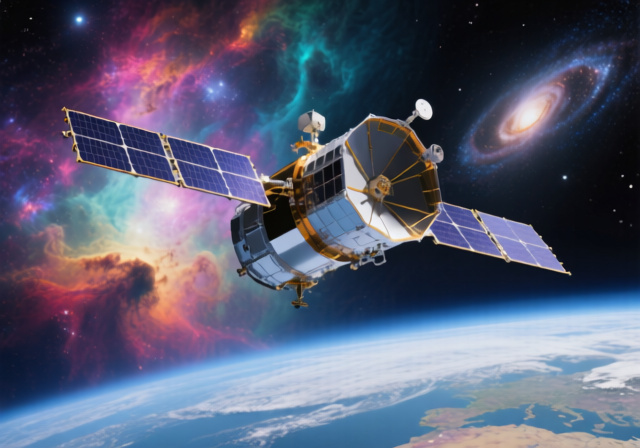
Thirty-six years after it rocketed into orbit, the Hubble Space Telescope is still working. As of 2026, the observatory that was once written off as a national embarrassment is still capturing images of distant galaxies, mapping dark matter, and turning out peer-reviewed papers at a rate most modern missions can only envy. Few instruments in the history of science have aged this gracefully, and fewer still have reshaped what ordinary people think the universe looks like.
In a year when the James Webb Space Telescope dominates headlines, it is easy to forget that Hubble remains the workhorse of ultraviolet astronomy. The two observatories now operate in tandem: Webb peers into the infrared universe, while Hubble continues its unmatched survey of ultraviolet and visible light. Together they form a layered view of the cosmos that no single telescope can replicate. This updated guide walks through 15 essential Hubble Space Telescope facts, traces its journey from a flawed mirror to a record-breaking scientific instrument, and explains why the telescope still matters in 2026.
I have followed Hubble’s mission since the 1993 servicing mission restored its vision, and I have used nearly every public dataset it has produced. What follows is a fresh look at the observatory, including updated 2026 statistics, an honest comparison with Webb, and the practical details anyone curious about space telescopes actually wants to know.
Before diving into the full list of facts, here is a quick snapshot of where Hubble stands in 2026. The numbers below are drawn from NASA, ESA, and the Space Telescope Science Institute (STScI) and reflect the observatory’s current operational status.
Hubble Space Telescope: Quick Stats (2026)
Launch date: April 24, 1990 (Space Shuttle Discovery, STS-31)
Total mission duration: 36 years and counting
Orbital altitude: approximately 340 miles (547 km) above Earth
Orbital speed: about 17,000 mph (27,400 km/h)
Orbital period: 95-96 minutes per orbit
Primary mirror: 2.4 meters (94.5 inches) across
Power generation: up to 5,200 watts from two solar arrays
Power consumption: around 2,100 watts in normal operation
Total observations to date: more than 1.6 million
Peer-reviewed papers: over 20,000 and rising
Servicing missions completed: 5 (1993 to 2009)
Status as of 2026: Active and scientifically productive
Here are the most important facts about Hubble, drawn from over three decades of public mission data. Some of these figures have been updated for 2026, including the running totals of observations and peer-reviewed publications.
Hubble’s path from a back-of-the-envelope idea to a working observatory took nearly half a century. Along the way it survived budget cuts, the Challenger disaster, and a public failure that could have ended the program entirely.
The story really begins in 1946, when astrophysicist Lyman Spitzer Jr. published a paper arguing that a telescope above Earth’s atmosphere could see the universe without atmospheric distortion and detect wavelengths blocked from the ground. At the time, the technology to build such an instrument did not exist, but the idea was powerful enough to survive two decades of skepticism.
Real planning began in the 1970s, when NASA started work on what was then called the Large Space Telescope (LST). Nancy Grace Roman, NASA’s first Chief of Astronomy and often called the “Mother of Hubble,” championed the project inside the agency and on Capitol Hill. Congress approved funding in 1977, and the telescope was renamed the Hubble Space Telescope in 1983 to honor the astronomer whose discoveries had made the whole project meaningful.
The Challenger disaster in January 1986 pushed Hubble’s launch back nearly four years. While painful at the time, the delay allowed engineers to refine the spacecraft’s systems and run more thorough pre-flight tests. By the time Hubble finally reached orbit on April 24, 1990, riding aboard Space Shuttle Discovery during mission STS-31, expectations were enormous.
Those expectations collapsed within weeks. The first images revealed that Hubble’s mirror suffered from spherical aberration, an optical flaw that spread starlight into a fuzzy halo rather than a sharp point. Newspapers called it a $1.5 billion blunder. Congress held hearings. For a moment, the entire program looked doomed.
The recovery came in December 1993, when the crew of Space Shuttle Endeavour rendezvoused with Hubble and installed COSTAR, the Corrective Optics Space Telescope Axial Replacement. COSTAR acted like a pair of prescription glasses for the entire observatory, and the first corrected images of spiral galaxy M100 announced to the world that Hubble was finally working as designed. The mission is still taught in engineering schools as a textbook example of how to recover from a high-stakes failure.
More than three and a half decades after launch, Hubble is still doing science because its original engineering was conservative, its instruments were designed to be swapped out, and its operators learned how to squeeze extra life out of aging hardware. Walking through the systems in 2026 reveals an observatory that has been continuously upgraded since 1990.
At the heart of the telescope sits a 2.4-meter (94.5-inch) primary mirror, coated with a thin layer of aluminum and a top coat of magnesium fluoride. That coating reflects ultraviolet, visible, and near-infrared light efficiently while resisting corrosion in the harsh space environment. If the mirror were scaled up to the size of Earth, the largest bump on its surface would still be only about six inches tall.
Hubble points with extraordinary precision using a combination of gyroscopes, reaction wheels, and Fine Guidance Sensors that lock onto reference stars. Three rate-sensing units measure how fast the spacecraft is rotating, while four reaction wheels adjust its orientation without firing thrusters. When all systems are healthy, Hubble can hold a target steady for hours at a time, an essential capability for capturing light from the faintest galaxies in the universe.
Power comes from two 25-foot solar arrays that together generate up to 5,200 watts of electricity when fully illuminated. Of that, the spacecraft uses roughly 2,100 watts during normal science operations, about the draw of a standard hair dryer. The arrays charge six nickel-hydrogen batteries that keep Hubble running during the 36 minutes of every 96-minute orbit when it passes through Earth’s shadow. Those batteries have been replaced twice during servicing missions.
All of Hubble’s science data travels through the Tracking and Data Relay Satellite System (TDRSS), a constellation of communications satellites in geosynchronous orbit. From there the data hops to the White Sands ground station in New Mexico and on to the Space Telescope Science Institute in Baltimore, where it is processed, archived, and delivered to astronomers worldwide.
The current instrument suite reflects more than twenty years of upgrades. The Wide Field Camera 3 (WFC3) remains the primary imager across ultraviolet, visible, and near-infrared wavelengths. The Cosmic Origins Spectrograph (COS) studies the large-scale structure of the universe by breaking light into its component wavelengths, while the Advanced Camera for Surveys (ACS) handles deep wide-field imaging. Together these three instruments cover most of the science cases Hubble was built to address.
What still fascinates me about Hubble’s imaging chain is how much of it resembles a careful astrophotography workflow. Each detector is monochrome. Long exposures build up signal photon by photon, sometimes over several days, while reaction wheels slowly rotate the spacecraft to keep the same stars in the field of view. Filters select specific wavelengths, and the resulting black-and-white frames are later combined and colorized so that each hue encodes real physical information: temperature, composition, or motion.
Technical Specifications Snapshot: Hubble’s main capabilities include a 2.4-meter primary mirror, angular resolution near 0.05 arcseconds (about the apparent size of a quarter seen from 500 miles away), an orbital altitude of about 340 miles, an orbital period of 95-96 minutes, and an average data transmission rate of 1-2 megabytes per second back to Earth.
Hubble’s discoveries are so woven into modern astronomy that it is easy to forget they were once radical surprises. The list below covers the biggest results, and many of them would not exist without the telescope’s unique vantage point above the atmosphere.
Hubble’s measurement of the universe’s age is among its most cited results. By observing Cepheid variable stars in distant galaxies, the telescope pinned down the Hubble constant precisely enough to give a cosmic age of about 13.8 billion years, with an uncertainty of just a few tens of millions of years. Before that, competing camps argued over numbers that differed by billions of years. Hubble ended the debate and gave cosmologists a firm timeline to build on.
In the late 1990s, two teams using Hubble data discovered that the expansion of the universe is accelerating. The discovery implied the existence of a mysterious force now called dark energy, which makes up roughly 68 percent of the total energy content of the cosmos. Three astronomers shared the 2011 Nobel Prize in Physics for this result, and dark energy remains one of the defining mysteries of twenty-first-century physics.
Hubble also turned supermassive black holes from theoretical curiosities into observational fact. By tracking the motion of stars and gas near galactic centers, the telescope confirmed that nearly every large galaxy hosts a black hole millions or billions of times the mass of our Sun. The relationship between black hole mass and host galaxy properties suggested that galaxies and their central black holes co-evolve over cosmic time.
The famous Deep Field observations showed, for the first time, just how crowded the early universe really was. Staring at what looked like an empty patch of sky, Hubble revealed thousands of galaxies in every stage of evolution. The Ultra Deep Field, taken in 2004, reached back even further, capturing galaxies whose light left them when the universe was only about 800 million years old.
Hubble’s observations of gravitational lensing, where the gravity of massive galaxy clusters bends light from more distant objects, allowed astronomers to map the distribution of dark matter across the sky. Those maps confirmed that roughly 27 percent of the universe is made of a substance we cannot see directly but can weigh through its gravitational effects.
Closer to home, Hubble documented the dramatic impact of Comet Shoemaker-Levy 9 with Jupiter in 1994, watched seasonal changes on Mars and Saturn, and helped discover four new moons of Pluto: Nix, Hydra, Kerberos, and Styx. These results are a reminder that Hubble’s value is not limited to deep space; it is also the most flexible planetary observatory ever flown.
From an artistic standpoint, Hubble’s most famous images are also scientific documents. The Pillars of Creation in the Eagle Nebula show star-forming columns of gas being eroded by nearby young stars. The Crab Nebula reveals the tangled aftermath of a supernova first seen by Chinese astronomers in 1054 AD. Each picture is built from real data, and each one tells a story that textbooks still rely on.
Hubble is the only major space telescope designed to be repaired and upgraded by astronauts. Five Space Shuttle servicing missions between 1993 and 2009 turned what could have been a short-lived experiment into a multi-decade observatory.
Servicing Mission 1 (STS-61, December 1993) saved the program. The Endeavour crew installed COSTAR to correct the mirror flaw, swapped in a new Wide Field/Planetary Camera, and replaced critical electronics. The mission spanned 11 days and five spacewalks, and the resulting images of spiral galaxy M100 proved the fix worked.
Servicing Mission 2 (STS-82, February 1997) added the Space Telescope Imaging Spectrograph (STIS) and the Near Infrared Camera and Multi-Object Spectrometer (NICMOS). STIS gave Hubble a powerful new ability to study the composition, temperature, and motion of celestial objects, while NICMOS opened up the near-infrared sky.
Servicing Mission 3A (STS-103, December 1999) was unplanned. Three of Hubble’s six gyroscopes had failed, and a fourth was failing. Without gyroscopes the telescope cannot point. The Discovery crew replaced all six gyroscopes, a Fine Guidance Sensor, and the onboard computer, putting Hubble back into safe operations.
Servicing Mission 3B (STS-109, March 2002) installed the Advanced Camera for Surveys (ACS), which immediately became Hubble’s workhorse imager. The mission also delivered new, more efficient solar arrays and a cooling system that revived NICMOS.
The final servicing mission, Servicing Mission 4 (STS-125, May 2009), was the most ambitious. The Atlantis crew installed the Wide Field Camera 3 and the Cosmic Origins Spectrograph, two instruments that essentially define what Hubble can do today. They also repaired STIS and ACS during a series of complex spacewalks, sometimes using tools designed on the fly. That mission is the reason Hubble is still producing cutting-edge science in 2026.
What made these missions remarkable was the human factor. Astronauts worked in bulky gloves on tiny screws, delicate electronics, and precisely aligned instruments. The specialized tools and procedures developed for Hubble pushed spacewalk techniques forward and remain a reference for future on-orbit servicing concepts.
One of the most common questions in 2026 is whether the James Webb Space Telescope (JWST) has replaced Hubble. The short answer is no. The two telescopes complement each other, and most modern astronomy projects use both.
The key difference is wavelength. Hubble is optimized for ultraviolet, visible, and near-infrared light. JWST is optimized for mid-infrared. Webb’s mirror is also much larger (6.5 meters versus 2.4 meters) and sits 1.5 million kilometers from Earth at the second Sun-Earth Lagrange point, far beyond Hubble’s low Earth orbit. That gives Webb sharper infrared vision and the ability to stare at one patch of sky continuously, but it also makes servicing impossible.
Ultraviolet sensitivity is where Hubble remains uniquely capable. JWST cannot observe UV light at all, and ground-based telescopes are largely blocked from it by the ozone layer. That means Hubble still owns the science of hot young stars, active galactic nuclei, supernova shock fronts, and the warm interstellar medium. In the era of Webb, that role matters more than ever.
Hubble vs JWST Quick Comparison
Primary mirror: Hubble 2.4 m / Webb 6.5 m
Wavelength range: Hubble UV, visible, near-infrared / Webb near- and mid-infrared
Orbit: Hubble low Earth orbit at 340 miles / Webb L2 at 1.5 million km
Servicing: Hubble yes (5 missions) / Webb no
Strongest at: Hubble UV astronomy, high-resolution visible imaging / Webb deep infrared, distant galaxies, exoplanet atmospheres
Status in 2026: Both operating
For ground-based observers, neither telescope removes the value of a backyard setup. Modern amateur instruments with adaptive optics or careful stacking can match Hubble’s resolution in narrow visible-light scenarios, and they complement ground-based telescope brands compared at the consumer level. The trade-off is sensitivity: Hubble can pull in photons from objects that no terrestrial telescope can detect, which is exactly why it remains oversubscribed by professional astronomers even after three decades in orbit.
Hubble’s legacy is no longer about to be written; it is already on the shelves. As of 2026 the observatory has produced more than 1.6 million observations and over 20,000 peer-reviewed scientific papers, a publication rate of two to three papers every single day since launch. The Hubble archives are openly available, and they continue to feed discoveries as new analysis techniques are developed.
Culturally, Hubble still does something no successor has matched. Its images appear in classrooms, textbooks, art exhibits, and even tattoos. For a generation of scientists and enthusiasts, including many who post on r/nasa and r/space, Hubble was the first window onto the real universe. That emotional connection is part of why the mission retains public support decades after its launch.
For photographers, Hubble remains an object lesson in what imaging can achieve when technique, patience, and technology line up. The same ideas, long exposures, careful stacking, and wavelength selection, show up in modern astrophotography techniques practiced by enthusiasts. You cannot replicate Hubble’s instruments on Earth, but you can borrow its philosophy of letting faint light accumulate over time.
Looking ahead, NASA expects Hubble to remain operational through the late 2020s and possibly into the 2030s, though its orbit is slowly decaying. When the spacecraft finally retires, the current plan calls for a controlled re-entry, likely using a deorbit module, with the remnants splashing down in an uninhabited stretch of ocean. No return-to-Earth option is feasible now that the Space Shuttle fleet is retired.
Meanwhile, the next generation of observatories is preparing to come online. The Nancy Grace Roman Space Telescope, named for the astronomer often credited as the Mother of Hubble, is scheduled to launch in 2027. With a field of view roughly 100 times larger than Hubble’s, Roman is expected to survey the sky for dark energy, exoplanets, and wide-area infrared phenomena. Hubble will not live to see all of Roman’s science, but the two telescopes are designed to overlap for at least a few years, just as Hubble and JWST overlap today.
Hubble’s deeper legacy is conceptual. By proving that a telescope could be repaired in orbit, that ultraviolet astronomy was worth a flagship mission, and that public engagement with the cosmos was both possible and productive, Hubble paved the way for everything that came after it, including Webb, Roman, and the future Habitable Worlds Observatory now in early planning. When future historians list the instruments that defined modern astronomy, Hubble will sit near the top, alongside Galileo’s first telescope and the Mount Wilson 100-inch Hooker telescope that Edwin Hubble himself once used.
For Amateur Astronomers: While Hubble’s capabilities are extraordinary, ground-based astronomy is more accessible than ever. Modern amateur telescopes can capture stunning images of nebulae, galaxies, and planets using techniques inspired by professional observatories. If you are just getting started, exploring budget telescope options is a practical first step, and many beginners find that binoculars versus telescopes for astronomy is a useful comparison before investing in a full setup.
Yes. Hubble remains operational in 2026, more than 36 years after launch. Both NASA and ESA continue to fund its science program, and the observatory is still producing peer-reviewed papers at a rate of roughly two to three per day.
NASA expects Hubble to operate into the late 2020s and potentially into the 2030s, depending on gyro health and orbit decay. When the mission finally ends, the current plan is a controlled deorbit using a small propulsion module, with debris falling into an uninhabited ocean area.
Hubble orbits above Earth’s atmosphere, which eliminates atmospheric distortion and gives it access to ultraviolet light that is blocked from the ground. Ground-based telescopes with adaptive optics can rival Hubble in some visible-light cases, but they cannot match its ultraviolet sensitivity or its long-term stability.
Hubble’s initial development and launch cost around $1.5 billion in 1990s dollars. Adjusted for inflation and including all five servicing missions, the total lifetime cost is estimated at roughly $11 to $16 billion, making it one of the most expensive astronomy projects ever flown.
1) Pinned the age of the universe at about 13.8 billion years. 2) Helped discover that the universe’s expansion is accelerating, implying dark energy. 3) Confirmed supermassive black holes at the centers of nearly all large galaxies. 4) Captured the Hubble Deep Field and Ultra Deep Field, revealing thousands of early galaxies. 5) Mapped dark matter through gravitational lensing observations.
Hubble’s resolution, although excellent for deep-space targets, is limited to objects around 300 feet across on the lunar surface from its 340-mile orbit. The Apollo flags are only a few feet tall, far below Hubble’s resolving power. To image Apollo hardware you would need a spacecraft in lunar orbit.
Hubble’s detectors are monochrome. Astronomers image the same target through filters that isolate specific wavelengths, then combine the resulting black-and-white frames and assign colors based on the physical meaning of each wavelength. The color images that go viral are scientifically accurate, not decorative.
No. With the Space Shuttle retired, there is no longer a vehicle capable of returning Hubble safely. Its end-of-life plan is a controlled deorbit and re-entry over an uninhabited stretch of ocean.
Yes. Hubble and JWST work in tandem rather than as substitutes. Webb is optimized for infrared and sits 1.5 million kilometers from Earth. Hubble remains the only major observatory with full ultraviolet capability, and it continues to be one of the most oversubscribed telescopes in astronomy.
The Hubble Space Telescope stands as the most productive scientific instrument of its generation. Its 36-year run has turned what was once a public failure into a global symbol of what careful engineering and patient operation can achieve. Even as the James Webb Space Telescope and the upcoming Nancy Grace Roman Space Telescope take over more of the heavy lifting, Hubble continues to deliver science that no other observatory can.
For photography enthusiasts and amateur astronomers, Hubble’s story is also a practical reminder that great results come from long exposures, careful calibration, and a willingness to keep refining the system. Whether you are just beginning to explore astronomy observation tools or already comparing advanced reflector and refractor telescope designs, the same principles apply: choose the right instrument, give it time, and trust the data.
As Hubble continues its watch over the cosmos in 2026 and beyond, it remains a working monument to curiosity. Every new image it sends home is another reminder that the universe is bigger, stranger, and more beautiful than we imagined, and that there is still far more left to see.
Quick Reference: To follow Hubble’s current observations and the latest discoveries, visit the official NASA Hubble site where new images are released weekly. The Hubble Legacy Archive and the Mikulski Archive for Space Telescopes (MAST) let you search and download the raw data behind almost every major result Hubble has produced, including all 1.6 million observations to date.
![Night Vision vs Thermal Scopes [cy]: Complete Technology Comparison](https://revellphotography.com/wp-content/uploads/2026/09/featured-update-5466-1789493599975.jpg)