Toy Photography Ideas: Complete Guide for 2025
Creative toy photography setup featuring action figures and miniatures in a dramatic scene with professional lighting, soft shadows, and depth…

Ever wondered what those tiny, jewel-like birds zipping through your Mississippi garden might be? I’ve spent countless hours across the Magnolia State observing these aerial acrobats, and the diversity never ceases to amaze me.
Mississippi hosts 12 documented hummingbird species, with the Ruby-throated Hummingbird being the most common and only breeding species in the state. As the Audubon Delta experts confirm, Mississippi serves as both a crucial breeding ground and a vital wintering destination for various hummingbird species throughout the year.
From the common Ruby-throated to rare vagrants like the Green-breasted Mango documented in 2025, Mississippi’s position along the Gulf Coast makes it a premier destination for hummingbird diversity. Whether you’re a backyard bird watcher, photography enthusiast, or curious homeowner, this guide will help you identify and appreciate every species that visits our state.
For the best viewing experience, having the right optics makes all the difference. When it comes to choosing binoculars for bird watching, consider lightweight models with close focus capabilities – perfect for observing these tiny birds at feeders or in gardens.
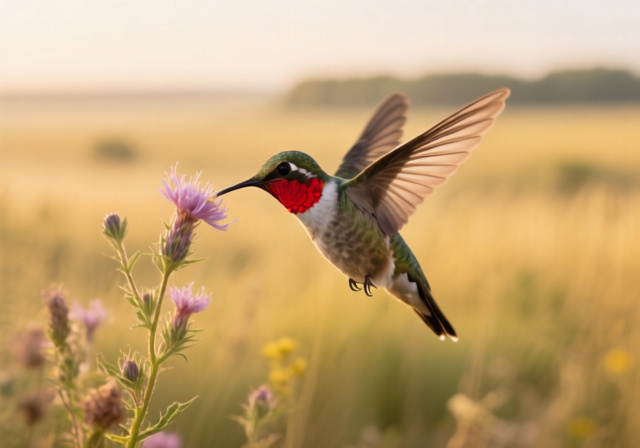
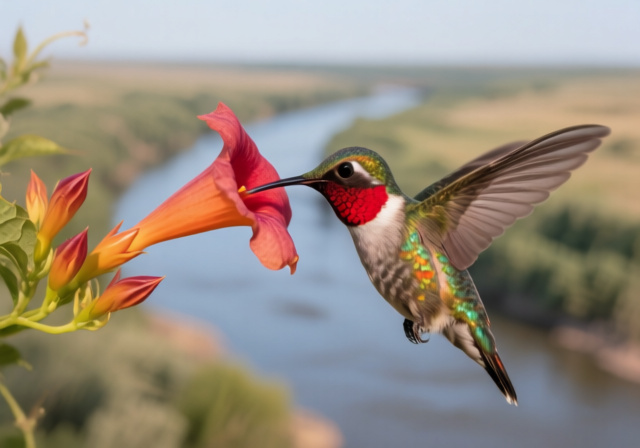
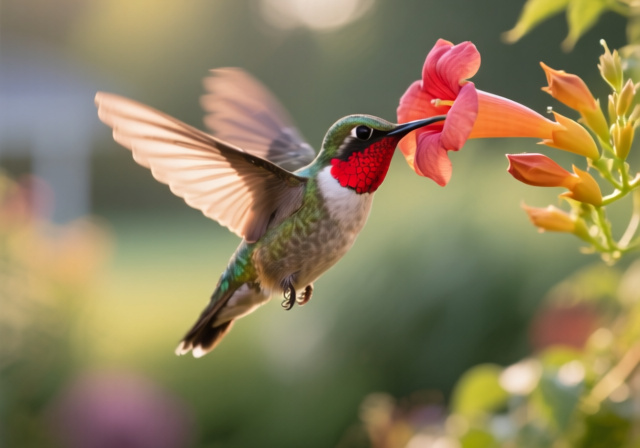
The Ruby-throated Hummingbird (Archilochus colubris) is undoubtedly Mississippi’s hummingbird celebrity. As the only species that breeds east of the Mississippi River, these birds fill our gardens from March through October. I’ve seen them return as early as late February in coastal areas, their metallic green backs catching the morning sun.
Males are unmistakable with their brilliant ruby-red gorgets (throat feathers) that flash like fire when sunlight hits just right. Females lack the dramatic red throat but share the emerald green back and white breast. What fascinates me most is their incredible migration – these 3-gram birds fly nonstop across the Gulf of Mexico twice a year!
Timing is everything with Ruby-throats. Spring migration peaks in April, while fall migration brings spectacular numbers in September. I’ve counted over 30 individuals at a single feeder during peak migration – a feeding frenzy that’ll drain your nectar supply five times daily.
For identification, look for their unique behavior: a distinctive hover-and-dive pattern and tail-pumping while feeding. Their wings beat about 53 times per second, creating that signature humming sound.
Don’t pack away those feeders after the Ruby-throats leave! The Rufous Hummingbird (Selasphorus rufus) has become Mississippi’s most reliable winter resident. These feisty western birds arrive in October and often stay through March.
What sets Rufous apart is their stunning coloration – males have brilliant copper-orange backs and bellies with a vivid red-orange gorget. Females show green backs with rufous flanks and a central orange spot on their throat. I’ve found them particularly common in the southern third of the state, especially along the coast.
Rufous hummingbirds are notoriously territorial. Last winter, I watched a single male dominate three feeders, chasing away all competitors including larger birds. Their aggressive nature makes them easy to spot – they’re usually the bird causing all the commotion!
Identification tip: Look for their distinctive wing shape – broader than Ruby-throats – and their habit of wagging their tail while perched. In flight, their rufous color creates an unmistakable copper flash.
The Black-chinned Hummingbird (Archilochus alexandri) is a rare but increasingly regular visitor to Mississippi. These western species expand eastward during summer, with most sightings occurring from May to August.
Males appear almost identical to Ruby-throated at first glance, but with careful observation, you’ll notice the key difference: instead of ruby, their gorget is a stunning deep violet-black that appears black until the light hits it perfectly. Females are nearly identical to female Ruby-throats, making them extremely challenging to identify.
I’ve had the privilege of photographing Black-chinned hummingbirds in northern Mississippi, where they seem to prefer open woodlands and forest edges. Their feeding behavior differs slightly from Ruby-throats – they tend to hover longer and visit flowers more frequently than feeders.
For positive identification, I recommend using good binoculars for hummingbird watching with at least 8x magnification. The subtle differences in gorget coloration become apparent with quality optics.
The Calliope Hummingbird (Stellula calliope) holds the title as North America’s smallest hummingbird, weighing just 2.5 grams. These tiny western visitors are rare in Mississippi, with most records from October through March.
Males have a distinctive streaked gorget of magenta rays against a white background, unlike any other species. Their small size and short tail are key identification features. Females are dull brown above with pale underparts and a small amount of streaking on the throat.
When identifying Calliopes, pay attention to their feeding behavior – they tend to hover lower than other species and often visit smaller flowers. Their rapid wingbeats create a higher-pitched buzz than larger hummingbirds.
Broad-tailed Hummingbirds (Selasphorus platycercus) are another western species that occasionally visits Mississippi. Adult males have a rose-magenta gorget and, uniquely, produce a distinctive metallic wing trill when flying – a sound I’ll never forget the first time I heard it.
These medium-sized hummingbirds have broader tails than their relatives, hence their name. Their green coloration is similar to Ruby-throats, but the wing sound and larger size help distinguish them.
Most Broad-tailed sightings in Mississippi occur during migration, particularly in April-May and September-October. They seem to prefer higher elevations but will visit feeders in lowland areas during migration.
Mississippi’s official list includes seven additional species, all considered rare vagrants:
Quick Summary: Mississippi’s hummingbird calendar has two peak periods – spring migration (March-April) and fall migration (September-October). Ruby-throated hummingbirds breed here March-October, while western species primarily visit October-March.
Understanding timing is crucial for successful hummingbird watching in Mississippi. Based on years of observation and community reports, here’s what to expect month by month:
| Month | Primary Species | Activity Level | Notes |
|---|---|---|---|
| February | Ruby-throated, Rufous | Low to Medium | Early arrivals on coast |
| March | Ruby-throated, Rufous | High | Spring migration peak |
| April | Ruby-throated | Very High | Breeding season begins |
| May-July | Ruby-throated | Medium | Nesting and fledging |
| August | Ruby-throated | Medium | Fall migration begins |
| September | Ruby-throated | Very High | Fall migration peak |
| October | Ruby-throated, Rufous | High | Species overlap period |
| November-December | Rufous, rare species | Medium | Winter residents establish |
| January | Rufous, rare species | Low to Medium | Winter viewing |
Gorget: The patch of specialized, iridescent throat feathers that give hummingbirds their distinctive colorful appearance. The color changes with viewing angle and light conditions.
Identifying hummingbirds can be challenging, but these tips will help you distinguish between similar species:
| Species | Male Features | Female Features |
|---|---|---|
| Ruby-throated | Ruby gorget, green back | White throat, green back, white-tipped tail |
| Rufous | Copper gorget, copper back | Green back, rufous sides, orange throat spot |
| Black-chinned | Purple-black gorget, green back | Nearly identical to female Ruby-throated |
Capturing these tiny birds in flight is one of photography’s most rewarding challenges. After spending years perfecting my technique, here are my top recommendations for Mississippi hummingbird photography:
For serious hummingbird photography, I recommend starting with quality budget binoculars for hummingbird watching to study behavior before shooting. For photography, a DSLR or mirrorless camera with a telephoto lens (200mm or longer) is ideal. A flash with a better beamer attachment can freeze wing motion while maintaining natural light appearance.
Consider using spotting scopes for distant hummingbird viewing when photographing at longer distances. For close work, a macro lens can capture stunning detail of feathers and eyes.
I’ve found the multi-flash setup produces the most dramatic hummingbird photos. Position 3-4 flashes around the feeder to create consistent lighting and freeze motion. Use a fast shutter speed (1/1000s or faster) combined with f/8-f/11 for sufficient depth of field.
Patience is your greatest asset. I’ve waited hours for a particular male to visit the perfect flower. Study their patterns – hummingbirds are creatures of habit and often follow the same route between perches and food sources.
For natural-looking shots, remove the feeder cap and insert a flower or two into the feeding ports. This creates the illusion of natural feeding while still attracting the birds to a predictable location.
The Gulf Coast, particularly around Biloxi and Gulfport, offers excellent winter photography opportunities with diverse species. Inland, the Natchez Trace Parkway provides numerous spots where Ruby-throats breed in summer. Northern Mississippi’s hardwood forests host breeding populations that are more approachable during nesting season.
When a hummingbird hovers directly in front of you, it’s usually investigating potential threats or food sources. These curious birds have excellent vision and may simply be checking if you’re a flower or predator. Some believe it’s a sign of trust or curiosity, but scientifically, it’s likely the bird assessing its environment.
No! September is actually peak migration season in Mississippi. Keep your feeders up and fresh through mid-November. Migrating hummingbirds need all the energy they can get for their journey. Contrary to myth, feeders don’t prevent migration – natural instinct and decreasing daylight trigger migration regardless of food availability.
Yes! Studies show hummingbirds have excellent memory and can recognize individual humans. They learn who refills the feeders and may even hover near windows when food is low. I’ve had birds follow me around the garden during refilling time. Their brain is about 4.2% of their body weight – proportionally one of the largest in the bird kingdom.
Sudden disappearance usually indicates migration timing. Ruby-throated hummingbirds typically leave Mississippi in October. However, other causes include predator presence (hawks or cats), fermented nectar, or finding better food sources elsewhere. If they disappear during summer months, check for nearby blooming flowers that might be drawing them away.
Put feeders out by late February along the coast and mid-March inland. Early migrants begin arriving in late February, with the main wave in March. Keep feeders up until at least mid-November to support late migrants and winter residents like Rufous hummingbirds.
Twelve species have been officially documented in Mississippi. The Ruby-throated is the common breeding species, while the Rufous is the most frequent winter visitor. The remaining ten species are rare vagrants that occasionally appear, especially along the Gulf Coast during winter months.
After decades of observing Mississippi’s hummingbirds, I’m continually amazed by their resilience and beauty. Whether you’re watching a male Ruby-throated defending his territory in summer or spotting a rare winter visitor along the coast, each sighting feels special.
Remember, you don’t need expensive equipment to start – just a clean feeder and patience. As your interest grows, consider upgrading your observation tools. The right optics for hummingbird photography can transform your experience from casual observation to serious study.
Contribute to citizen science by reporting rare sightings to local Audubon chapters or the Mississippi Audubon Society. Your observations help scientists understand migration patterns and population changes. Together, we can ensure these jewel-like birds continue to grace Mississippi’s skies for generations to come.
The diversity of hummingbirds in Mississippi truly makes our state special. From the common Ruby-throated to the ultra-rare vagrants, each species adds to the rich tapestry of our natural heritage. Get outside, keep those feeders clean, and enjoy the show – nature’s smallest helicopters are waiting to delight you!