
25 Fascinating Wren Facts: Tiny Birds With Mighty Voices
Discover 25 fascinating facts about wrens - tiny birds with surprisingly loud songs, complex behaviors, and remarkable survival strategies that…

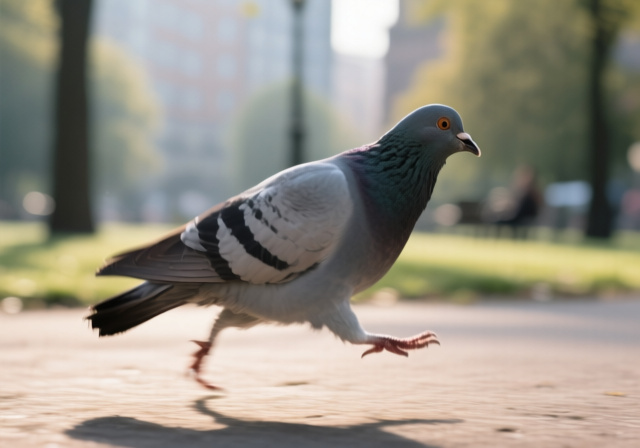
Birds bob their heads to stabilize their visual world while moving through it—a precise head-hold-and-thrust mechanism that creates crystal-clear images despite birds having limited eye mobility compared to humans.
As a wildlife photographer who has spent years observing and capturing birds in motion, I’ve become fascinated by this seemingly odd head-bobbing behavior. What looks like a quirky, almost comical movement is actually one of nature’s most elegant solutions to a fundamental visual challenge. When you watch a pigeon strut down the sidewalk with that distinctive stop-and-go head motion, you’re witnessing millions of years of evolutionary adaptation at work.
In this guide, I’ll walk you through the science behind why birds bob their heads, what researchers have discovered about this behavior, which species exhibit it and which do not, and how you can use this knowledge to capture better photographs of birds in the wild.
The head-bobbing motion that catches our attention is actually a sophisticated two-phase visual stabilization system. Far from being a random or bouncy movement, it follows a precise rhythm that serves a critical function for birds.
During the hold phase, the bird’s head locks into a stationary position in space while its body continues forward motion. This stillness typically lasts between 20 and 50 milliseconds—long enough for the photoreceptor cells in the bird’s eyes to capture a stable, detailed image of the surroundings. From a photographer’s perspective, this is the “money moment” when the bird’s head is perfectly still and your chances of capturing sharp detail are highest.
I’ve photographed this phase countless times, and the precision never fails to impress me. The head locks in place as if frozen in mid-air while the body walks beneath it. This brief pause creates a stable platform for the bird’s visual system to gather crucial information about its environment.
Motion Parallax: The visual phenomenon where objects closer to the observer appear to move faster across their field of vision than distant objects. Birds amplify this effect through head bobbing to enhance depth perception.
After the hold phase, the bird rapidly thrusts its head forward to realign with its body. This quick movement happens so fast—typically under 50 milliseconds—that the bird’s brain essentially edits out the visual blur, similar to how we don’t notice our own blind spot. The cycle then repeats: hold, thrust, hold, thrust.
For photographers, understanding these phases is crucial. The hold phase offers your best opportunity for sharp, detailed shots. I’ve learned to watch for the brief moment of stillness before pressing the shutter. This timing has helped me capture images that showcase the intricate details of a bird’s eye and feather structure during observation.
The entire process overcomes a fundamental challenge: unlike human eyes that can move freely within their sockets, many birds have limited eye mobility. While we can smoothly track moving objects with our eyes alone, most birds must move their entire head to change their visual focus. This head-bobbing behavior creates a series of “still photographs” that the bird’s brain assembles into a coherent visual experience.
Research published in the Journal of Experimental Biology demonstrates that this system is remarkably effective. Birds that exhibit head-bobbing behavior can navigate complex environments, locate tiny seeds on the ground, and detect predators approaching from impressive distances—all while maintaining forward momentum. Their visual system has evolved this elegant solution to compensate for monocular vision and restricted eye movement.
The coordination of head-bobbing involves sophisticated neural circuitry that integrates visual input with motor control. At the core of this system are two key brain structures: the cerebellum and the optic tectum.
The cerebellum acts as the movement coordination center, fine-tuning the timing between the hold and thrust phases. It receives constant visual feedback about the bird’s surroundings and adjusts the head movement in real-time to maintain optimal visual stability. When a bird encounters uneven terrain or changes speed, the cerebellum immediately modifies the head-bobbing pattern to compensate.
The optic tectum, part of the midbrain responsible for visual processing, plays an equally important role. It processes the visual information and helps the bird determine when a head-hold is necessary based on what it sees. When the optic tectum detects that the visual field is shifting rapidly—such as when the bird is walking—it signals that longer hold phases are needed to maintain clear vision.
Quick Summary: Bird head bobbing is controlled by the cerebellum (motor coordination) and optic tectum (visual processing), working together to create stable vision during movement.
The scientific community has studied bird head bobbing for over five decades, with researchers developing increasingly sophisticated experiments to understand this behavior. These studies have transformed our understanding of bird vision and behavior, revealing that head bobbing serves purely visual functions rather than aiding balance.
“The head-bobbing behavior is not related to balance as many assume, but serves purely visual functions.”
– Dr. Barrie J. Frost, Queen’s University
In the 1970s, Dr. Mark Friedman conducted groundbreaking experiments by placing birds on treadmills. When birds walked on treadmills surrounded by stationary walls, their head-bobbing stopped almost entirely. This discovery proved that the behavior relates to stabilizing visual surroundings, not the physical act of walking itself. I find this fascinating because it shows how birds adapt their behavior based on visual input rather than proprioception.
Later studies by Dr. Barrie J. Frost in 1978 confirmed these findings using more sophisticated motion-tracking equipment. Researchers discovered that when visual references remained constant, the hold phase shortened or disappeared entirely. Birds adjusted their head-movement pattern based on how much their visual field was actually changing—a remarkable example of sensory feedback influencing motor behavior.
Perhaps the most revealing experiments involved temporarily blindfolding birds. When researchers covered birds’ eyes, the head-bobbing motion ceased immediately. This eliminated any remaining doubt that the behavior serves purely visual purposes. Without visual input to process, there’s simply no need for the hold-and-thrust pattern that characterizes head bobbing.
These studies also revealed interesting variations between species. Some birds hold their heads still for longer periods, while others thrust more frequently. These patterns reflect different visual needs and environmental adaptations. For example, ground-foraging birds that must watch for predators while moving tend to have more pronounced head-bobbing patterns than birds in less visually demanding situations.
Recent advances in high-speed videography and motion-tracking technology have given researchers new insights into the precise mechanics of head bobbing. Modern studies confirm that the movement is even more precisely controlled than earlier experiments suggested. Birds can adjust their head-bobbing pattern based on walking speed, terrain complexity, and the visual demands of their environment.
Contemporary research has also explored additional potential functions beyond vision stabilization. Some scientists suggest head bobbing might help with communication between flock members, signal awareness of predators, or even assist with spatial navigation. However, vision stabilization remains the primary and most well-documented purpose of this behavior.
Head bobbing is not universal among birds—the behavior varies significantly across species based on their vision type, foraging style, and evolutionary history. Understanding these differences can enhance your bird-watching observations and help you anticipate behavior in the field.
| Bird Species | Head Bobbing Style | Vision Type | Typical Foraging |
|---|---|---|---|
| Pigeons & Doves | Exaggerated thrust-and-hold | Monocular (side placement) | Ground foraging |
| Chickens & Quails | Rhythmic, moderate | Monocular | Ground scratching |
| Cranes & Herons | Deliberate, slow | Binocular (partial) | Wading, stalking |
| Parrots | Up-and-down bobbing | Binocular | Varied, some ground |
| Magpies & Crows | Subtle, quick | Binocular | Omnivorous foraging |
| Ducks & Geese | Minimal or none | Binocular (waterfowl) | Aquatic dabbling |
| Hawks & Eagles | Minimal | Binocular (raptorial) | Aerial hunting |
| Owls | None (neck rotation instead) | Binocular | Night hunting |
Pigeons are perhaps the most recognizable head-bobbers, and their pronounced movement makes them perfect subjects for both observation and photography. Their distinctive bob is easy to track even without optics, making them ideal for studying this behavior up close.
I’ve spent countless hours photographing urban pigeons, and their head-bobbing provides predictable patterns that help with timing. The key is to focus on the hold phase—that brief moment of stillness when you can capture sharp, detailed images of their iridescent neck feathers and curious, orange-ringed eyes.
Birds that spend significant time foraging on the ground typically exhibit pronounced head-bobbing behavior. Chickens, quails, pheasants, and other ground-dwelling species use the movement to locate seeds, insects, and other food items while moving through grass and vegetation.
These birds often combine head bobbing with quick pecking motions, creating an interesting sequence of movements. For photographers, this behavior offers opportunities to capture feeding behaviors, though it requires quick reflexes and sometimes burst mode to get the perfect shot.
Not all birds need head bobbing for clear vision. Birds of prey like hawks and eagles have forward-facing eyes with excellent binocular vision, which allows them to judge distances without the stop-and-go head movement. Owls take a different approach entirely, relying on incredibly flexible necks that can rotate up to 270 degrees to scan their surroundings without head bobbing.
Waterfowl like ducks and geese typically don’t exhibit head bobbing either. Their different body structure, aquatic lifestyle, and more stationary feeding patterns reduce the need for this particular visual adaptation. Penguins, with their unique waddling gait on land, have evolved alternative solutions for maintaining visual stability during their more limited ground movement.
While head bobbing for visual stabilization is well-documented, an intriguing question arises: do birds bob their heads in response to music or rhythm? Research suggests some species absolutely do—and this behavior reveals surprising connections between visual processing and auditory-motor responses.
Harvard researchers studying African grey parrots have documented remarkable rhythmic head-bobbing in response to music. These intelligent birds don’t just randomly bob—they synchronize their movements to the beat, displaying an ability to perceive and respond to rhythm that was once thought unique to humans. The famous African grey parrot named Alex, studied by Dr. Irene Pepperberg, demonstrated clear preferences for music and would bob his head in apparent dance-like patterns.
Sulphur-crested cockatoos take this phenomenon even further. Research published in Scientific Reports showed cockatoos engaging in “dancing” behavior—coordinated head bobbing and foot lifting—that clearly matched musical rhythms. One cockatoo named Snowball became internet-famous for his synchronized dancing to Backstreet Boys songs, displaying head-bobbing patterns that varied appropriately with different tempos.
Quick Summary: Some parrots and cockatoos bob their heads to music and can synchronize their movements to rhythm. This is separate from the vision-stabilization head bobbing and relates to auditory-motor processing and social display behavior.
The connection between rhythm and head bobbing in parrots likely stems from multiple factors. Parrots are highly social birds that use physical displays for communication within flocks. Head bobbing to music may be an extension of these natural display behaviors, combined with the birds’ exceptional intelligence and ability to recognize patterns.
For pet bird owners, music-related head bobbing is usually a positive sign—an indication that your bird is engaged, happy, and comfortable enough to display natural behaviors. However, distinguishing between music-related bobbing and other forms of head bobbing is important for understanding your bird’s needs and emotional state.
Capturing the head-bobbing behavior presents unique challenges and rewards for photographers. The rapid movement requires specific techniques and equipment considerations. Having documented this behavior across multiple species, I’ve developed strategies that consistently produce compelling images.
Shutter speed is your most critical setting for head-bobbing photography. I recommend using at least 1/1000s to freeze the motion during the thrust phase and capture sharp details during the hold phase. When lighting permits, 1/2000s or higher gives even better results, especially for faster-moving species like pigeons that have more pronounced head-bobbing patterns.
Your aperture should balance depth of field with light-gathering needs. I typically shoot at f/5.6 to f/8 to keep the bird’s head and eye sharp while slightly softening the background. This creates pleasing separation while ensuring the behavior remains the clear focal point of your image.
Head bobbing follows predictable patterns once you understand the rhythm. Most birds complete a full cycle every 1 to 2 seconds while walking steadily. The key is to anticipate the hold phase—that moment of stillness when your shutter should click for maximum sharpness.
I recommend watching a bird for 30 to 60 seconds before shooting to establish its rhythm. Once you recognize the pattern, you can time your shots to coincide with the hold phase. This approach yields more keepers than simply firing continuously and hoping to catch the right moment.
The right optics make a significant difference when photographing head-bobbing behavior. A telephoto lens in the 200-400mm range gives you good working distance while allowing you to fill the frame with smaller birds. Image stabilization helps maintain sharpness, especially when hand-holding.
For serious bird photography, having quality viewing equipment is just as important as your camera. When scouting locations or observing from a distance, good optics enhance your ability to spot and anticipate head-bobbing behavior. Understanding the behavior helps you position yourself for the best angle when the bird enters your frame.
Head-bobbing images tell a story about bird behavior and adaptation. Try to capture the bird in its natural environment, showing context for why it might be bobbing its head—perhaps while foraging on the ground, watching for predators, or interacting with other birds.
Consider using burst mode during your photography sessions. A rapid burst of 3 to 5 images during a head-bob cycle increases your chances of capturing multiple phases of the movement, which can be powerful when presented as a sequence showing the complete behavior from hold through thrust and back.
For pet bird owners, head bobbing can sometimes raise questions about whether the behavior is normal or potentially indicates a health issue. While head bobbing serves primarily visual functions in wild birds, companion birds may exhibit this movement for additional reasons related to communication and emotional expression.
Happy, excited birds often bob their heads more frequently. Parrots, cockatiels, and other companion birds may head-bob when seeking attention, greeting their owners, or expressing excitement about food or new toys. This type of bobbing usually appears alongside other positive body language like relaxed posture, bright eyes, and playful vocalizations.
However, excessive or unusual head bobbing can indicate health concerns. If your bird’s head bobbing is accompanied by loss of balance, weakness, difficulty perching, changes in appetite, or unusual droppings, consult an avian veterinarian promptly. These additional symptoms may signal neurological issues, infections, or other medical conditions that require professional attention.
Bird head bobbing primarily serves visual functions rather than emotional expression. However, pet birds may bob their heads when excited or happy. In wild birds, the behavior relates to vision stabilization rather than mood. Context matters—observe additional body language to determine if your pet bird’s head bobbing indicates happiness.
Pigeons appear to have pronounced head bobbing because their movement is more exaggerated than in other species. Their body structure and walking style create a more dramatic hold-and-thrust pattern. The movement is actually precise and controlled for maximum visual stability, not violent. Pigeons’ side-mounted eyes require more dramatic head movement to achieve depth perception.
No, not all birds bob their heads. The behavior is most common in ground-foraging birds with monocular vision like pigeons, chickens, and doves. Birds of prey with binocular vision (hawks, eagles), owls with flexible necks, and waterfowl like ducks typically do not exhibit head-bobbing behavior.
Ducks do not typically bob their heads because their different body structure and aquatic lifestyle reduce the need for this visual adaptation. Their eyes are positioned differently than pigeons or chickens, and their movement patterns in water versus on land create different visual challenges. Ducks have evolved other solutions for maintaining visual stability.
Birds may bob their heads before taking off to get a final, clear visual assessment of their surroundings. This last look helps them judge distances, spot obstacles, and choose the optimal flight path. The head stabilization provides crucial information just before launch, ensuring safe departure and proper navigation during the initial moments of flight.
For pet birds, concern is warranted when head bobbing is accompanied by loss of balance, weakness, difficulty perching, changes in appetite, unusual droppings, or lethargy. Wild birds exhibiting head bobbing along with inability to fly, visible injuries, or unusual behavior may need help from wildlife rehabilitation services. Normal head bobbing appears controlled and rhythmic, while concerning movements often seem uncoordinated.
While challenging, it is possible to capture head bobbing with modern smartphones. Use burst mode to capture multiple frames during the movement, and shoot in good lighting to enable faster shutter speeds. For best results, get relatively close to your subject and focus on the bird’s head. A phone gimbal or stabilization device can help reduce camera shake during handheld shooting.
Some birds, particularly parrots and cockatoos, do bob their heads to music. Harvard researchers have documented African grey parrots synchronizing their head movements to musical rhythms. This behavior is separate from vision-stabilization head bobbing and appears to relate to social display and auditory-motor processing. Not all bird species respond to music this way.
Head bobbing is controlled by two key brain structures: the cerebellum and the optic tectum. The cerebellum handles motor coordination and fine-tunes the timing between hold and thrust phases. The optic tectum processes visual information and determines when head holds are needed based on changes in the visual field. These structures work together to create stable vision during movement.
Birds bob their heads when they walk to stabilize their vision. Unlike humans with binocular vision and mobile eyes, many birds have limited eye mobility and side-mounted eyes. By holding their head still for brief moments while their body moves forward, birds can capture clear images and maintain depth perception while navigating their environment.
Bird head bobbing represents one of nature’s most elegant solutions to the challenge of vision in motion. This seemingly simple movement—hold, thrust, hold, thrust—enables birds to navigate complex environments, locate food sources, and avoid predators with remarkable success. For bird watchers and photographers, understanding this behavior opens up new appreciation for avian intelligence and adaptation.
Next time you observe birds, take a moment to watch for this distinctive movement. Notice how different species execute the pattern differently, and how the behavior relates to their environment and daily activities. For photographers, capturing the head-bobbing behavior provides unique opportunities to document fascinating natural behaviors that tell compelling stories about avian life.
Pro Tip: Early morning and late afternoon offer the best lighting for photographing head bobbing. The angled light highlights the movement and creates beautiful catchlights in birds’ eyes.
The more you understand about bird behavior, the more you’ll notice the subtle adaptations that make each species unique. From the exaggerated head bobbing of pigeons on city sidewalks to the rhythmic patterns of chickens in a backyard, this behavior connects us to the remarkable evolutionary history of birds. Whether you’re a casual observer or a dedicated wildlife photographer, paying attention to head bobbing enriches your understanding of the natural world.

![Where to See Starling Murmurations in the UK: Complete [cy] Guide](https://revellphotography.com/wp-content/uploads/2026/08/featured-update-4579-1786200415166.jpg)