Artificial Light Photography: Complete Guide for 2026
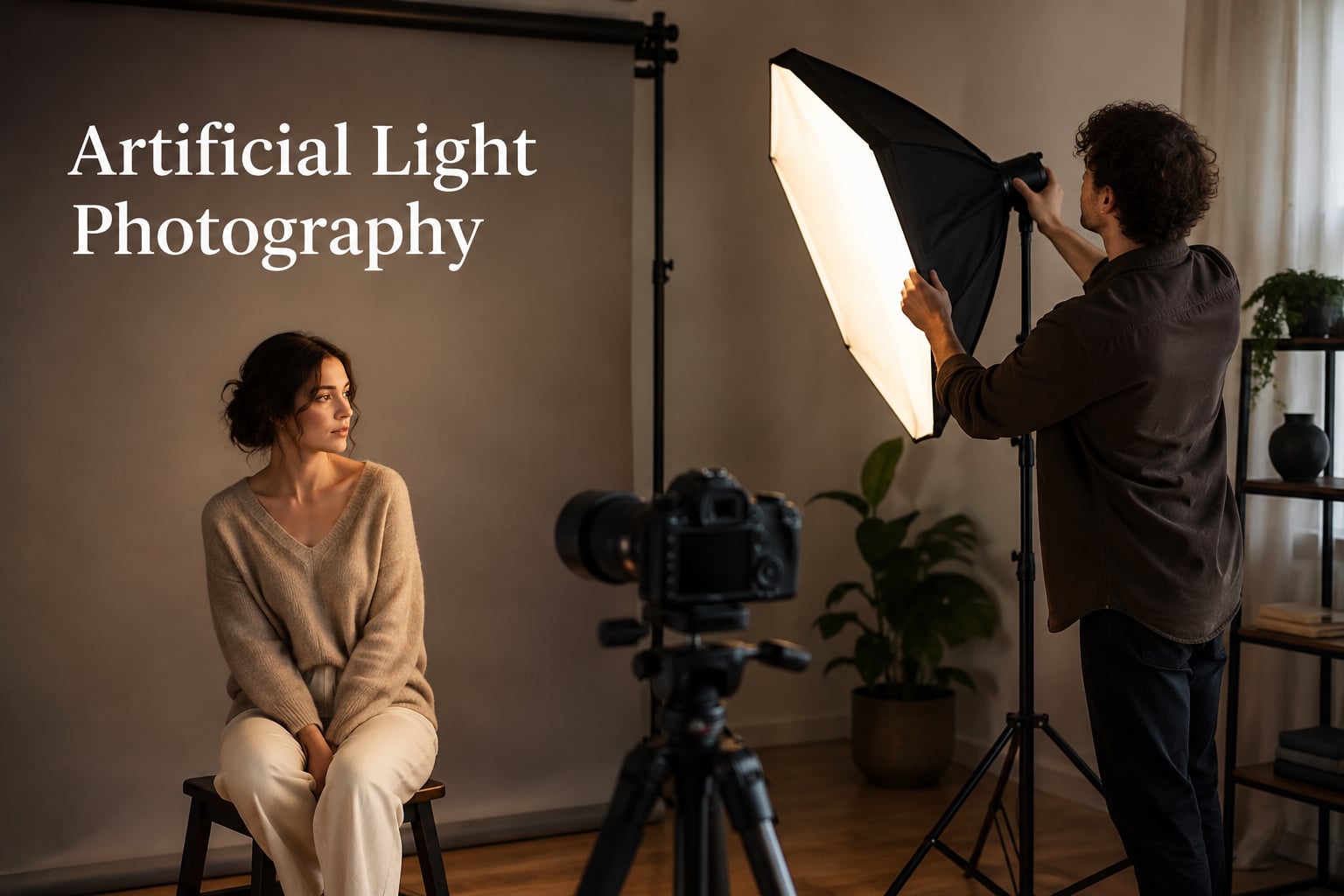
Artificial light photography uses man-made light sources such as flashes, LED panels, and strobes to illuminate your subject instead of…
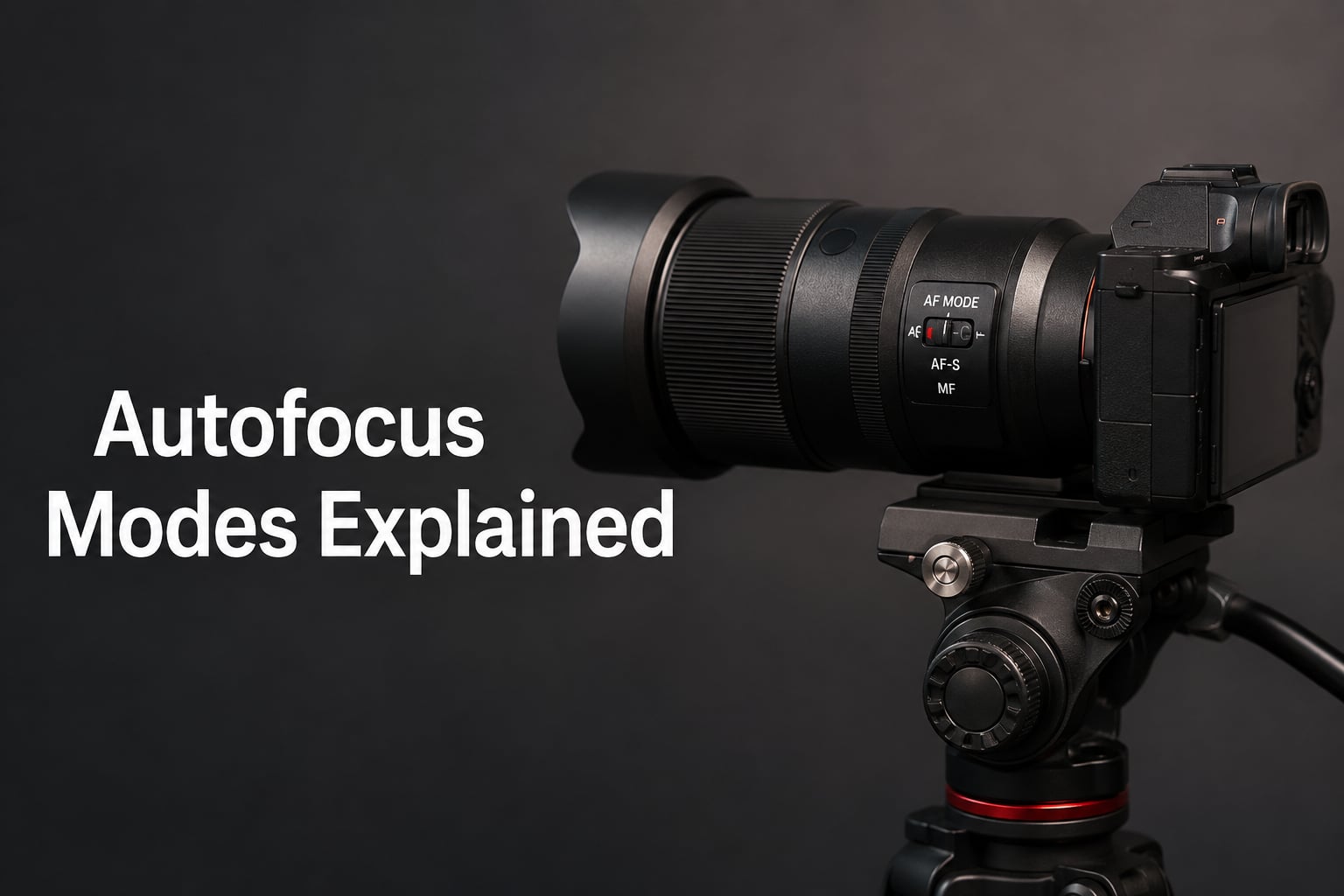
When I picked up my first DSLR, the autofocus menu looked like alphabet soup. AF-S, AF-C, AF-A, MF, with single focus autofocus and continuous autofocus all jumbled together. Years later, after shooting weddings, wildlife, and sports in every light condition imaginable, those same focus modes are the tools that decide whether my keeper rate is 9 out of 10 or 1 out of 10. In this guide, I am walking you through autofocus modes explained the way I wish someone had walked me through them on day one.
Whether you shoot Canon, Nikon, Sony, or another brand, the focus modes on your camera all do the same basic things. They just have different names. By the end of this article, you will know what each mode does, when to use it, and how the autofocus system under the hood actually works. Let us break it down.
Autofocus modes are preset behaviors your camera uses when locking onto a subject. The autofocus system inside your camera looks at contrast, phase, or both, then drives the lens until the image is sharp. Each mode tells the camera how aggressively to track, when to lock, and what to do if the subject moves.
There are two main autofocus systems every photographer should understand before touching focus modes. Active AF sends out a beam, usually infrared or a sonar pulse, to measure distance to the subject. Passive AF uses the light coming through the lens to calculate focus. Most modern DSLRs and mirrorless cameras rely on passive systems, but the legacy distinction helps explain why older autofocus was sometimes faster or slower than modern systems.
Choosing the wrong focus mode is the number one reason beginners miss shots. I learned that lesson the hard way at a soccer match. I left my camera in single shot autofocus and watched every passing player blur past me. Once I switched to continuous autofocus, the keeper rate jumped from about 20 percent to over 80 percent. That single switch taught me more about autofocus than any manual ever could.
Single-Shot AF, called AF-S on Nikon and Sony and One-Shot AF on Canon, locks focus once and holds it. The moment you half-press the shutter, the camera finds focus, beeps or shows a green confirmation in the viewfinder, and stops adjusting. If your subject moves after the lock, the camera will not chase them.
This mode shines for stationary or slow subjects. I use single shot autofocus for portraits, landscapes, product photography, and any scene where neither I nor the subject is moving quickly. The big advantage is precision. Because the camera stops hunting once it locks, you get sharp focus where you pointed it. Focus and recompose, a classic technique where you focus, then tilt the camera to reframe, works beautifully in this mode.
The catch is what happens when the subject moves. If a person tilts their head or a child takes a step forward after you lock focus, the image goes soft. Single shot autofocus also struggles when something passes between you and your subject, like a tree branch, because the camera will lock onto the closer object and ignore the subject behind it. Watch your focus confirmation indicator and re-focus if anything changes between lock and shutter press.
Continuous AF, called AF-C on Nikon and Sony and AI Servo AF on Canon, never stops adjusting. As long as you hold the shutter button halfway down, the camera keeps tracking the subject and re-focusing in real time. It is built for action.
Sports, kids, pets, wildlife, dancers, cars, and any unpredictable moving subject all belong in this mode. Modern continuous autofocus systems use predictive algorithms to guess where your subject will be a fraction of a second later, based on the speed and direction of movement. The camera fires a burst and keeps refining focus between frames. On flagship bodies, this can mean tens of focus recalculations per second.
The trade-off is precision. Continuous AF sometimes locks onto the nearest object with high contrast and ignores what you actually want sharp. I get my sharpest wildlife shots when I pair continuous AF with subject detection or animal eye AF. Without that assist, you sometimes end up with a perfectly sharp tree branch and a slightly soft animal. Configure your AF point selection carefully, ideally a single point or a small zone, and trust the tracking to do the rest.
Automatic AF, called AF-A on Nikon and AI Focus AF on Canon, is a hybrid mode. The camera starts in single shot autofocus. If it detects movement, it switches itself into continuous autofocus on the fly. In theory, it gives you the best of both worlds without thinking.
In practice, I rarely use AF-A. The mode was designed for casual shooters and beginners who do not want to learn focus modes. The problem is the camera often switches modes at the wrong moment, right after focus has already drifted. You get the timing wrong on a crucial frame and the camera is still figuring out what to do.
Use AF-A when you want a single setting that handles a mixed environment, like a family event with kids running and adults posing. Otherwise, take the 30 seconds to learn single shot and continuous autofocus and pick the right one manually. You will get more consistent results.
Manual focus removes the camera from the focus equation entirely. You turn the focus ring on the lens until the subject looks right through the viewfinder or on the rear LCD. Modern lenses offer electronic focus-by-wire rings that are precise but feel different from the mechanical rings on classic lenses.
There are four situations where I always switch to manual focus. Low light or low contrast scenes where the autofocus hunts endlessly. Macro photography, where depth of field is so thin that any autofocus error ruins the shot. Astrophotography, where stars are too dim for most systems to lock onto. And any time there is a foreground obstruction, like shooting through a chain-link fence or window glass.
Mirrorless cameras make manual focus easier with focus peaking, which outlines sharp edges in a bright color like red or yellow. Magnification buttons let you zoom into the image to confirm focus. DSLRs rely on the optical viewfinder, which is fine for stationary subjects but harder for critical work. If your lens has a distance scale printed on the barrel, you can also pre-focus by distance, which is handy for zone focusing in street photography.
Phase detection autofocus uses dedicated sensors or pixels on the sensor in mirrorless cameras to measure the convergence of light rays. The system knows not just whether the image is out of focus, but how far out of focus and in which direction. That extra information is why phase detection is faster and better at tracking.
Contrast detection autofocus reads the image off the main sensor and looks for the point of highest contrast. The camera does not know which way to drive the lens, so it hunts back and forth until contrast peaks. Contrast detection is highly accurate but slower. Most mirrorless cameras and older compacts rely on it.
Hybrid modern mirrorless systems combine both. Phase detection pixels on the sensor give the rough direction and distance, contrast detection fine-tunes the final focus. The result is the fast acquisition of phase detection and the precision of contrast detection. This hybrid approach is one of the reasons mirrorless cameras now lead the industry in autofocus performance.
The other big factor is the focus algorithm itself. Modern cameras use deep learning autofocus trained on millions of images to recognize faces, eyes, animals, birds, vehicles, and even specific subjects. Sony’s Real-Time Tracking and Canon’s Dual Pixel CMOS AF II use subject recognition to stay locked even when the subject momentarily disappears behind an obstacle. That is a level of intelligence that pure phase detection alone could never deliver.
The same focus mode has a different label on every brand. Memorize these and you can pick up any modern camera and find the right setting in seconds.
The underlying technology has converged. Canon uses Dual Pixel CMOS AF on its mirrorless and newer DSLR sensors. Nikon mirrorless uses a hybrid phase and contrast system. All three brands offer subject detection for humans, animals, and vehicles on their higher-end bodies. Do not get stuck on the name, focus on the behavior the single autofocus mode produces.
This is where focus modes go from theory to practice. After thousands of frames in each genre, here is the focus mode I default to and why.
Portraits use single shot autofocus (AF-S / One-Shot) with eye AF enabled if your camera has it. Faces do not move fast enough to need continuous autofocus, and the precision of single focus matters more than tracking.
Wildlife uses continuous AF (AF-C / AI Servo) with animal eye AF or subject detection. Animals are unpredictable, their direction changes constantly, and depth of field is often shallow. Tracking matters more than raw precision.
Sports uses continuous AF (AF-C / AI Servo) with a small AF zone or expanded flexible spot. The action is fast and your subject crosses other players and obstacles constantly. Use burst shooting to maximize the chance of a sharp peak-action frame.
Landscapes use single shot autofocus (AF-S / One-Shot) or manual focus with focus stacking for very deep depth of field. Tripod-mounted shots and infinity focus are usually best handled manually.
Street photography uses either single shot autofocus with zone focusing, or manual focus with a hyperfocal distance preset. You want to react quickly without waiting for the camera to lock.
Macro uses manual focus almost exclusively, with the help of a focusing rail for precise adjustments. Autofocus is too imprecise at high magnifications.
Eye AF is now standard on most modern mirrorless cameras. The camera detects a human or animal eye in the frame and locks focus there automatically. Sony, Canon, Nikon, and Fuji all offer some form of eye AF, and it works on humans, pets, and wildlife depending on the model.
Subject detection has expanded beyond eyes. Canon’s latest systems detect cars, motorcycles, trains, and aircraft. Sony recognizes humans, animals, birds, insects, and vehicles. Nikon offers similar detection on its Z9 and Z8 bodies. These systems use deep learning autofocus trained on huge datasets.
Predictive autofocus uses motion data to estimate where the subject will be when the shutter fires. It is most useful in continuous AF for fast action approaching or receding from the camera.
Focus limiting switches on some telephoto lenses restrict the focus range. You can tell the lens only to focus between 5 meters and infinity, for example. This speeds up acquisition because the lens skips the close range entirely. Wildlife photographers shooting distant birds benefit most.
There is no single best autofocus mode. Use AF-S for stationary subjects like portraits and landscapes. Use AF-C for moving subjects like sports, wildlife, and kids. The best mode is the one matched to your subject.
The four core autofocus modes are AF-S (Single-Shot / One-Shot) for stationary subjects, AF-C (Continuous / AI Servo) for moving subjects, AF-A (Automatic / AI Focus) as a hybrid, and MF (Manual Focus) for full manual control.
For everyday shooting with mixed subjects, start with AF-S for portraits, AF-C for action, and MF when light is too low for autofocus. Pair your mode with eye detection or subject tracking when available.
On Canon cameras, use One-Shot AF for stationary subjects, AI Servo AF for moving subjects, and AI Focus AF only as a hybrid for unpredictable scenes. Enable eye detection on supported bodies for portraits.
Autofocus modes explained in plain terms means four settings. AF-S for stationary subjects. AF-C for moving subjects. AF-A as a hybrid when in doubt. MF when autofocus cannot get the job done. Match the single focus mode to your subject, pair it with subject detection when available, and your keeper rate goes up immediately.
If you want to dive deeper into camera optics, check out our guide on Co-Witness Sights Explained and our beginner’s breakdown of Mil Dot Explained. For a comparison of optical instruments, see our piece on Telescope vs Microscope.
Take a few minutes to practice each mode with your camera. Shoot a friend walking toward you in AF-C, then shoot a still life in AF-S. See for yourself how each mode changes the result. That hands-on time is worth more than any article, and it is how I learned these modes years ago. Updated for 2026, this guide will continue to track the latest mirrorless autofocus technology so you can get the most out of every frame.