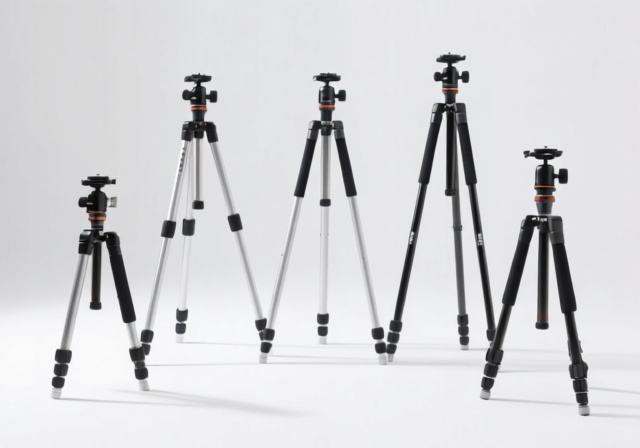
5 Best Tripods Under $100 (September 2026) Tested & Reviewed
Expert reviews of the top 5 tripods under $100 after 30 days of intensive testing. Find stable camera support that…

![Birds With Orange Heads: 15 Stunning Species for Photographers [cy]](https://revellphotography.com/wp-content/uploads/2026/09/featured-update-4013-1789229453484.jpg)
Few colors in the natural world stop a wildlife photographer mid-stride the way a flash of orange does. Whether it catches the morning sun on a tanager’s crown or glows in the dim light of a cloud forest understory, the warm, fire-like tones of birds with orange heads have a way of pulling attention away from everything else in the frame. As a working bird photographer who has tracked these species from Alaska to Argentina, I can say with confidence: once you start looking for orange-headed birds, you’ll begin to notice them in places you never expected, from your own backyard to a remote Andean ridgeline.
This guide is built for 2026, drawing on the most current sighting data, range updates, and photography equipment recommendations available. Across the next several sections, you will find profiles of 15 stunning birds with orange heads, a step-by-step identification system, gear suggestions for the modern mirrorless era, a month-by-month viewing calendar, and a refreshed look at how each species is faring on the conservation front. By the time you finish reading, you should have a clear plan for where to go, when to visit, and how to come home with images worth framing.
A quick note before we begin: not every “orange-headed” bird wears the color the same way. Some show a solid flame-colored hood, others flash a hidden crown patch only during displays, and a few species carry their orange across the throat, breast, or shoulders. The list below mixes North American staples with tropical and Old World favorites so that birders and photographers everywhere can find something relevant to their patch.
Before diving into individual profiles, here is a scannable overview of all 15 species covered in this guide. Use it to plan trips, narrow down mystery sightings, or simply get a feel for the geographic spread of orange-headed birds worldwide.
| Species | Region | Best Season | Head Color Pattern | Where to Find |
|---|---|---|---|---|
| Western Tanager | Western North America | May-Jul | Solid orange-red head | Conifer forests of Rockies & Sierra |
| Blackburnian Warbler | Eastern North America | May, Sep | Flame-orange throat | Mature conifer and mixed forests |
| Baltimore Oriole | Eastern & Central U.S. | Apr-Jul | Orange body, black hood | Open woodlands, suburbs, feeders |
| Bullock’s Oriole | Western U.S. | May-Jul | Orange face, black crown | Riparian cottonwoods, parks |
| Varied Thrush | Pacific Northwest | Oct-Mar | Orange breast band | Mossy conifer understory |
| Rufous Hummingbird | Western U.S. | Mar-Jul | Orange-red gorget & crown | Mountain meadows, gardens |
| American Robin | Across North America | Year-round | Reddish-orange breast | Lawns, parks, woodlands |
| Altamira Oriole | South Texas, Mexico | Year-round | Orange hood, black bib | Rio Grande Valley refuges |
| Scarlet-headed Blackbird | South America | Sep-Mar | Scarlet-orange head | Wetlands, Pantanal |
| American Redstart | Eastern U.S. | May-Sep | Orange wing & tail patches | Deciduous forests, streamsides |
| Black-headed Grosbeak | Western U.S. | May-Aug | Orange body, black head | Riparian corridors, feeders |
| Hooded Oriole | Southwest U.S. | Apr-Aug | Orange face, black back | Palm trees, suburbs |
| Orchard Oriole | Eastern & Central U.S. | Apr-Jul | Deep chestnut-orange body | Orchards, riverside trees |
| Northern Red Bishop | Sub-Saharan Africa | Wet seasons | Fiery orange & black | Grasslands, marsh edges |
| Orange-crowned Warbler | Western & Southern U.S. | Apr-May, Sep | Hidden orange crown | Shrubby habitats, woodlands |
Each profile below includes identification tips, range and habitat notes, a “where to find” pointer for travelers, and photography guidance drawn from real field experience. Species are ordered by familiarity to North American readers, but international species are clearly marked.
The Western Tanager (Piranga ludoviciana) is the orange-headed poster child of western montane forests. Adult males combine a flame-orange head with a butter-yellow body and jet-black wings crossed by a single yellow wing bar. Females and non-breeding males appear muted in olive and yellow tones, but a close look still reveals warmer hues on the face.
These tanagers breed in coniferous and mixed forests from southeastern Alaska south through the Rocky Mountains and Pacific states, then winter in Mexico and Central America. During spring migration in May, look for them in cottonwoods, aspens, and ponderosa pines at mid-elevations. Yellowstone, Glacier, Rocky Mountain, and Yosemite national parks are all excellent places to find them in summer.
Photographing them usually means pointing a long lens upward. A 500mm or 600mm prime on a monopod is the most comfortable setup, especially when males are foraging 60 feet up. Before you raise the camera, having a good pair of essential bird watching optics helps you scan the canopy efficiently and lock onto a displaying male without losing him in the branches. Listen for the male’s hoarse, robin-like burry song and watch for movement in the canopy. Soft overcast light renders the orange beautifully without harsh highlights; on sunny mornings, get the sun behind you and try to place the bird against a dark conifer background to make the head truly pop.
No other North American warbler has a throat quite like the male Blackburnian (Setophaga fusca). Against a black cap and cheek patch, the brilliant orange throat seems to glow from within, like a coal in the canopy. The back is black with white streaks, and a fiery orange patch flashes in the wings when the bird spreads them.
Blackburnians breed in mature coniferous and mixed forests across the Appalachians, the Northeast, and parts of boreal Canada, wintering in the Andes from Colombia to Bolivia. Spring migration in May is the most reliable time to see them at lower elevations, when they pass through parks and suburban trees on their way north. The Mount Mitchell and Pisgah areas of North Carolina, the White Mountains of New Hampshire, and the Algonquin Highlands of Ontario are all classic breeding locations.
These warblers are small (about 4.75 inches) and constantly on the move, so plan for high ISO and fast shutter speeds. I prefer a 1/2000s minimum on overcast days and 1/3200s or faster in dappled light. A camera with reliable subject-detection autofocus, like the Sony A1 II, Canon R5 II, or Nikon Z8, is a real advantage. Position yourself below a flowering or leafing tree, prefocus on likely perches, and let the warbler come to you.
The Baltimore Oriole (Icterus galbula) is the orange-and-black icon of spring across eastern North America. Adult males show a deep orange breast and shoulders paired with a solid black hood and black wings marked by a single white bar. Females wear a softer palette of yellowish-orange and gray-brown, often leading to confusion with Orchard Orioles.
Baltimore Orioles breed from the Great Plains east to the Atlantic and from the Gulf of Mexico north into the boreal forest edge. They favor open deciduous woodlands, riverside trees, parks, and increasingly well-vegetated suburbs. They are also one of the easiest orange-headed birds to attract, visiting feeders that offer orange halves, grape jelly, or nectar.
From a photography standpoint, this is one of the most cooperative species on the list. Set up near a known nest tree, oriole feeder, or flowering tulip poplar, and the birds will return repeatedly throughout the day. The soft light of early morning or late afternoon flatters the orange tones; try to avoid direct midday sun, which can blow out the brightest feathers. If you shoot raw, dial in mild negative highlight compensation to preserve detail in the hood and belly.
Bullock’s Oriole (Icterus bullockii) is the western counterpart to the Baltimore, and on the Great Plains the two species hybridize in a well-known contact zone. Adult males show a bright orange face and underparts, a black crown and eye-line, a large white wing patch, and orange outer tail feathers. Females are grayish above and pale orange below, often with a whitish belly.
Look for Bullock’s in riparian woodlands, open oak savannas, and suburbs with mature cottonwoods or sycamores. They range across the western U.S. from the Dakotas west to the Pacific and from southern Canada into Mexico. The Sacramento Valley, central Arizona’s riparian corridors, and the Rio Grande Nature Center in New Mexico are reliable summer destinations.
Bullock’s often build long, pendulous nests that hang from the undersides of leaves. Photographing the nest itself is tempting but should only be done from a respectful distance, never approaching closely enough to flush the sitting bird. For portraits, focus on adult males delivering food to the nest or displaying from exposed branches. Their rich, whistled song carries far, so use your ears as much as your eyes.
The Varied Thrush (Ixoreus naevius) is a large, ground-dwelling thrush that haunts the dim understory of the Pacific Northwest’s mossy forests. Males display a deep slate-blue back, a bold orange breast band, and orange “eyebrow” stripes that frame a black mask. Females are similar but washed with paler, brownish tones.
Breeding birds inhabit old-growth coniferous forests from Alaska south into Washington, Oregon, and northern California. In winter, many move to lower elevations, showing up at backyard feeders offering suet, berries, or seed on the ground. The Pacific coast rainforests of Oregon’s Tillamook State Forest, Washington’s Olympic Peninsula, and coastal British Columbia are dependable places to see them year-round.
Varied Thrushes are notoriously shy. The soft, single-note whistle that echoes through damp forests is often your first clue. To photograph them, find a quiet trail at dawn, walk slowly, and listen for leaf-turning in the duff below. A fast wide aperture (f/4 or f/2.8) is essential under the dark canopy; push ISO as high as your camera allows and rely on modern noise reduction in post. Patience, more than skill, is what gets the shot.
The male Rufous Hummingbird (Selasphorus rufus) looks like a glowing ember suspended in mid-air. Its entire back, belly, and tail blaze a coppery orange-red, while the iridescent throat patch (gorget) flashes a brilliant scarlet-orange in direct sunlight. Females and juveniles are green above with rust-tinted flanks and tail bases, often confused with Allen’s Hummingbird in California.
Rufous Hummingbirds breed from the Pacific Northwest up into Alaska and winter in Mexico. During their northbound migration in March and April and southbound push in July through September, they pass through almost every western U.S. state. Mountain meadows, forest edges, and suburban gardens with tubular red and orange flowers are all productive. Lolo Pass in Oregon and the Anacortes ferry terminal in Washington are classic stopover hotspots.
Hummingbird photography demands high shutter speeds (1/4000s or faster) and, ideally, multiple off-camera flashes with high-speed sync to freeze the wings. If you don’t have flash, aim for shade with even, indirect light and shoot in burst mode. Plant red or orange tubular flowers like bee balm, penstemon, and salvia to draw them close, and set up a sugar-water feeder well before peak activity. Expect a feisty attitude: Rufous males are famously aggressive and may hover inches from your lens.
The American Robin (Turdus migratorius) is technically an “orange-chest” bird rather than a strict orange-headed one, but no guide to orange-plumaged birds would be complete without it. Males show a warm brick-orange breast and belly contrasted with a dark gray head and back. Females are paler and grayer, often misleading beginners who think they’re a different species.
Robins are found across almost all of North America, from Alaska to central Mexico, in woodlands, suburbs, parks, and tundra edges. Northern populations migrate south in winter, while many southern birds stay put year-round. The American Robin is also one of the best subjects for sharpening foundational skills before targeting rarer birds, because it is approachable, abundant, and tolerant of human presence.
Use the robin as your training ground. Practice the basics: catching a bird pulling a worm from the lawn, freezing wing motion on takeoff, capturing the moment a beak full of mud arrives at the nest. Once you’ve nailed these techniques, you’ll be ready for the more challenging species on this list. Early morning dew, fresh rain, and first light on a snow-flecked lawn all create classic robin photo opportunities.
The Altamira Oriole (Icterus gularis) is the largest oriole regularly seen in the United States. Adult males and females look similar: a glowing orange head and underparts, a sturdy black throat patch, and black wings with white edging. Their size (about 9.5 inches) and slow, deliberate movements make them easier to follow than smaller orioles.
Altamira Orioles are year-round residents of Mexico and northern Central America, with a small U.S. population in the Lower Rio Grande Valley of southern Texas. They prefer open woodlands and brushy areas with tall trees for nesting. Santa Ana National Wildlife Refuge, Bentsen-Rio Grande Valley State Park, and the Sabal Palm Sanctuary are all reliable spots. They visit orange halves and nectar feeders reliably in winter, when pairs often forage together.
This species builds the longest hanging nest of any North American bird, sometimes exceeding 25 inches. Photographing the nest from a respectful distance with a long lens is a rewarding project, but never approach closely enough to alarm the sitting bird. For portraits, early morning light on a perched male with a dark green mesquite background produces a striking image that highlights the orange against complementary green tones.
The Scarlet-headed Blackbird (Amblyramphus holosericeus) is one of the most color-contrasted birds on the planet. Adult males and females sport a fiery scarlet-orange head and upper neck that appears to glow above a glossy black body and long, pointed tail. Juveniles are duller, with a brownish-black body and a less vivid orange hood.
This striking icterid lives in wetlands, marshes, and wet grasslands from eastern Bolivia and Brazil south to northern Argentina and Uruguay. The Brazilian Pantanal is the easiest place to see it, especially between July and October when water levels drop and birds concentrate around shrinking pools. The Ibera Wetlands of Argentina are another dependable destination.
Scarlet-headed Blackbirds often perch conspicuously on tall reeds and cattails, singing a sharp, metallic song. To capture the brilliant orange without blowing it out, expose for the head and let the black body go slightly dark, then lift the shadows in post. A polarizing filter helps cut glare from water and intensify the contrast between the orange and its dark body. Bring rain gear: wetland photography usually means wading through humid, wet grass.
The male American Redstart (Setophaga ruticilla) wears its orange on the wings and tail rather than the head, but the visual effect is unmistakable. Jet-black upper parts frame vivid orange patches that the bird flashes to flush insects from foliage. Females replace the black with gray and the orange with yellow, and juveniles look similar to females in their first fall.
Redstarts breed in moist, deciduous woodlands across the eastern U.S. and southern Canada, wintering in Central America, the Caribbean, and northern South America. They are common migrants through the East in May and again in August and September, often visiting shade trees in suburban yards along the way. Magee Marsh, Ohio, and Higbee Beach, New Jersey, are famous “warbler neck” destinations during spring migration.
Redstarts earn their name by constantly fanning their tails and drooping their wings. To freeze the action, use a shutter speed of 1/2000s or faster and pre-focus on perches near leaf clusters. Many photographers now use mirrorless cameras with AI subject detection trained for birds and animals; this can lock onto a redstart’s eye even as it flits between branches. Patience is essential: the bird performs constantly, but getting a clean head turn with all the orange fanned out takes time.
The Black-headed Grosbeak (Pheucticus melanocephalus) is a chunky, heavy-billed finch of western forests. Males combine a deep cinnamon-orange breast and collar with a solid black head, black wings marked with white spots, and a black tail. Females are warm brown and buff with bold white eyebrow stripes and warm orange underwings visible in flight.
This grosbeak breeds from southwestern Canada south through the western U.S. into Mexico, in riparian corridors, mixed woodlands, and well-vegetated suburbs. They readily visit feeders stocked with sunflower seeds. The Sacramento National Wildlife Refuge, the Bosque del Apache in New Mexico, and the mountains of southern Arizona are all reliable summer spots. Some birds winter along the Pacific coast and in Mexico.
Their large size and relatively slow movements make them easier to photograph than most warblers. Try for behavioral shots: a male singing from a high branch, a female feeding on berries, or a pair exchanging places at the nest. Listen for their rich, robin-like song with a slightly burry quality, often described as a “drunk robin.” A 400mm lens on a tripod is a comfortable setup for feeder photography; you can sit back and let the birds come to you.
The Hooded Oriole (Icterus cucullatus) brings a slimmer, more elongated look to the orange-headed oriole family. Adult males show a bright orange head, throat, and underparts, a black face mask and bib, and a black back and tail. Females are olive-yellow above and yellowish below, with a slender, slightly decurved bill.
Hooded Orioles breed across the southwestern U.S. from California to Texas, often in palm-lined suburbs, parks, and desert oases. They have adapted remarkably well to ornamental palm trees, weaving their hanging nests into the underside of palm fronds. The Coachella Valley, the Phoenix suburbs, and the lower Rio Grande Valley are excellent places to find them. They winter along the Pacific coast of Mexico and in southern California.
This is a species where feeder setup pays off. Offer grape jelly, orange halves, and nectar in a quiet corner of your yard, and a breeding pair may settle in for the season. Males can be coaxed into the open with a brief snippet of recorded song, but limit playback to short bursts and never use it during peak nesting to avoid stress. A perch near the feeder placed about six feet away gives you a clean background and a relaxed subject.
The Orchard Oriole (Icterus spurius) is sometimes overlooked because its color reads as deep chestnut rather than bright orange. Adult males wear a rich mahogany-chestnut body and hood with a black bib, face, wings, and tail. Females are olive-yellow with pale wing bars, and first-year males look like females with a black throat patch. Compare them to Baltimore Orioles and the deeper, redder cast becomes obvious.
Orchard Orioles breed across the eastern and central U.S., wintering in Central America and northern South America. They favor orchards (as the name suggests), floodplain forests, and riverside trees. South Texas, the lower Mississippi Valley, and the southern Great Plains are strongholds. Look for them in flowering trees during May and June, when males sing their fast, warbling song from high perches.
Because the chestnut color can clip easily, expose for the highlights and let the black bib go just slightly dark. Raw shooters should consider lifting the shadows carefully in post; the chestnut tones hold up well to moderate brightening. A flowering mulberry or a backyard nectar feeder often draws them in close, and the same setup that works for Baltimore Orioles will frequently pull in this species too.
The Northern Red Bishop (Euplectes franciscanus) is a small African weaver famous for the male’s dramatic breeding transformation. Outside of breeding season, he looks like a streaky brown sparrow; in breeding plumage, he blazes with fiery orange and scarlet across the head, breast, and shoulders, finished off with a contrasting black belly and face mask.
This bishop lives in grasslands, marshes, and agricultural areas across sub-Saharan Africa, with breeding colonies forming during and after the rainy seasons. In West Africa, peak display occurs between August and October; in East Africa, between March and May. Reliable sites include Murchison Falls in Uganda, Lake Naivasha in Kenya, and various wetlands in Ghana and Senegal.
Breeding males are remarkably tolerant of vehicles and humans, which makes them a favorite of safari photographers. They prefer to display from tall grass stems and small bushes, weaving a ball-shaped nest low in the reeds. Try to capture the moment a male puffs himself up and ruffles his plumage, as this reveals the full brilliance of the orange. Bring a beanbag for vehicle-based shooting and a 100-400mm zoom to cover both individual and colony scenes.
The Orange-crowned Warbler (Leiothlypis celata) hides its namesake color under a wash of olive-yellow feathers. Most of the time, you would never know the bird has orange at all. The patch is concealed on the crown and only revealed briefly when the male raises his head feathers in display, during a fight, or in a sudden moment of alarm.
This is one of the most widespread warblers in North America, breeding from Alaska across Canada and south through the western mountains, with separate populations wintering in the southern U.S. and Mexico. They are habitat generalists, using shrubby edges, second-growth forests, parks, and suburban gardens. Spring migration in April and May, plus fall migration in September and October, are the best windows to see them in the lower 48.
Photographing the hidden crown is one of the great “I was there” moments in bird photography. Watch for two males in a territorial dispute: they often face off with crowns raised, fanning the orange patch like a tiny flame. A 1/1600s shutter speed will freeze most of the action; a longer lens (500mm or 600mm) gives you the reach to catch a distant moment without disturbing the birds. Outside of displays, focus on clean portrait shots that capture the warbler’s soft, understated beauty.
Sorting orange-headed birds from one another in the field is easier when you follow a consistent process. Use these five steps in order and you should be able to narrow almost any sighting down to a species, even with a brief glimpse.
Plumage can change drastically by season, age, and sex. Females, juveniles, and non-breeding males often show reduced orange or none at all. When in doubt, take a long-exposure burst with your camera and review the shots later; behavior captured in the field is often easier to research at home than in real time.
Bird photography has gone through a generational shift since the early 2020s, with mirrorless systems, AI-driven autofocus, and high-ISO sensors redefining what is possible in the field. The recommendations below reflect the state of the art in 2026.
For serious bird work, the current flagship mirrorless bodies are the Sony A1 II, Canon EOS R5 Mark II, and Nikon Z8. All three offer stacked sensors with minimal rolling shutter, blackout-free shooting, and AI-trained subject detection that can lock onto a bird’s eye even among busy branches. Mid-range options like the Canon R7, Nikon Z6 III, and Sony A7 IV still deliver excellent results at lower prices. The key features to prioritize are fast continuous shooting (10 fps or more), a deep buffer, and a reliable subject-detection autofocus system.
For those starting out, a recent crop-sensor body paired with a 100-400mm or 150-600mm lens offers the best balance of reach, portability, and cost. Once you outgrow that setup, a full-frame body with a 500mm or 600mm prime is the gold standard for western tanagers, grosbeaks, and orioles.
A 400mm f/2.8 or 600mm f/4 prime lens is the dream for many bird photographers, but most of us work with zooms. Modern 100-400mm, 200-600mm, and 150-600mm lenses from Sony, Canon, Nikon, Tamron, and Sigma produce stunning results, especially on crop-sensor bodies. Add a 1.4x teleconverter for occasional extra reach; the slight loss in light gathering is usually worth it for warblers and hummingbirds.
Pair your camera with a good pair of binoculars for finding birds before you raise the camera. When choosing optics, take time to learn understanding binocular specifications so the magnification and objective lens match the species and habitat you shoot in most often. If you plan to digiscope, also research the difference between choosing the right spotting scope configuration, since angled and straight designs suit different field positions. A reliable binocular that you actually carry into the field will always outperform an expensive one left at home. Keep your lenses clean: dust, pollen, and water spots are the most common cause of soft images, and routine cleaning pays off.
Bright orange tones can fool light meters into underexposing, leaving the bird looking muddy. Add +0.3 to +0.7 EV compensation for perched birds in good light. For high-key shots against bright skies, use spot metering on the head and lock exposure before recomposing. Shoot in raw format so you can fine-tune the orange, the black, and the highlights separately in post without permanently damaging the file.
Shutter priority mode is your friend for active subjects. A baseline of 1/2000s freezes most perched bird motion; bump to 1/4000s or faster for hummingbirds and warblers in flight. Don’t be afraid to raise the ISO to 1600, 3200, or even 6400 on modern sensors; the resulting grain is often preferable to a soft, motion-blurred frame. Auto ISO with a minimum shutter speed floor is the easiest way to keep settings consistent through changing light.
Light is the single most important ingredient in a bird photograph. Golden hour, the first hour after sunrise and the last before sunset, gives orange birds a warm, glowing rim light that no midday sun can match. Overcast days produce soft, even illumination that is ideal for revealing the subtleties of feathers; the resulting color saturation is often richer than under harsh sun. Side lighting brings out feather texture; backlight creates a halo of light around the bird’s outline but requires careful exposure for the head.
Approach slowly, avoid direct eye contact, and use natural cover to get close. Wear muted colors and avoid sudden movements. Many of my best images have come from sitting quietly for thirty minutes, letting the bird grow accustomed to my presence. Carry a small backpack with rain covers, extra batteries, and memory cards: opportunities often arrive when you least expect them.
Photography should never come at the cost of a bird’s wellbeing. Avoid using recorded calls during the breeding season, when they can distract adults from nests and expose young to predators. Keep your distance from active nests, never block feeding routes, and stay clear of roost trees. If a bird shows signs of stress (alarm calling, broken-wing display, repeated flushing), back off immediately and re-evaluate your approach.
Share your locations responsibly. Avoid posting GPS coordinates of sensitive nesting species on social media, and consider using general regional descriptions rather than precise directions. The goal is to inspire other photographers to enjoy these birds, not to create pressure that drives them away from their habitat.
Timing is everything in birding. The guide below pairs each season with the species most likely to be active and visible, helping you plan trips that match the birds rather than the calendar.
Spring (March through May): Spring migration delivers the greatest variety of orange-headed birds in a single season. Eastern forests light up with Blackburnian Warblers, American Redstarts, and Baltimore Orioles arriving from the south. Western mountain canyons fill with Western Tanagers, Bullock’s Orioles, and Hooded Orioles. Rufous Hummingbirds surge north through the Pacific states. Orchard Orioles return to the lower Mississippi Valley. This is the prime time to plan a dedicated trip and rack up many species in a single week.
Summer (June through August): Breeding season offers the most predictable behavior. Orioles come to feeders reliably while feeding nestlings. Western Tanagers sing from conifer tops in mountain parks. Altamira Orioles tend their long nests in the Rio Grande Valley. Black-headed Grosbeaks bring their rich song to riparian corridors. Hummingbird activity peaks at dawn and dusk, when light is soft and feeders are busy. Early mornings in summer are short, so be on site well before sunrise to make the most of the golden hour.
Fall (September through November): Southbound migration brings a second wave of opportunity, often in mixed flocks. Blackburnian Warblers reappear in eastern woodlands. Rufous Hummingbirds flood through western mountain passes, fueling up for the long journey to Mexico. Varied Thrushes descend from high-elevation forests to lower woodlands. American Robins gather in large foraging flocks on lawns and berry trees. Fall foliage also offers cleaner sight lines and a colorful backdrop for portraits.
Winter (December through February): Winter narrows the variety of orange-headed birds in North America but concentrates them at food sources. Baltimore Orioles occasionally overwinter in the southeast, especially at feeders offering fruit. Altamira Orioles remain visible in the Rio Grande Valley. Varied Thrushes visit Pacific Northwest yards. International destinations like Costa Rica, Colombia, and Costa Rica bring Flame-faced Tanagers and Scarlet-headed Blackbirds into range. Winter is also a great time to scout new locations, build feeder setups, and plan ahead for spring.
Many orange-headed birds are doing well, but several face real pressure from habitat loss, climate change, and collisions with glass and other human-built structures. The most recent IUCN Red List and Partners in Flight WatchList assessments offer a useful snapshot. The Western Tanager is currently listed as Least Concern, with stable populations across its range. The Blackburnian Warbler has shown some decline in the southern Appalachians due to forest fragmentation. The Baltimore Oriole is also Least Concern, though its populations have dipped in parts of the Midwest.
Bullock’s Oriole remains common, but riparian habitat loss is a long-term concern in the arid West. The Varied Thrush is considered a species of conservation concern by Partners in Flight because of its dependence on old-growth Pacific Northwest forests. The Rufous Hummingbird has been on a worrying downward trend; climate change is shifting flower bloom times across its migration route, and BirdLife International currently lists it as Near Threatened. American Robins are still abundant, but citizen science has documented shifts in their wintering range linked to warming winters.
Altamira Oriole populations in the U.S. are small and depend on continued protection of Lower Rio Grande Valley habitat; the species is a U.S. Fish and Wildlife Service focal species for restoration work. The Scarlet-headed Blackbird remains locally common in South American wetlands, but wetland drainage across the continent is an ongoing threat. American Redstart populations are stable overall, though Breeding Bird Survey data show declines in the southern parts of its range. The Black-headed Grosbeak is a low-concern species, with steady populations in protected western forests.
Hooded Orioles and Orchard Orioles are both listed as Least Concern, but the Hooded Oriole’s dependence on palm trees and the Orchard Oriole’s reliance on floodplain forests make them vulnerable to urban development and habitat conversion. The Northern Red Bishop is abundant across sub-Saharan Africa, though wetland drainage affects local populations. The Orange-crowned Warbler is one of the most common warblers in the West, with stable populations and broad habitat tolerance.
What can photographers and birders do? The most powerful actions are also the simplest. Submit your sightings to eBird, where millions of records each year feed into conservation models. Participate in the Audubon Christmas Bird Count, the Great Backyard Bird Count, and Project FeederWatch. Plant native species in your yard, including milkweed, elderberry, serviceberry, and native sages that support a wide range of insects and birds. Keep cats indoors, and treat windows with decals or screens to prevent collisions. Long days in the field reward gear that is well cared for, so consider a seasonal routine for proper binocular maintenance to keep your optics ready for the next outing.
Support the organizations doing the heavy lifting. The Cornell Lab of Ornithology, the National Audubon Society, BirdLife International, the American Bird Conservancy, and the many regional land trusts all depend on members and donors to maintain critical habitat. Even a modest annual contribution funds real acreage of protected forest, wetland, and grassland. And finally, share your images. Compelling photographs of orange-headed birds spark curiosity in people who would otherwise never notice the natural world around them.
You do not need to travel far to see orange-headed birds. Many species can be drawn into residential yards with the right combination of food, water, and native plants. Whether you live on a suburban lot in Maryland or a desert property in Arizona, here are practical steps to invite orange-plumaged visitors to your home.
Offer the foods they love. Orioles of every species are passionate about grape jelly, orange halves, and nectar. Use a small jelly feeder with a plastic roof to keep rain off. Replace jelly every two to three days to prevent mold. Sugar-water nectar (one part white sugar to four parts water, boiled and cooled) works well in standard hummingbird feeders, but change it every two days in hot weather. Black-headed Grosbeaks and American Robins love sunflower seeds, suet, and chopped apples.
Plant for color and insects. Native plants do more than look pretty. They host the caterpillars and insects that songbirds depend on, especially during nesting season. Good choices for eastern yards include serviceberry, dogwood, elderberry, black-eyed Susan, bee balm, and trumpet vine. Western yards benefit from manzanita, California fuchsia, sage, and penstemon. Hummingbird-friendly tubular flowers in red, orange, and pink shades are particularly attractive to Rufous and other hummingbird species.
Provide water. A simple bird bath, kept fresh and clean, will draw American Robins, grosbeaks, and tanagers for drinking and bathing. Move the bath within view of a window and you’ll be able to photograph visitors from indoors. A small dripper or mister adds movement that catches a bird’s attention, even in dry climates.
Reduce window collisions. Apply decals, screens, or Acopian BirdScreens to large glass surfaces, especially near feeders. Most collisions happen within a few feet of a feeder, so position feeders either within three feet of windows or more than 30 feet away. This single step can save dozens of birds each year.
Looking for a specific bird near home? Use this quick regional breakdown to plan a trip, even a short one, to the closest reliable spot. The list is not exhaustive, but it provides a starting point for a dozen regions across the United States.
Texas: The Lower Rio Grande Valley is unbeatable for Altamira, Hooded, and Orchard Orioles. The Big Bend region adds Scott’s Oriole and Black-headed Grosbeak in summer.
California: The Sacramento Valley and Sierra foothills host Bullock’s Oriole, Black-headed Grosbeak, and Western Tanager in summer. The Coachella Valley and Palm Springs area are great for Hooded Oriole.
Florida: Orchard and Baltimore Orioles pass through during migration. The panhandle and northern parts of the state offer the best viewing.
Arizona: Ramsey Canyon, Madera Canyon, and the Huachuca Mountains attract Flame-colored Tanager (a rare visitor) along with Scott’s Oriole, Black-headed Grosbeak, and Western Tanager in summer.
Pacific Northwest: Western Tanagers and Varied Thrushes are widespread in summer and winter respectively. Rufous Hummingbirds pass through the Cascades in great numbers in spring and fall.
Appalachia and the Northeast: Blackburnian Warblers breed in the high Appalachians and northern New England. American Redstarts are widespread in deciduous forests; Baltimore Orioles occupy the lower elevations.
Great Plains: The hybrid zone between Baltimore and Bullock’s Orioles runs through the central Plains, creating fascinating identification challenges in Nebraska, Kansas, and the Dakotas.
International destinations: Costa Rica and Colombia are excellent for Flame-faced Tanager and tropical orioles. The Brazilian Pantanal offers Scarlet-headed Blackbird. Kenya, Uganda, and Ghana host Northern Red Bishop in breeding season.
Several birds have orange heads, including the Western Tanager, Baltimore Oriole, Altamira Oriole, Hooded Oriole, and the Rufous Hummingbird. The exact shade and pattern of orange varies, from a solid flame-colored hood to a small iridescent gorget. The Western Tanager’s orange-red head against a yellow body is the most iconic example in North America.
Birds with bright orange crowns include the male Rufous Hummingbird, whose iridescent orange-red gorget extends to the crown, and the male Western Tanager during breeding season. The Orange-crowned Warbler also has orange on the crown, but it is usually hidden under olive feathers and only revealed during displays.
An orange tanager typically has a bright orange-red head, throat, or body, depending on the species. The Western Tanager shows an orange-red head with a yellow body and black wings. The Flame-faced Tanager of South America has an orange face with a black crown and turquoise wing coverts. The Scarlet-headed Blackbird has a vivid scarlet-orange head on a glossy black body.
The American Redstart flashes bright orange patches in its wings and tail when fanning feathers to flush insects. The Western Tanager shows orange edges on the flight feathers of the male. The Baltimore Oriole’s wing has a single white wing bar with a hint of orange on the shoulder. The Rufous Hummingbird has orange-rufous tail feathers that glint in flight.
Orioles of all species are strongly attracted to orange. Baltimore, Bullock’s, Hooded, Altamira, and Orchard Orioles readily visit feeders offering orange halves, grape jelly, and nectar. Western Tanagers, Black-headed Grosbeaks, and various hummingbirds also respond to orange objects during breeding season. This makes orange one of the most effective feeder colors in North America.
Some orange-headed birds are common while others are quite rare. The American Robin and Baltimore Oriole are widespread and easy to see across much of the U.S. Others, like the Altamira Oriole in the U.S. or the Northern Red Bishop outside of Africa, are restricted in range and require travel to see. Conservation status varies by species and region.
In winter, the most commonly seen orange-headed birds in North America include the American Robin across much of the southern U.S., Baltimore Orioles that overwinter in the southeast, Varied Thrushes along the Pacific coast, and Altamira Orioles year-round in the Rio Grande Valley. Tropical species like the Flame-faced Tanager are also available on international trips.
After spending countless hours in forests, wetlands, and backyards tracking birds with orange heads, I keep coming back to the same conclusion: the most important ingredient in bird photography is not your camera. It is your willingness to slow down, listen, and return to the same patch often enough to learn its rhythms. A modest setup used consistently will always outperform a flagship kit used once a year. Start with the species that live near you, master their behavior, and let your skills grow with your curiosity.
Use this guide as a starting point, not a final word. New species are discovered, range maps shift, and conservation statuses change every year. Subscribe to eBird alerts for your county, join a local Audubon chapter, and contribute your sightings so the data behind these pages keeps improving. The next time you see a flash of orange in the trees, take a moment to watch, listen, and if the light is right, raise your camera. The photograph you capture may be the one that introduces someone else to the wider world of birds. For more on keeping your field optics in top shape, revisit our proper binocular maintenance guide between seasons.
For 2026 and beyond, the world of orange-headed birds remains one of the most rewarding corners of the birding hobby. Whether your next goal is a single backyard Baltimore Oriole or a lifetime checklist that includes Flame-faced Tanagers in the Andes, the path forward is the same: show up, pay attention, and let the birds lead the way.