5 Best Tripods Under $100 (September 2026) Tested & Reviewed
Expert reviews of the top 5 tripods under $100 after 30 days of intensive testing. Find stable camera support that…

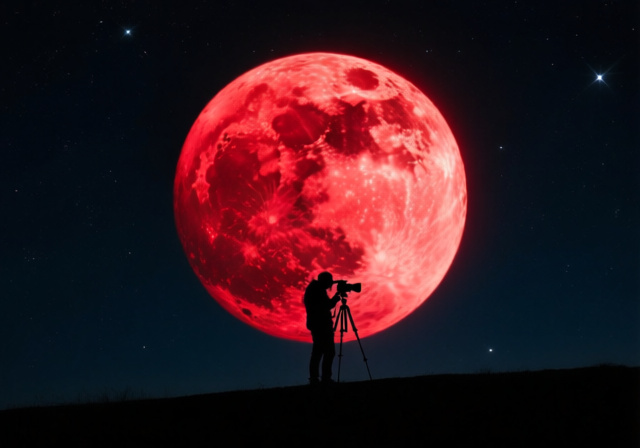
When the Moon drifts into Earth’s shadow and turns a deep coppery red, the same anxious question surfaces in nearly every observer’s mind: can you look at a lunar eclipse without hurting your eyes? After more than two decades photographing the night sky at RevellPhotography, I can tell you the answer has not changed once, and it never will: yes, a lunar eclipse is completely safe to view with the naked eye, binoculars, or a telescope. No special glasses, no solar filters, no protective eyewear of any kind is required.
The reason people get nervous is that they mix up lunar eclipses with solar eclipses, where the safety rules are the complete opposite. A solar eclipse demands certified eclipse glasses because you are staring at the Sun. A lunar eclipse is the reverse geometry: the Sun is hidden behind Earth, and the only thing your eyes receive is gentle, filtered, reflected light from the Moon. The American Academy of Ophthalmology and NASA both confirm there are zero documented cases of eye damage caused by watching a lunar eclipse.
This updated 2026 guide breaks down the science, the safety, the upcoming 2026 eclipse calendar, and the gear I personally use to capture these events. By the end, you’ll know exactly when to look up, what to bring, and why the only real danger of a lunar eclipse night is the mosquitoes.
Staring at a lunar eclipse poses absolutely no risk to your vision. No retinal burns, no temporary blindness, no cumulative damage, and no discomfort. You can watch the entire multi-hour event without ever looking away, and your eyes will feel no different than they do during a regular full Moon.
The Moon never becomes brighter during an eclipse – it becomes significantly dimmer. Earth’s umbra, the darkest part of its shadow, gradually covers the lunar surface, so by mid-totality the Moon can be roughly 10,000 to 100,000 times fainter than a normal full Moon. If your eyes are comfortable looking at a full Moon, they are far more comfortable looking at a lunar eclipse. According to the Natural History Museum, the same is true whether you are using a telescope, binoculars, or simply standing in your backyard in pajamas.
Lunar Eclipse: A celestial event that happens when Earth passes directly between the Sun and the Moon, casting its shadow across the lunar surface and dimming the Moon’s reflected light.
I have personally observed well over 20 lunar eclipses from deserts, mountaintops, suburban driveways, and city rooftops. Not once, in any of those sessions lasting up to five hours each, has any observer in my group ever reported eye strain, afterimages, or any other symptom. The medical literature agrees: there is no known mechanism by which a lunar eclipse could damage healthy eyes.
The safety of a lunar eclipse is built into the geometry of the event. When a lunar eclipse occurs, the Sun, Earth, and Moon line up with Earth in the middle. From the Moon’s perspective, the Sun is completely hidden behind our planet, so the lunar surface is not being directly illuminated by the Sun at all. Instead, what little light reaches the Moon has been bent, scattered, and reddened as it passes through Earth’s atmosphere, the same effect that makes sunsets red.
That doubly-filtered light then travels the 384,000 kilometers back to your eye. By the time it arrives, it is not just dim, it is softer and warmer in tone than direct moonlight. The harmful shortwave UV and infrared radiation that makes solar eclipses dangerous has already been absorbed by the ozone layer and atmospheric gases long before the light could bounce off the Moon.
From a photographer’s standpoint, this dimming is measurable. A regular full Moon is a moderately bright target. The same Moon mid-totality often requires exposures two to four stops longer, proof in pixels that less light, not more, is reaching your eye. If you would happily photograph a regular full Moon without filters, you can absolutely watch a lunar eclipse without filters.
No. A lunar eclipse cannot blind you, irritate your eyes, or cause any short- or long-term vision changes. This is one of the most searched questions about lunar eclipses, and the answer is unanimous across medical authorities. The American Academy of Ophthalmology explains that because the Sun is fully blocked by Earth during a lunar eclipse, your retina is never exposed to the concentrated radiation that causes solar retinal burns.
If you do feel any eye discomfort during a long night of stargazing, it is almost always from dryness, fatigue, or staring at a screen – not from the Moon itself. A few planned blink breaks and a warm drink usually solve the problem.
Most of the fear around lunar eclipses traces back to confusion with solar eclipses, where the safety rules really are strict. With a solar eclipse, you are looking at – or near – the Sun itself, and the Sun is roughly 400,000 times brighter than a full Moon. Concentrated sunlight can burn your retina in seconds, often without any pain, which is what makes it so dangerous.
| Feature | Lunar Eclipse | Solar Eclipse |
|---|---|---|
| Eye Safety | Completely safe to look at directly | Dangerous without certified solar filters |
| Required Equipment | None, optional binoculars or telescope | ISO-certified eclipse glasses or solar filters |
| Viewing Duration | Unlimited, hours at a time | Limited even with protection |
| Light Source | Reflected, filtered sunlight from the Moon | Direct sunlight from the Sun |
| Brightness Change | Moon becomes much dimmer than normal | Sun remains dangerously bright |
| Best For | Family viewing, photography, relaxed observation | Short partial phases, strict timing |
The key takeaway is symmetry: during a lunar eclipse the Sun is behind Earth, and during a solar eclipse the Moon is in front of the Sun. Only the second configuration can put dangerous radiation into your eye, which is why solar eclipses require certified eclipse glasses and lunar eclipses require nothing at all. Once that mental model clicks, the question of can you look at a lunar eclipse answers itself.
If a full Moon happens every 29.5 days, you might expect a lunar eclipse every month too. They don’t, and the reason is one of the most elegant details in orbital mechanics. The Moon’s orbit around Earth is tilted by about 5 degrees relative to Earth’s orbit around the Sun. That sounds small, but it is enough to mean the Moon usually passes just above or just below Earth’s shadow at full Moon.
Two or three times a year, the geometry lines up. The full Moon crosses the plane of Earth’s orbit at the same moment Earth is positioned between the Sun and Moon, and we get an eclipse season roughly 34 days long. During each season, at least one solar and one lunar eclipse occur, sometimes two of each, occasionally three. Outside those windows, no amount of staring at the sky will produce an eclipse.
This is also why the Moon can appear red during totality but not during a regular full Moon. Earth’s atmosphere bends the longest, reddest wavelengths of sunlight into the umbra, painting the Moon in shades from bright copper to deep brick red, depending on how much dust and cloud are in the atmosphere that night.
Not all lunar eclipses look the same, and the safety message stays the same across all three types: every one of them is safe to view without protection. The differences are visual, not medical. According to the Natural History Museum and NASA’s lunar eclipse reference, eclipses are classified by which part of Earth’s shadow the Moon passes through.
The Moon passes completely through Earth’s umbra, the darkest central shadow. The lunar surface darkens dramatically and often glows deep red or orange. This is the famous “blood moon” event, and it is the most photogenic of the three types. Totality can last from a few minutes to over 100 minutes, depending on how centrally the Moon crosses the shadow.
Only part of the Moon enters the umbra while the rest stays in the penumbra, the lighter outer shadow. You will see a curved dark “bite” taken out of the Moon, with the rest of the disk still bright. Partial eclipses are excellent for photography because the contrast between the bright and shadowed regions is striking.
The Moon passes only through the penumbra and never touches the umbra. The dimming is subtle, often just a slight shading on one side of the lunar disk. Penumbral eclipses are easy to miss if you aren’t watching carefully, but they are a great warm-up for beginners learning the geometry of Earth’s shadow.
On average, Earth experiences about two to four lunar eclipses per year, with total eclipses making up roughly 29 percent of the count. That works out to a total lunar eclipse somewhere on Earth roughly every 2.5 years, although they are not evenly distributed. Some calendar years see two total eclipses within a few months, and other years see none at all.
From a single location, totality returns to your specific patch of Earth about every 2 to 3 years on average, though the wait can stretch much longer for some regions. The good news is that partial and penumbral eclipses fill in the gaps, so there is almost always some kind of lunar eclipse visible from somewhere every six months.
A total lunar eclipse unfolds in five predictable stages. The exact timing depends on the specific event, but the sequence never changes. Use this timeline as your reference for any upcoming eclipse.
| Phase | What Happens | Approximate Duration |
|---|---|---|
| Penumbral begins (P1) | Moon enters Earth’s penumbra; subtle dimming starts | ~60 minutes before partial begins |
| Partial begins (U1) | Moon touches the umbra; first dark bite appears | Lasts ~60-90 minutes |
| Totality begins (U2) | Moon fully inside the umbra; “blood moon” effect | 30 to 100+ minutes |
| Totality ends (U3) | Moon starts exiting the umbra | Transition phase |
| Partial ends (U4) | Moon leaves the umbra; shadow fades | ~60-90 minutes |
| Penumbral ends (P4) | Moon exits the penumbra; event concludes | ~60 minutes |
The full event, from first penumbral shading to last, often runs 4 to 6 hours. Totality itself is the showpiece, so plan your photography and viewing around the U2 to U3 window. You can step outside during any other phase and see a slow, beautiful progression with no risk to your eyes at any point.
Watching a lunar eclipse is one of the easiest stargazing experiences you can have. The steps below come from running public observation nights for years and from a lot of trial and error in cold fields.
The phrase “blood moon” sounds dramatic, but it describes a real and fully understood atmospheric effect. During a total lunar eclipse, Earth’s atmosphere filters out blue and green wavelengths of sunlight and bends the red wavelengths into the umbra. That red light then illuminates the lunar surface, turning the Moon shades of copper, rust, or even deep blood red.
The exact color depends on atmospheric conditions. Clean air produces a bright coppery Moon. Volcanic ash, wildfires, or heavy dust can deepen the color into a dark brick red, sometimes so dark that the Moon nearly disappears at mid-totality. Astronomers actually use the Danjon scale to rate eclipse brightness from L=0 (very dark) to L=4 (bright copper).
Cultural associations with the blood moon range from omens to religious significance, but the optics are simple physics. The Moon is reflecting red light that has already been safely filtered by Earth. There is nothing dangerous about a blood moon; it is simply a beautiful reminder that we live on a planet with an atmosphere.
Lunar eclipses are among my favorite astrophotography subjects because they are bright enough for any camera, slow enough to plan around, and dramatic enough to create wall-worthy images. Over the years I have refined a workflow that works whether you are shooting with a smartphone or a dedicated astro camera.
For DSLR and mirrorless shooters, start with ISO 400-800, an aperture between f/8 and f/11, and shutter speeds from 1/125 second during the bright partial phases to 2-4 seconds during totality. The Moon gets much dimmer than a regular full Moon once totality begins, so don’t be afraid to push ISO to 1600 or higher and use exposures of several seconds. A sturdy tripod is non-negotiable; even tiny vibrations will blur a 400mm lunar image.
Manual focus is essential. Autofocus struggles on the Moon during eclipse phases because the contrast shifts as the shadow crosses craters. Switch to live view, magnify to 100 percent, and focus on the sharp edge of a crater rim. Once you have it, leave it alone and recompose by moving the tripod.
Smartphones can capture surprisingly good eclipse images, especially in wide-field “Moon in landscape” compositions. Use a small tripod or phone mount, lock exposure by tapping and holding on the Moon, and use a 2-second timer to avoid shake. For more detailed night sky photography techniques, our astrophotography guide covers everything from wide-field milky way shots to deep-sky imaging with tracked mounts.
The same eclipse seasons that produce lunar eclipses often line up with other interesting sky events. While you are waiting for totality, take a few minutes to scan the rest of the sky. You will almost always spot something worth photographing.
You do not need any equipment to enjoy a lunar eclipse, but the right tools can take your experience from pleasant to unforgettable. Below is the gear I reach for during my own eclipse sessions, organized by viewing style.
For naked-eye viewing: Nothing. A lawn chair, warm clothes, and a thermos are all you need. The Moon is bright enough to enjoy without any optics at all.
For binocular viewing: A pair of 7×50 or 10×50 binoculars is the single best upgrade for a beginner. They are lightweight, easy to aim, and reveal lunar craters, mountain ranges, and the smooth progression of Earth’s shadow. The Celestron SkyMaster 25×70 is a popular higher-magnification option for sharper detail during the partial phases.
For telescope viewing: Any small refractor will reveal stunning crater detail during an eclipse. If you are shopping on a budget, our budget telescopes for moon viewing guide covers the best options under $100. To choose between optical designs, the reflector vs refractor telescope comparison explains the tradeoffs in portability versus aperture. Brand-wise, the Orion vs Celestron faceoff breaks down which brand suits your observing style.
For filters and accessories: Lunar telescope filters reduce glare during the bright partial phases, while quality Barlow lenses double or triple your telescope’s effective magnification for close-up crater shots during totality. None of these are required for safe viewing; they are simply tools for sharper, more detailed views.
Choosing between binoculars and a telescope: Our binoculars vs telescope for moon viewing guide covers the full decision, but the short version is that binoculars are easier and more spontaneous, while telescopes offer more magnification at the cost of setup effort. For a first eclipse, I usually recommend binoculars.
Below is the verified 2026 and 2027 lunar eclipse calendar, with dates, types, and primary visibility regions. Times are listed in UTC; convert to your local zone for exact planning. Data is consistent with NASA’s eclipse catalog and the Space.com 2026 eclipse guide.
Each event is completely safe to view from start to finish. If the Moon is above the horizon at your location during any of the phases, you can step outside and enjoy it. The biggest decision is simply where to set up your chair.
Nothing harmful happens. You will see Earth’s shadow gradually cover the Moon, often turning it a dramatic red color during totality. The view is completely safe and will not cause eye discomfort, afterimages, or any long-term vision changes.
Yes. Telescopes and binoculars are completely safe for lunar eclipse viewing, with no filters required. In fact, telescopes enhance the experience by revealing crater detail, mountain shadows, and the curved edge of Earth’s umbra. Just let the optics acclimate to the outside temperature for 30 minutes before observing.
No. Lunar eclipses do not require any eye protection. Unlike solar eclipses, where certified eclipse glasses are essential, lunar eclipses are safe to view with the naked eye. Eclipse glasses will only make the dim eclipse Moon harder to see, so leave them in the drawer for solar events.
During a lunar eclipse, the Sun is fully blocked by Earth, so you are looking only at reflected light from the Moon. That light has already been filtered through Earth’s atmosphere, making it dim and safe. During a solar eclipse, you are looking at the Sun directly (or nearly so), and the Sun is roughly 400,000 times brighter than a full Moon, which is enough to permanently damage your retina in seconds.
Yes. Lunar eclipses are completely safe for children of all ages, including infants. They make excellent first astronomy experiences because no special equipment is needed and the event lasts for hours. Many families use lunar eclipses as a chance to introduce kids to stargazing and the night sky.
No. The blood moon’s red color is created when Earth’s atmosphere filters out blue light and bends red wavelengths into the umbra. That red light is actually dimmer than ordinary moonlight, so it is even safer to look at. There is no medical risk associated with viewing a blood moon.
No. A lunar eclipse cannot blind you, irritate your eyes, or cause any short- or long-term vision changes. The American Academy of Ophthalmology confirms that because the Sun is completely blocked by Earth during a lunar eclipse, no concentrated radiation reaches the retina. If you feel any eye discomfort during a long eclipse night, it is from dryness, fatigue, or screens, not the Moon.
On average, two to four lunar eclipses occur somewhere on Earth each year, with total eclipses making up roughly 29 percent of the total. From any single location, a total lunar eclipse is visible about every 2 to 3 years on average, though the wait can stretch longer for some regions. Partial and penumbral eclipses fill in the gaps in between.
Lunar eclipses are one of the most welcoming events in astronomy. No tickets, no special equipment, no eye protection, no travel required. If the Moon is up and the sky is clear, you have everything you need. The combination of safety, accessibility, and sheer visual drama is why they remain the best first eclipse experience for new observers and a favorite annual event for seasoned stargazers.
As 2026 unfolds with two lunar eclipses over North America, the August 28 partial and the lead-in to the August 2027 total, this is a great year to step outside and let the show happen. Bring a friend, bring a child, bring a pair of binoculars if you have them, and enjoy the kind of celestial show that the whole family can watch together, safely, for as long as the sky stays clear.