15 Hubble Space Telescope Facts (September 2026) Amazing Things to Know
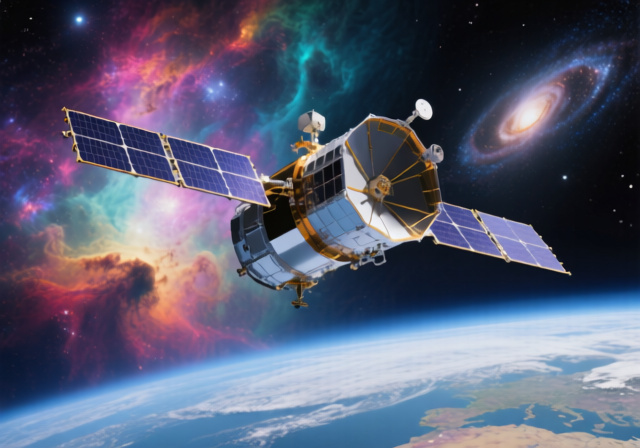
Explore 15 amazing Hubble Space Telescope facts about its discoveries, technical specifications, and profound impact on our understanding of the…

The sky has captivated humanity since our earliest ancestors first gazed upward. It is more than just the blue expanse above our heads—it is a living tapestry of physics, chemistry, and cosmic events that unfolds both day and night. Whether you are peering through a telescope or simply watching clouds drift by on a summer afternoon, the sky offers endless wonders waiting to be discovered.
These 50 sky facts will introduce you to the science behind what you see, from why sunsets paint the horizon in brilliant oranges and reds to how ancient cultures used the stars for navigation. You will learn about the celestial sphere that surrounds us, discover which constellations dominate each season, and find practical tips for observing satellites, meteor showers, and rare phenomena like zodiacal light. By the time you finish, your perspective on what lies above will be forever changed.
This guide covers everything from atmospheric optics to deep sky objects visible to the naked eye, with special attention to topics that forum members at r/Astronomy and r/Stargazing most frequently ask about. Light pollution solutions, equipment recommendations, and constellation identification are all covered here.
The blue sky you see during daytime results from a process called Rayleigh scattering. When sunlight enters Earth’s atmosphere, it collides with gas molecules—primarily nitrogen and oxygen. Blue light, which travels as shorter wavelengths, scatters in all directions much more efficiently than red light, which passes through with minimal scattering. Your eyes perceive this scattered blue light from every direction, creating the familiar blue canopy overhead.
Rayleigh Scattering: The scientific process where sunlight interacts with gas molecules in Earth’s atmosphere, causing blue light to scatter more than other colors due to its shorter wavelength.
The sky is not actually blue in a physical sense—it only appears that way to human eyes. Remove the atmosphere entirely, as astronauts discovered on the Moon, and the sky turns black even when the Sun hangs directly overhead. Mars tells a different story: its thin atmosphere contains fine dust particles that scatter red light more effectively, giving the Martian sky a butterscotch or salmon color during daytime.
Sunrise and sunset present entirely different palettes. When the Sun sits low on the horizon, its light travels through substantially more atmosphere to reach your location. Most blue light scatters away long before arriving, leaving reds, oranges, and yellows to paint the clouds and horizon. This same effect explains why the sky near the Sun appears brightest at midday—the light path through the atmosphere is shortest, maximizing the contrast between scattered blue and direct yellowish-white sunlight.
Volcanic eruptions and severe storms can dramatically alter sky colors. Large eruptions inject sulfur dioxide and ash particles into the stratosphere, creating vivid red and orange sunsets worldwide for months or even years. During severe thunderstorms, water droplets in the atmosphere can produce rare green skies—a phenomenon that occurs when blue sunlight passes through thick water-laden clouds, mixing with scattered green light from the storm system.
Beyond Rayleigh scattering, the atmosphere produces several optical phenomena worth knowing. The airglow effect creates a faint greenish or reddish glow along the horizon on clear nights, caused by oxygen atoms releasing energy after being excited by ultraviolet radiation. This natural light emission is so subtle that it is usually invisible except in dark sky locations far from city lights.
Every star visible to the naked eye in the night sky is larger and brighter than our Sun. Of the approximately 5,000 stars observable from exceptionally dark locations worldwide, not a single one is smaller than our star. This might seem surprising, but smaller, dimmer stars outnumber bright ones—they simply lie too far away to see without optical aid.
When you gaze at Sirius, the brightest star in Earth’s night sky, you are seeing light that departed 8.6 years ago. The most distant stars visible without telescopes—Deneb in Cygnus, Achernar in Eridanus, and Rigel in Orion—shine from thousands of light-years away. Deneb’s light began its journey when humans were still learning to control fire, making astronomy literally a view into the past.
Stars appear to twinkle—technically called scintillation—because their light passes through Earth’s turbulent atmosphere. Moving pockets of air with different temperatures and densities bend starlight slightly, causing the apparent flickering. Planets do not twinkle as noticeably because they are closer and appear as tiny disks rather than points of light. The light from multiple points on a planetary disk averages out atmospheric distortion, creating a steadier appearance.
The Sun is remarkably average in cosmic terms. Classified as a G-type main-sequence star, it is about halfway through a 10-billion-year lifespan and will eventually swell into a red giant before collapsing as a white dwarf. In contrast, UY Scuti, one of the largest known stars, is roughly 1,700 times the Sun’s diameter. You could fit nearly 5 billion Suns inside this monster star, though it weighs only about 30 times more.
The Milky Way contains between 200 and 400 billion stars, but you can only see about 2,500 from any single location on Earth. From the Southern Hemisphere, the Large and Small Magellanic Clouds—two satellite galaxies orbiting our own—appear as prominent fuzzy patches. These closest galaxies lie about 160,000 and 200,000 light-years away respectively.
The celestial sphere is an imaginary dome surrounding Earth, onto which astronomers project stars and celestial objects. Though the universe is three-dimensional and stars lie at vastly different distances, the celestial sphere provides a useful coordinate system for locating objects in the sky. Ancient civilizations recognized patterns in this starry backdrop and created the constellation system we still use today.
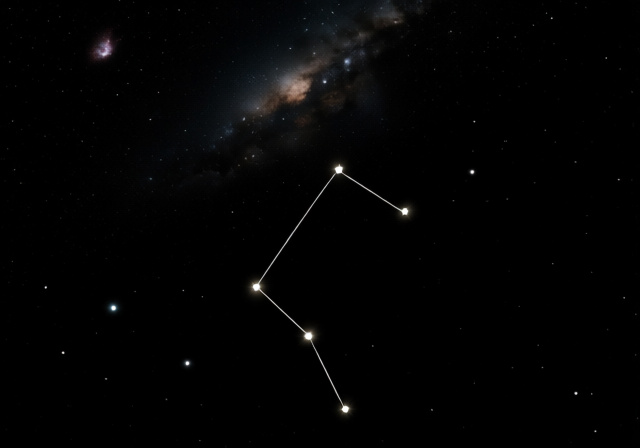
Modern astronomy recognizes 88 official constellations—regions of the sky that together cover the entire celestial sphere without overlap. These range from expansive constellations like Hydra (the water serpent) to tiny ones like Equuleus (the little horse). Constellations serve as guideposts, making it easier to navigate the night sky and communicate locations of celestial objects.
Asterisms differ from constellations. An asterism is a recognizable pattern of stars that may span multiple constellations or use only a portion of an official constellation. The Big Dipper is the most famous asterism—it uses seven bright stars from the larger constellation Ursa Major (the great bear). The Summer Triangle is another well-known asterism, formed by three bright stars from three different constellations: Vega in Lyra, Deneb in Cygnus, and Altair in Aquila.
The brightness of stars is measured using the magnitude scale, developed by ancient Greek astronomer Hipparchus. On this inverted scale, lower numbers indicate brighter objects. Sirius, the brightest star in our sky, has an apparent magnitude of -1.46. The full Moon reaches magnitude -12.7, while the Sun blazes at magnitude -26.7. The faintest stars visible under perfect dark skies measure around magnitude 6.5, though modern telescopes can detect objects down to magnitude 30.
Many naked eye objects await observation without any equipment. The Andromeda Galaxy, the nearest major galaxy to our Milky Way, spans a larger angular diameter than the Moon but presents much fainter surface brightness. Under dark skies, you can spot the Orion Nebula—a stellar nursery 1,344 light-years away where new stars are being born right now. The Pleiades star cluster, known as the Seven Sisters, contains hundreds of stars but appears as a tiny dipper-shaped collection to naked eyes.
The Moon drifts away from Earth at approximately 3.8 centimeters annually—the same rate at which human fingernails grow. This gradual recession means that in the distant past, the Moon appeared significantly larger in our sky. During the Cretaceous period when dinosaurs roamed Earth, the Moon was roughly 10,000 kilometers closer and subtended a noticeably larger angle in the sky.
Venus earns the title of Earth’s “sister planet” based on size, yet its surface environment could not differ more. Surface temperatures reach 462 degrees Celsius (864 degrees Fahrenheit)—hot enough to melt lead. Despite these extremes, Venus dominates our morning and evening sky as the brightest planet, sometimes bright enough to cast shadows on absolutely dark nights. Ancient civilizations often recorded it as two separate objects: the morning star and evening star.
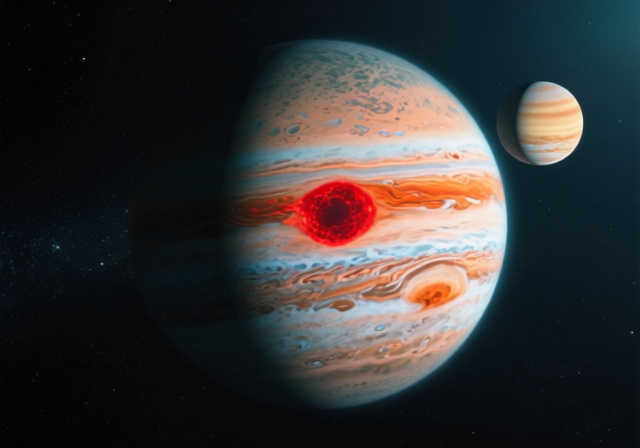
Jupiter contains more mass than all other planets combined—so voluminous that you could fit every other planet in the solar system inside it with room to spare. Four of its 95 known moons are visible with basic binoculars: Io, Europa, Ganymede, and Callisto, collectively called the Galilean moons after their discoverer. Ganymede exceeds Mercury in size, making it the largest moon in our solar system.
Mars owes its distinctive red appearance to iron oxide—essentially rust—covering its surface. Every 26 months, Mars reaches opposition, aligning with Earth on the same side of the Sun and appearing brightest in our sky. During these favorable oppositions, Mars can rival Jupiter in brightness, though it remains much smaller in apparent angular size.
Saturn’s iconic rings consist primarily of ice particles ranging from grains of sand to boulders the size of houses. While you need a telescope for clear ring visibility, Saturn itself appears as a steady, bright yellowish “star” to naked eyes. Unlike actual stars that twinkle due to atmospheric turbulence, Saturn’s disk-like appearance creates a noticeably steadier glow.
Twilight is the period between day and night when sunlight still illuminates the upper atmosphere after sunset or before sunrise. Understanding twilight phases helps photographers and sky observers plan their activities, as each phase offers different lighting conditions and visibility for celestial objects.
Civil twilight occurs when the Sun sits less than 6 degrees below the horizon. During this phase, most outdoor activities can continue without artificial lighting, and the brightest stars and planets become visible near the horizon. Many photographers consider civil twilight ideal for capturing cityscapes with visible stars in the sky.
Nautical twilight extends from 6 to 12 degrees below the horizon. During this phase, the horizon remains visible at sea, allowing navigation by celestial references. For sky observers, nautical twilight reveals more stars as the sky darkens further, though faint deep-sky objects remain challenging to see. This phase is often called the “blue hour” by photographers.
Astronomical twilight spans from 12 to 18 degrees below the horizon. Only after the Sun passes 18 degrees below the horizon does true astronomical darkness begin, when the faintest stars and deep-sky objects become visible. Many astronomers time their observing sessions to begin during astronomical twilight, particularly for events like meteor showers or faint comet observations.
The duration of twilight depends on your latitude and the Sun’s declination. At the equator, twilight lasts roughly 30 minutes total across all phases. At higher latitudes during summer, civil twilight can persist all night north of 48.5 degrees latitude, creating “white nights” where darkness never fully arrives. Understanding these twilight zones helps you plan observation sessions and recognize when specific celestial phenomena become visible.
Aurora borealis (northern lights) and aurora australis (southern lights) result from charged particles emitted by the Sun colliding with Earth’s magnetic field. These particles excite oxygen and nitrogen atoms in our upper atmosphere, causing them to release light at specific colors. Green auroras dominate at approximately 100 kilometers altitude, while red and blue auroras occur at higher and lower altitudes respectively.
Meteor showers occur when Earth passes through debris trails left by comets orbiting the Sun. The Perseids in August and Geminids in December represent the most reliable annual showers, typically producing 50 to 100 meteors per hour at peak. Most “shooting stars” originate from particles no larger than a grain of sand, burning completely upon atmospheric entry.
Solar eclipses owe their existence to a cosmic coincidence: the Sun is 400 times larger than the Moon but also approximately 400 times farther away, making them appear nearly identical in angular size. This alignment allows total solar eclipses to occur. However, the Moon retreats from Earth at 3.8 centimeters yearly—in about 600 million years, total solar eclipses will become impossible.
Noctilucent clouds form at roughly 80 kilometers altitude, making them the highest clouds in Earth’s atmosphere. These rare, electric-blue clouds become visible only during deep twilight from latitudes between 50 and 65 degrees north or south of the equator, typically during summer months. They appear to shine against a darkening sky because their extreme altitude still catches sunlight while ground-level observers experience darkness.
Green flashes at sunset represent genuine atmospheric optics phenomena. As the Sun’s disk touches the horizon and sunlight passes through increasingly dense atmosphere, refraction separates colors like a prism. Under ideal conditions with a clear horizon, a green—or occasionally blue—flash may be visible for a few seconds after the Sun disappears from view.
Beyond auroras and meteor showers, several subtle light phenomena reward patient observers with dark skies. Zodiacal light appears as a triangular glow extending along the ecliptic—the Sun’s apparent path through the sky—before sunrise in spring or after sunset in autumn. This phenomenon results from sunlight reflecting off interplanetary dust particles scattered throughout our solar system.
The gegenschein (German for “counterglow”) appears as a faint brightening directly opposite the Sun along the ecliptic. Like zodiacal light, it is caused by sunlight scattering off dust particles, but this region represents a stable Lagrange point where dust accumulates. The gegenschein is fainter than zodiacal light and requires excellent dark sky conditions to observe.
Airglow persists throughout the night across the entire sky, creating a subtle background luminance that limits how faint deep-sky objects can become visible from any location. Unlike light pollution from human sources, airglow originates naturally from excited atmospheric atoms and molecules releasing energy. The greenish airglow visible near the horizon results from oxygen atoms at around 100 kilometers altitude.
Light pollution from human activities represents the primary obstacle for sky observers worldwide. The International Dark-Sky Association estimates that one-third of humanity cannot see the Milky Way from their location due to artificial light. Even small cities produce enough skyglow to limit naked-eye visibility to a few hundred stars. Finding truly dark skies—rated 4 or higher on the Bortle Scale—increasingly requires traveling to remote wilderness areas or designated dark sky preserves.
Your eyes alone serve as excellent sky observation tools. Under dark conditions away from light pollution, approximately 3,000 stars become visible to dark-adapted eyes. The key is allowing 20 to 30 minutes for your eyes to fully adapt to darkness—pupil dilation and chemical changes in your retina’s rod cells dramatically improve low-light sensitivity during this adjustment period.
For beginners, I recommend starting with binoculars rather than telescopes. Binoculars provide a wider field of view, making it easier to locate objects and observe star clusters, lunar craters, and some galaxies. They require no setup, deliver immediate results, and cost significantly less than beginner telescopes. Look for 10×50 specifications—the first number indicates magnification, the second the objective lens diameter in millimeters.
When choosing sky observation locations, prioritize spots with clear horizons toward the north (for Northern Hemisphere observers) and minimal artificial light sources. Elevated locations help, as does proximity to forests or terrain that blocks nearby light sources. Many dedicated sky observers use light pollution maps available through organizations like the International Dark-Sky Association to identify optimal viewing locations.
Use red light instead of white light during observation sessions. Red light preserves your night vision because rod cells in your eyes—the cells responsible for vision in low light—are minimally sensitive to red wavelengths. Cover a regular flashlight with red cellophane, or purchase dedicated astronomy flashlights with adjustable red LED outputs. Even brief exposure to white light resets your dark adaptation, requiring another 20-minute adjustment period.
The best sky observation timing depends on your targets. New moon phases provide the darkest skies for deep-sky objects. Seasonal changes alter which constellations and objects appear prominently. Summer reveals the Milky Way’s galactic center in Sagittarius and Scorpius. Winter showcases the bright Orion Nebula and surrounding stellar nurseries. Spring and autumn offer excellent views toward galaxy-rich regions where thousands of distant galaxies await patient observers with binoculars for sky observation.
| Measurement | Value | Context |
|---|---|---|
| Atmosphere Height | 100 km (62 miles) | Where space officially begins (Karman line) |
| Visible Stars | 3,000 – 5,000 | From a perfectly dark location |
| Light Travel (Sun to Earth) | 8 minutes 20 seconds | We see the Sun as it was 8 minutes ago |
| Moon Recession Rate | 3.8 cm/year | Same rate as fingernail growth |
| Milky Way Stars | 200-400 billion | In our galaxy alone |
| Andromeda Distance | 2.5 million light-years | Nearest major galaxy to Milky Way |
| Observable Universe | 93 billion light-years | Estimated diameter of visible universe |
| Solar System Velocity | 828,000 km/h | Earth and Sun orbit Milky Way center |
| Light Speed | 299,792 km/s | Fastest speed physically possible |
| Atmospheric Pressure | 101.325 kPa | Sea level standard atmosphere |
Capturing sky phenomena requires understanding both photography techniques and celestial mechanics. The “500 rule” provides a starting point for sharp star images without star trails: divide 500 by your lens focal length to determine maximum exposure time. With a 20mm lens, exposures of 25 seconds or less keep stars relatively point-like; longer exposures produce visible trails as Earth rotates.
Astronomical twilight—when the Sun sits 12 to 18 degrees below the horizon—provides optimal conditions for many types of sky photography. During this period, enough ambient light remains to illuminate landscapes and foregrounds while the sky remains dark enough for stars and faint phenomena. This window varies from roughly 45 minutes to over an hour depending on latitude and season.
Camera settings for sky photography differ significantly from daylight work. Use manual mode to control aperture, shutter speed, and ISO independently. Set aperture to f/2.8 or faster if your lens allows. Increase ISO between 1600 and 6400 depending on your camera’s low-light performance. Use manual focus set to infinity, then fine-tune by taking test shots and examining star sharpness on your camera’s display.
Light pollution presents the greatest challenge for sky photographers in populated areas. Light pollution filters specifically block the wavelengths emitted by common outdoor lighting (sodium and mercury vapor lamps), improving contrast between celestial objects and sky background. Even with filters, urban and suburban photographers face limitations—true dark skies remain essential for capturing faint nebulae and distant galaxies.
Planning telescope or camera setups depends on your primary subjects. Wide-angle lenses excel for Milky Way landscapes and meteor showers. Telephoto lenses and telescopes become necessary for lunar and planetary detail, while apochromatic refractors and specialized astrographs target deep-sky photography. Each category requires different mount stability—wide-angle work tolerates lighter tripods than high-magnification planetary imaging.
The sky contains about 100 tons of space dust that falls to Earth every single day, mostly from micrometeorites that burn up in our atmosphere and settle as microscopic particles.
From a perfectly dark location with no light pollution, you can see approximately 5,000 stars total (about 2,500 at any given time). In typical suburban areas, this drops to about 200-300 stars due to light pollution.
Stars twinkle because they’re so far away they appear as single points of light that get distorted by Earth’s atmosphere. Planets appear as tiny disks, so their light averages out the atmospheric turbulence and appears steadier.
At sunset, sunlight travels through more atmosphere, scattering away blue light and allowing reds and oranges to dominate. The specific colors depend on atmospheric conditions, pollution levels, cloud formations, and the angle of the Sun below the horizon.
Yes, but only the brightest ones. Venus is often visible in daylight if you know exactly where to look. With a telescope, you can see bright stars like Sirius and Vega during the day by pointing at their precise coordinates.
Start with just your eyes, learning major constellations and identifying bright planets. Then add binoculars—10×50 is ideal for beginners. Download a star chart app like SkyView or Stellarium to help identify objects. Join local astronomy clubs for guidance and access to dark sky observing locations.
These sky facts represent just the beginning of a lifelong journey into astronomy and atmospheric science. The universe has been performing its cosmic show for 13.8 billion years, and every clear night offers fresh opportunities to witness supernovae in distant galaxies, asteroids passing between Earth and Moon, or simply the Moon gliding through its monthly phases while planets drift through their orbital dance.
Whether your interest lies in photographing celestial wonders, identifying constellations overhead, or simply understanding why the sky appears blue during your afternoon walk, the knowledge you have gained here provides a foundation for deeper exploration. Consider investing in quality observation equipment as your interest develops, but never forget that the most important tool remains your own curious eyes.
The sky connects each of us to something larger than ourselves—a reminder that we inhabit a small planet orbiting an average star in one of hundreds of billions of galaxies. Look up tonight, find a dark spot away from city lights if possible, and let your eyes adjust. You will be rewarded with a view that has inspired poets, navigators, and scientists throughout human history. The universe awaits your attention.