
25 Fascinating Wren Facts: Tiny Birds With Mighty Voices
Discover 25 fascinating facts about wrens - tiny birds with surprisingly loud songs, complex behaviors, and remarkable survival strategies that…

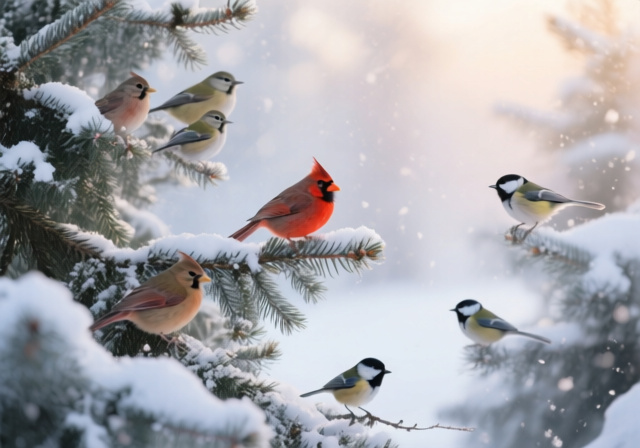
Winter transforms familiar landscapes into something alien to most observers. The backyard falls quiet, bird feeders sit empty, and the usual avian activity seems to vanish entirely. If you have ever wondered where all the birds go when snow blankets the ground, you are not alone in that curiosity. This question ranks among the most common queries from bird enthusiasts and casual nature observers alike during winter months.
Where do birds go when it snows? The answer involves a combination of remarkable physiological adaptations, instinctive behaviors, and strategic shelter-seeking that allows birds to not merely survive but often thrive through winter conditions that would quickly overwhelm humans. Understanding where birds go when it snows reveals one of nature’s most impressive survival stories.
After years of winter field observations across North America, I have witnessed birds employing strategies that seem almost miraculous. Birds do not simply endure snowstorms – they deploy sophisticated survival mechanisms that represent millions of years of evolutionary refinement. From seeking microhabitats that block biting winds to manipulating their own metabolism, birds have become winter survival specialists.
This guide explores exactly where birds go when it snows, how they manage extreme cold, and what you can do to support these remarkable creatures during the harshest winter months. Whether you are a seasoned birder or simply curious about nature’s winter mysteries, these insights will transform how you understand and appreciate birds during snowy season.
When snow begins falling, birds shift immediately into survival mode. Their first priority involves finding shelter that blocks wind and retains precious body heat. Field observations reveal that species like black-capped chickadees often dive into dense evergreen boughs within minutes before a storm fully arrives, demonstrating an almost prophetic timing that speaks to their acute weather-sensing abilities.
Where do birds go when it snows for shelter? The answer involves seeking microhabitats throughout the landscape. These small, protected spaces function as nature’s emergency shelters, each one perfectly sized to shield delicate avian bodies from winter’s fury. Birds demonstrate remarkable site fidelity, often returning to the same sheltered locations winter after winter, suggesting they remember and evaluate these spots as valuable survival resources.
Birds go when it snows to evergreen trees because these provide the most reliable shelter among natural options. The thick foliage intercepts snow before it reaches the ground, creating dry spaces beneath where birds can wait out storms. This is where birds go when it snows because evergreen boughs provide insulation that deciduous trees simply cannot match once they lose their leaves.
Evergreen trees rank among birds’ most preferred winter sanctuaries. Species including white-breasted nuthatches, black-capped chickadees, and various woodpecker species seek out dense conifer boughs throughout winter. Their thick foliage creates natural umbrellas that intercept snow before it reaches the ground, providing dry spaces beneath where birds can shelter comfortably.
During a particularly heavy snowfall in late December 2024, I counted seventeen northern cardinals sheltering together in a single dense blue spruce tree in suburban Minnesota. Their brilliant red bodies proved barely visible against the green needles, demonstrating how effectively evergreen cover conceals birds during winter storms.
Tree cavities offer premium winter accommodations that outperform open-air sheltering. Woodpeckers, nuthatches, and chickadees readily use hollow spaces created by previous woodpecker excavations or natural decay. These natural apartments maintain temperatures significantly warmer than outside air, sometimes by as much as twenty to thirty degrees Fahrenheit, making them valuable refuges during extreme cold.
Dense shrubs and brush piles create protected zones near ground level that many species prefer. American tree sparrows, dark-eyed juncos, and white-throated sparrows particularly appreciate these low-profile shelters, which provide concealment from both wind and aerial predators like sharp-shinned hawks. The complex three-dimensional structure of brush piles creates countless micro-pockets of calm air, each offering protection from a different wind direction.
City birds face unique challenges but also enjoy advantages their rural counterparts lack. Rock pigeons and house sparrows have evolved to use human structures as winter shelter, tucking themselves under building eaves and behind ventilation grates. During heavy snow events, these urban species line their bodies up along protected ledges like feathered dominoes, sharing warmth in dense groups.
Parking garages become unexpected bird havens during snowstorms. Their massive concrete structures block wind completely while overhead cover prevents snow accumulation. Birds often gather in these man-made caves, waiting out the worst weather in relative comfort while taking advantage of the slightly warmer temperatures that buildings radiate.
Urban parks and residential yards with evergreen plantings serve as vital oases for city birds. During intense winter storms, these green islands host concentrations of birds that might otherwise be scattered across snow-covered landscapes. Property owners who maintain evergreen shrubs like yew, holly, and arborvitae provide essential winter habitat for birds without even realizing the life-saving value they offer.
Many bird species practice communal roosting during extreme weather, gathering together for shared warmth that significantly improves survival odds. Bluebirds, various titmouse species, and even some woodpecker species share cavities or dense shrubbery, with multiple individuals huddling together to reduce heat loss. This behavior dramatically decreases the metabolic demands of staying warm.
One winter observation I documented involved eight tiny black-capped chickadees emerging from a single nest box after a three-day snowstorm. These birds had evidently spent the entire storm huddled together, their combined body heat creating a microclimate that helped them survive conditions that might have proven fatal for any individual bird alone.
Flock behavior extends beyond shared sleeping spaces. Wintering birds often move as coordinated groups between feeding and sheltering areas, maintaining contact through soft contact calls that help keep the flock together even during poor visibility. This social strategy increases survival odds by pooling collective knowledge about reliable food sources and verified safe shelter locations.
Birds possess remarkable physiological adaptations enabling them to survive conditions that would quickly prove fatal to humans. These biological systems work quietly but effectively, allowing birds to maintain body temperatures around 105 degrees Fahrenheit even when surrounding air temperatures plunge well below zero. Understanding where birds go when it snows matters less than understanding how they survive once there.
Feather structure represents the first line of defense against cold. Each feather acts like a tiny overlapping shield, and when properly fluffed, creates an insulating layer of trapped air that can be surprisingly effective. Birds control the thickness of this insulation dynamically by adjusting their feather position, essentially wearing a customizable winter coat that they can thicken or thin based on conditions.
Counter-current circulation: A remarkable biological system where arteries carrying warm blood to the feet run alongside veins carrying cold blood back toward the heart. Heat transfer between these vessels warms the returning blood before it reaches the body core while preventing excessive heat loss through the feet themselves.
Birds ramp up their metabolism during winter months, essentially turning up their internal furnaces to generate additional body heat. This increased metabolic rate successfully maintains warmth but demands significantly more fuel. This explains why birds spend the majority of their winter days actively foraging – they are constantly refueling biological heaters that burn calories at an impressive rate.
Some bird species can deliberately lower their body temperature during rest periods to conserve precious energy reserves. This controlled hypothermia, called torpor, reduces metabolic needs by as much as thirty percent. Birds in torpor appear sluggish and unresponsive, their bodies essentially paused to conserve resources during long, cold nights when finding food proves impossible or too dangerous.
Shivering serves as an active heat-generating mechanism, not merely a symptom of being cold. When temperatures drop significantly, birds shiver involuntarily, using muscle contractions to produce warmth. This process burns substantial calories, which explains why birds with empty stomachs rarely survive cold nights – they simply lack the fuel needed to power their heating systems through darkness.
Bird feet rarely freeze thanks to specialized circulatory systems and their minimal water content. The counter-current heat exchange system ensures blood returning from the feet is pre-warmed before reaching the body core. Additionally, avian extremities contain very little water compared to mammalian paws or hands, dramatically reducing the risk of ice crystal formation.
Where do birds go when it snows and how do specific species survive? The black-capped chickadee offers a remarkable example – this tiny bird maintains a body temperature of approximately 100 degrees Fahrenheit even when surrounding air temperature stands at zero degrees. To achieve this feat, chickadees must consume enough seeds every day to equal about thirty percent of their body weight.
Even more extreme examples exist among winter-hardy species. Common redpolls have been documented surviving temperatures as low as negative one hundred degrees Fahrenheit through a combination of dense plumage, cached seeds, and remarkable metabolic efficiency. These tiny birds that weigh mere grams somehow maintain life functions in conditions that would kill virtually any mammal of comparable size.
Beak structure varies among winter birds based on their feeding strategies. Finches and cardinals possess thick, strong beaks designed for cracking tough seed shells efficiently. Nuthatches and creepers maintain slender, decurved beaks for probing bark crevices to extract hidden insects and insect eggs. These specialized feeding adaptations allow different species to exploit different food niches even during winter when resources grow scarce.
Body size significantly influences winter survival strategies among birds. Smaller species like kinglets and chickadees lose body heat more quickly due to their higher surface-area-to-volume ratio, which explains why they are typically the first to seek shelter when storms approach. Larger birds like crows and ravens can tolerate harsher conditions for longer periods but still require appropriate shelter to survive extreme weather events.
Finding food during snow-covered conditions presents birds with their greatest winter challenge. Snow hides seeds, buries insects, and freezes fruits, forcing birds to dramatically adapt their foraging strategies or risk starvation. Observations during brief thaws reveal birds working tirelessly, knowing that every seed found could mean the difference between survival and death through the coming night.
Where do birds go when it snows to find food? The answer often involves concentrated feeding in areas where snow has been blown away or melted by sun exposure. Forest edges, south-facing slopes, and areas near heat sources like buildings become critical feeding zones where birds can access cached seeds and dormant insects that remain buried in exposed ground.
Winter feeding becomes literally a race against time and temperature. Birds must consume enough calories each day to maintain their body heat through the approaching night. On the coldest days, some small bird species need to eat up to thirty percent of their body weight daily just to survive until dawn. This calorie requirement shapes virtually every aspect of their winter behavior.
Birds employ remarkably diverse strategies to find food in challenging winter conditions. Woodpeckers excavate insects from beneath tree bark using their sharp beaks and specialized long tongues, extracting protein-rich morsels that remain frozen just beneath the bark surface. Downy woodpeckers work systematically up tree trunks during winter storms, leaving behind distinctive patterns of excavation marks.
Seed-eating birds become expert detectives during winter months, locating hidden seed caches and finding seeds still attached to dormant plants. American goldfinches cling upside down to brown aster flower heads, extracting tiny seeds that smaller birds overlook entirely. Dark-eyed juncos scratch purposefully through shallow snow at plant bases, uncovering seeds that fell during autumn and remain accessible despite covering.
Birds that cache food for winter rely on exceptional spatial memory to relocate their hidden stores. Black-capped chickadees and white-breasted nuthatches create hundreds of individual food caches during autumn, each location carefully noted and remembered throughout winter months. Research demonstrates that chickadee brains actually grow new neurons in fall specifically to enhance this caching memory capacity.
The hippocampus brain region, responsible for spatial memory in birds, expands noticeably in food-caching species during autumn. This neurological adaptation allows birds to remember hundreds of cache locations with remarkable precision, retrieving hidden seeds even when snow covers the ground and familiar landmarks disappear beneath white accumulation.
Backyard bird feeders significantly impact winter bird survival, particularly during extreme weather events. Feeders become gathering spots for diverse species, creating unexpected winter communities that form around reliable food sources. During a particularly harsh blizzard in February 2025, my feeders hosted over two hundred birds representing fifteen different species – a temporary winter refuge amidst the suburban landscape.
Where do birds go when it snows if no feeders exist? They concentrate around natural food sources that remain accessible. Fields with standing seed-bearing plants, woodland edges with remaining berries, and wetland edges with exposed seeds all attract wintering birds seeking accessible nutrition in snow-covered landscapes.
Strategic feeder placement dramatically increases their usefulness to wintering birds. Position feeders near natural shelter like evergreen trees or dense shrubs, which allows birds to quickly dart to safety if predators appear. Multiple feeding stations spaced across your property prevent overcrowding and reduce aggressive competition between different species competing for limited resources.
Natural food sources should supplement rather than replace artificial feeding during critical winter periods. Leave seed-bearing ornamental plants standing through winter rather than cutting them back in fall. Maintain brush piles that provide both shelter and access to insects between stacked branches. Consider providing water sources where possible, as birds need water for drinking even in freezing temperatures.
A common misconception suggests that birds leave areas when it snows primarily for warmth. In reality, migration patterns follow food availability rather than temperature directly. Birds that can survive cold temperatures but cannot find sufficient food during winter months are the ones most likely to migrate southward, not those seeking warmer climates.
Many bird species that people assume migrate actually remain year-round in regions with cold winters. Northern cardinals, black-capped chickadees, white-breasted nuthatches, and many woodpecker species are permanent residents throughout their range, enduring snow and extreme cold without traveling south. These species survive by adapting their behavior and physiology rather than fleeing cold temperatures.
Partial migration creates interesting patterns where some individuals of a species migrate while others remain. Dark-eyed juncos provide an excellent example – northern populations typically migrate southward while southern populations remain year-round residents. This variation within species suggests that migration decisions involve individual condition, age, and competitive ability rather than species-wide instincts.
Snow creates exceptional bird watching conditions that reveal behaviors invisible during warmer months. The white backdrop provides perfect contrast for spotting and identifying birds, while their concentration near reliable food sources makes observation easier than during scattered summer conditions. Winter birding offers unique rewards for patient observers willing to brave cold temperatures.
Understanding where birds go when it snows helps birders predict sighting locations with remarkable accuracy. Birds concentrate their activities around reliable food sources and sheltered areas during winter, creating predictable patterns that patient observers can learn. This knowledge transforms winter birding from frustrating to highly productive.
Where do birds go when it snows if you want to observe them? The best locations combine food availability with protective cover. Forest edges, berry-producing shrubs, and areas with standing seed plants all attract wintering birds. Learning to recognize these productive habitats dramatically improves your winter bird watching success.
Proper optics make winter bird watching more enjoyable and productive. Cold winter air often brings exceptional clarity, creating ideal viewing conditions that exceed summer birding. Quality binoculars help you spot birds against white winter backgrounds and identify subtle field marks that distinguish similar species like the various winter sparrow species.
For observing winter bird behavior, selecting appropriate optics matters significantly. Binoculars versus monoculars represents a common consideration for winter birders – binoculars typically provide better depth perception and comfort for extended viewing sessions, while monoculars offer portability advantages in harsh conditions where gloved hands benefit from lighter equipment.
Winter bird photography requires specific equipment considerations that differ from other seasons. Low-light optics become crucial during short winter days when birds remain most active only at dawn and dusk. The reduced light levels characteristic of winter demand optics with excellent light-gathering capabilities for both observation and photography.
Natural food sources attract birds throughout winter months. Fields with standing seed-bearing weeds like goldenrod and aster, forest edges with remaining berry-producing shrubs, and wetlands with exposed mud flats all host concentrations of winter birds seeking accessible nutrition. These locations provide the diverse food resources that different species require to survive.
Urban areas create surprising bird watching opportunities during winter months. City parks with mature evergreen plantings, botanical gardens, and even cemeteries with large trees become bird refuges when surrounding rural areas are buried under deep snow. The urban heat island effect makes these areas slightly warmer than surrounding countryside, attracting birds seeking thermal relief.
Unfrozen water sources remain critical even during freezing temperatures. Springs, streams that maintain flow through winter, and human-maintained heated bird baths attract birds that desperately need water for drinking and occasional bathing. Birds congregate at these water sources, creating reliable viewing locations that concentrate multiple species during the coldest weather.
Winter offers uniquely favorable photographic conditions. Snow provides clean, uncluttered backgrounds that make birds stand out beautifully, while the low angle of winter sun creates soft, flattering lighting during golden hours that extend longer than summer mornings and evenings. These environmental factors combine to create ideal circumstances for capturing stunning bird photographs.
Camera settings require adjustment for winter conditions. Increase ISO to compensate for lower light levels typical of short winter days, use wider apertures to gather more light, and consider faster shutter speeds to capture active birds in blizzard conditions. The reflective properties of snow can fool exposure meters, causing underexposure, so bracketing exposures often produces the best results.
Ethical considerations become especially important during winter when birds face maximum survival stress. Maintain respectful distances that do not cause birds to flush from shelter, avoid using recorded calls that might disrupt essential resting or feeding activities, and never pursue birds aggressively for photographs. Winter birds operate on extremely tight energy budgets – any unnecessary disturbance can prove life-threatening.
Where do birds go at night during winter represents a question that intrigues many observers who notice birds disappearing at dusk. At night, birds seek maximum protection from cold temperatures and nocturnal predators. Most species select roost sites that provide insulation, wind block, and concealment from threats.
Many species roost in dense evergreen vegetation where interlocking boughs block wind while trapping heat radiating from the ground. The temperature beneath a dense conifer tree can be ten to twenty degrees warmer than exposed air temperature, making these locations valuable for overnight survival. Some species like American tree sparrows regularly roost beneath snow cover, which provides surprisingly effective insulation.
Tree cavities provide premium overnight accommodations that outperform most other roost sites. Woodpeckers, nuthatches, chickadees, and many other cavity-nesting species use these spaces for overnight shelter, gaining additional protection from wind and cold. Some species like brown creepers actually sleep behind loose strips of bark, wedging themselves into protected spaces where their cryptic plumage provides additional concealment.
Absolutely. Birds have evolved sophisticated strategies for surviving snowy conditions. Their combination of behavioral adaptations like seeking shelter in microhabitats, physiological features like specialized counter-current circulation systems, and social behaviors like communal roosting allows them to thrive even when deep snow covers the landscape. Most healthy adult birds can survive several days of severe winter weather if they have access to adequate shelter and food.
Birds possess remarkable weather-sensing abilities that allow them to detect approaching storms before humans notice any changes. They sense changes in air pressure, humidity levels, and wind patterns that precede snow events. Many species dramatically increase feeding activity and seek shelter preparation behaviors hours or even days before human observers notice weather changes.
The 333 rule is a birding guideline designed to help beginners know when birding conditions warrant special effort. It suggests that if you can identify 3 species, within 30 seconds, at a distance of 30 feet or less using binoculars, conditions are considered good for productive birding. This rule helps new birders recognize favorable conditions and encourages them to bird more frequently rather than waiting for perfect weather.
Snow affects birds both positively and negatively. On the negative side, snow covers essential food sources, dramatically increases energy requirements for maintaining body warmth, and makes aerial foraging more difficult. However, snow also provides useful insulation for ground-roosting species, offers excellent camouflage against predators, and creates predictable birding conditions that reward patient observers.
Birds employ multiple strategies to locate food in snow-covered conditions. They excavate through snow to reach ground-level seeds, probe bark crevices for hidden insects and eggs, visit backyard feeders and human-provided food sources, and rely on hundreds of cached food stores created during autumn months. Some species completely change their diet during winter, switching to whatever food sources remain accessible despite snow cover.
At night during winter, birds seek maximum protection from cold and predators. Many species roost in dense evergreen vegetation where interlocking boughs block wind and trap heat. Tree cavities provide premium overnight accommodations, while some birds like black-capped chickadees share these spaces communally with multiple individuals. Urban birds often utilize building ledges, garage rafters, or human structures offering protection from winter night conditions.
Providing food during winter storms can genuinely help birds survive extreme conditions. Focus on high-energy foods like black oil sunflower seeds, suet, and nyjer seed. Position feeders near natural shelter so birds can quickly reach safety if predators appear. Ensure feeders remain accessible during snow by regularly clearing accumulation. Once you begin feeding during winter, continue consistently as birds come to depend on these reliable food sources.
Birds migrate based on food availability rather than temperature directly, which explains why not all species leave snowy regions. Many species including northern cardinals, black-capped chickadees, and most woodpeckers remain year-round residents throughout their range, surviving cold by adapting their behavior rather than migrating. Species that do migrate typically do so because snow has buried their specific food sources, not because they cannot tolerate cold.
Birds’ ability to survive winter storms showcases nature’s remarkable resilience in the face of extreme challenges. These small creatures combine instinct, physiology, and learned behavior to endure conditions that seem impossible to overcome. Understanding where birds go when it snows deepens our appreciation for wildlife and connects us more intimately with the natural world’s seasonal rhythms.
Winter bird watching offers unique rewards for those willing to venture into cold conditions. The stark landscape creates perfect viewing opportunities, while birds’ concentration near food sources provides exceptional observation possibilities. Armed with knowledge about their behavior and proper equipment like appropriate binoculars suited to winter conditions, you can witness these survival strategies firsthand.
Remember that winter represents a critical survival period for birds across North America. Your observations should always prioritize their wellbeing over obtaining closer views or perfect photographs. Maintain respectful distances, avoid disturbing birds sheltering from storms, and consider providing supplemental food and fresh water during extreme weather events. These small actions can genuinely make the difference between survival and struggle for our feathered friends during winter’s harshest moments.

![Where to See Starling Murmurations in the UK: Complete [cy] Guide](https://revellphotography.com/wp-content/uploads/2026/08/featured-update-4579-1786200415166.jpg)